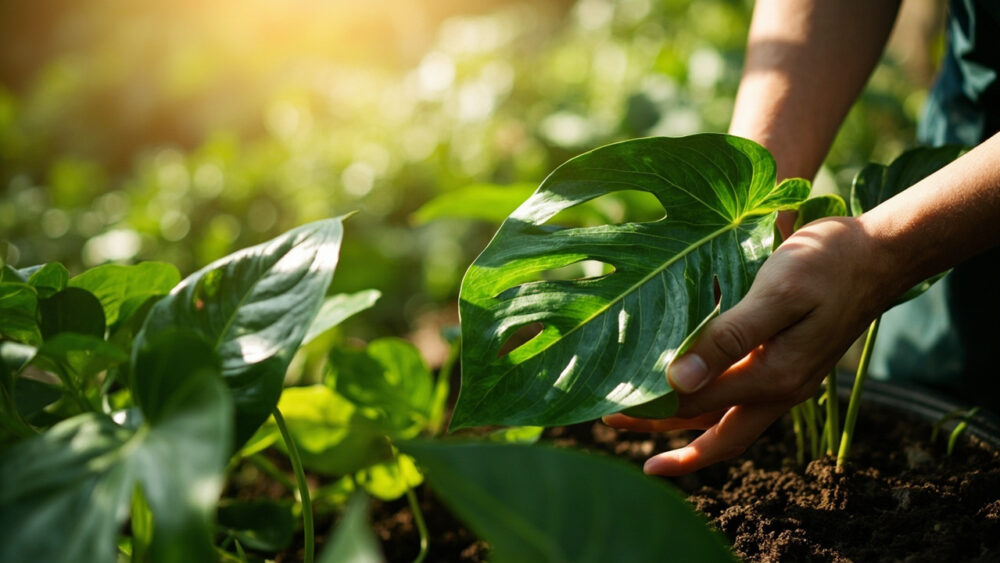
Philodendron care comes down to four things the plant actually cares about: bright indirect light, water only when the top inch or two of soil has dried out, temperatures above 60°F, and a chunky, fast-draining mix that never stays soggy. Get those four right and most philodendrons grow practically on autopilot. Get one badly wrong and you will watch it sulk for months before it tells you why.
Here is what trips people up. The mistake that kills more philodendrons than neglect ever does, the leaf sign almost everyone misreads as “needs more water” when it means the opposite, and the honest answer to whether you should mist your philodendron every day like every care blog tells you to.
All of it is coming up, including the Philodendron at a Glance card at the very bottom. Save that one to your phone before you put this down.
Light, Placement, and Temperature
Philodendrons want bright, indirect light, something like a few feet back from an east or west window, or a north window if it is large and unobstructed. Direct afternoon sun through south or west glass will scorch the leaves into brown, papery patches within a day or two.
Too little light is the more common problem though. A philodendron stretching toward the window with 4 to 6 inches between leaves, instead of 1 to 2, is starving for brightness even if it looks green and alive.
Keep it between 65°F and 85°F. Below 55°F for any length of time, growth stalls and leaves can go soft and yellow.
Placement solves half your problems before they start, but water solves or causes the other half.
Watering: How Much, How Often, and How to Tell
Water when the top 1 to 2 inches of soil are dry to the touch, then soak thoroughly until water runs out the drainage hole. In an average indoor room that is roughly every 7 to 10 days, faster in summer heat, slower in winter.
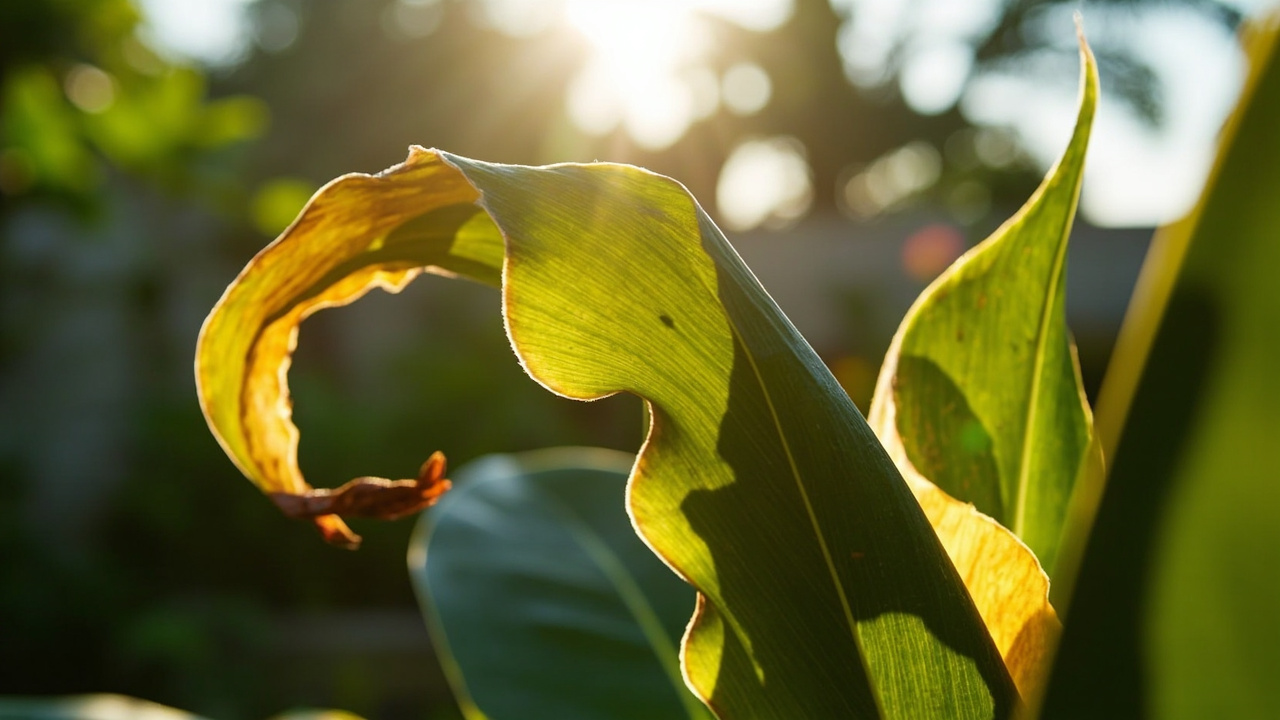
Here is the sign everyone misreads. Yellowing lower leaves get blamed on thirst almost every time, but in philodendron it is overwhelmingly a sign of overwatering and root suffocation, not underwatering.
If you assumed yellow leaves mean grab the watering can, that instinct is what drowns most philodendrons within their first year in a new home. The real fix is to back off, let the soil dry out fully, and check the roots for brown, mushy sections if the yellowing continues.
Underwatered philodendrons tell a different story: leaves go limp and slightly crispy at the edges, and the whole plant looks deflated rather than discolored.
Once you can read the leaves correctly, the soil underneath them matters just as much.
Soil, Potting Mix, and Feeding
Use a loose, fast-draining mix, a standard indoor potting soil cut with perlite or orchid bark at roughly a 2-to-1 ratio. Straight potting soil alone holds too much water for philodendron roots long term.
Always use a pot with a drainage hole. Decorative pots without one are fine as an outer cachepot, never as the actual growing container.
Feed monthly during spring and summer with a balanced liquid houseplant fertilizer diluted to about half the label strength. Skip feeding in fall and winter when growth naturally slows, since fertilizer applied to a dormant plant just builds up as salt in the soil.
Good soil and light timing feed the plant, but the plant also needs your hands on it now and then.
Pruning, Repotting, and Cleaning: The Routine Tasks
Prune any time you see a yellowed, damaged, or leggy stem, snipping just above a node with clean scissors. This is also how you propagate: a 4 to 6 inch stem cutting with a node or two roots readily in water or moist soil within 3 to 4 weeks.
Repot every 1 to 2 years, or sooner if roots are circling the pot’s edge or pushing up through the soil surface. Go up one pot size, not three, since an oversized pot holds excess moisture the roots cannot use fast enough.
Wipe the leaves down with a damp cloth every few weeks. This is not just cosmetic, dusty leaves photosynthesize measurably less than clean ones.
Skip misting as a humidity fix, by the way, it evaporates in minutes and does almost nothing for the plant. A pebble tray or humidifier nearby does far more if your air is genuinely dry.
Handle the routine work on schedule and you will rarely meet the problems in the next section, but you will meet a few anyway.
The Problems Most Likely to Strike
Root rot from overwatering is the big one, showing up as yellow leaves, a mushy stem base, or a sour smell from the soil. Pull the plant, trim any brown mushy roots with clean scissors, and repot into fresh dry mix.
Brown, crispy leaf edges usually mean low humidity or a salt buildup from over-fertilizing, not underwatering as most people guess first. Flush the soil with plain water until it runs clear from the drainage hole to clear built-up salts.
Spider mites and mealybugs both target stressed or dusty philodendrons. Fine webbing or small cottony clumps at leaf joints are the tells; treat with insecticidal soap or neem oil, following the product label exactly, and isolate the plant while you treat it.
One more thing worth stating plainly: philodendron is toxic to cats, dogs, and people if chewed or swallowed, due to calcium oxalate crystals that cause mouth and throat irritation. If a pet or child has eaten any part of it, contact a veterinarian or poison control right away rather than waiting to see what happens.
Once pests and rot are off the table, the only question left is what real success looks like.
How to Tell Your Philodendron Is Genuinely Thriving
A thriving philodendron pushes out a new leaf every 2 to 4 weeks during spring and summer, each one slightly larger than the last. Internodes, the gaps between leaves, stay tight rather than stretched.
New leaves emerge pale, almost yellow-green, wrapped in a papery sheath, then darken to full green as they unfurl over a few days. That pale new growth is normal, not a deficiency, so resist the urge to fertilize the moment you see it.
Vining varieties like heartleaf philodendron will actively reach and trail; upright types like Philodendron selloum push new leaves from the center crown. Either pattern, growth that keeps coming steadily beats one dramatic flush followed by nothing.
Save the card below and you have got everything else on one screen.
Philodendron at a Glance
- Light: bright, indirect light, a few feet from an east or west window, never direct hot sun.
- Water: soak thoroughly when the top 1 to 2 inches of soil are dry, roughly every 7 to 10 days.
- Temperature: 65°F to 85°F, protect from anything below 55°F.
- Soil: loose, fast-draining mix, potting soil cut with perlite or bark, always in a pot with drainage.
- Feeding: balanced liquid fertilizer at half strength, monthly in spring and summer, none in winter.
- Repotting: every 1 to 2 years, or when roots circle the pot, sizing up just one pot size.
- Toxicity: toxic to pets and people if chewed, call a veterinarian or poison control for any suspected ingestion.
If you remember nothing else, remember this: check the soil before you water, and read yellow leaves as too much water, not too little.
Get that one habit right and philodendron does almost all the rest of the work itself.