Growing tamarind from seed starts with fresh pods, not dried grocery-store pulp, because viability drops fast once the seed dries out and sits around. Soak the seed 24 hours, nick or sand the hard shell, and plant it a half inch deep in warm, well-draining soil. That part is simple. The part nobody warns you about is what comes after germination, when a fast, leggy seedling convinces you it is thriving right up until a single cold night sets it back for a month.
Here is what this guide actually opens up for you. There is one seed-prep mistake that keeps otherwise careful gardeners waiting six weeks for nothing to happen. There is a growth stage where the seedling looks perfectly healthy but is actually one root disturbance away from dying, and almost everyone mishandles it at transplant time. And there is the honest answer to the question you are already forming: how long until this thing actually fruits, because the answer is not what the plant tag implies.
Stick with me through each stage and I will flag the mistakes as we hit them. At the bottom is a save-able Tamarind at a Glance card with the numbers you will want to check again next weekend when you are back out at the pot or the planting bed.
When to Start Tamarind Seeds
Tamarind is a tropical tree, hardy only in USDA zones 10 and 11, and it has zero frost tolerance at any age. If you are in a marginal climate, start seed indoors 8 to 10 weeks before your last frost date so you have a sturdy seedling ready to move outside once nights stay above 50°F.
In true tropical or subtropical zones with no frost risk, you can direct sow anytime soil temperatures sit at 70 to 85°F, which usually means late spring through summer.
Everywhere else, treat tamarind as a permanent container tree that summers outdoors and comes inside before temperatures drop into the 40s.
Get the timing right and the sowing itself is almost foolproof, so let’s get the seed into the ground correctly.
Sowing Tamarind Step by Step
This is where most attempts actually fail, and it is not the planting depth. It is skipping seed prep because the seed “looks fine.”
1. Choose fresh seed
Pull seed from a ripe pod if you can get one, or buy seed sold as fresh or recently harvested. Seed that has dried out for months has a germination rate that drops sharply, sometimes to near zero.
2. Nick and soak
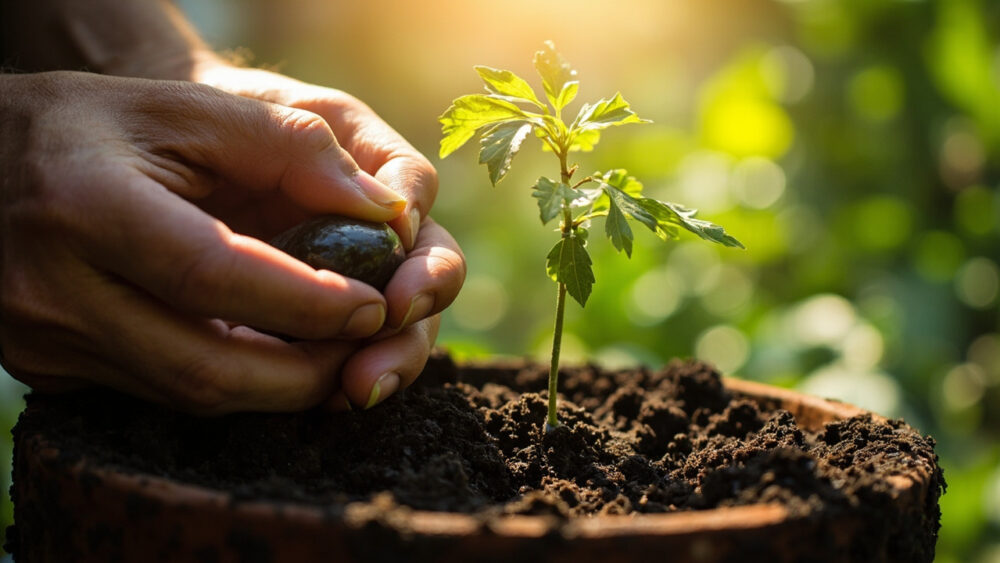
Tamarind seed has a hard, almost stone-like coat. Rub one side against sandpaper or nick it with a knife, avoiding the pale spot where the root will emerge, then soak in room-temperature water for 24 hours. This single step is the difference between germination in two weeks and germination that never happens at all.
3. Plant and place
Sow a half inch to 1 inch deep in a light, fast-draining mix, a standard potting soil cut with sand or perlite works well. Keep the medium at 75 to 85°F, using a seedling heat mat if your indoor space runs cooler, and set the pot somewhere bright but not in direct scorching sun yet.
Seed prepped and planted correctly, now comes the waiting, and the waiting has its own rules.
Germination: What to Expect and When to Worry
Expect germination in 1 to 3 weeks at consistently warm soil temperatures. You will see a thick, pale sprout push up before the first true leaves unfurl, and tamarind seedlings tend to grow fast once they start, often several inches in the first month.
If you assumed a nicked, soaked seed guarantees quick sprouting, that guess is only half right. Warm, consistent soil temperature matters just as much as seed prep. A seed that sits at 65°F can take twice as long or simply rot before it sprouts.
Nothing after 4 weeks with warm soil and no sprout means the seed did not make it. Start a new one rather than waiting longer, tamarind does not sit dormant and then suddenly germinate at week seven.
Once you have a sprout, the next danger is not the weather, it is your own hands.
Hardening Off and Transplanting Without Killing the Roots
Here is the mistake almost everyone makes at this stage. Tamarind seedlings look tough, upright, glossy-leaved, sturdy stems, and that appearance tricks people into transplanting carelessly. In reality, tamarind has a sensitive taproot that resents disturbance, and rough handling here is what actually kills more seedlings than any pest or disease ever will.
Harden off gradually if the seedling started indoors: move it outside to shade for a few hours a day, increasing sun exposure over 7 to 10 days before leaving it out full time.
When you transplant, do it into a pot at least 3 to 5 gallons, or into the ground if you are frost-free, and disturb the root ball as little as possible. Slide it out intact rather than shaking soil loose. Water it in immediately.
A seedling that survives transplant with its roots undisturbed is now home free for the easy part, ongoing care.
Caring for Tamarind Through the Season
Tamarind wants full sun, at least 6 to 8 hours a day, and well-draining soil. It tolerates poor soil and short dry spells once established, which is part of why it has a reputation as an easy tree in the right climate.
Water young trees regularly, letting the top 1 to 2 inches of soil dry between waterings, then taper off as the tree matures since mature tamarind is genuinely drought-tolerant. Overwatering in a pot, sitting in a saucer of water, is a far more common killer than underwatering.
Feed lightly during the growing season with a balanced fertilizer, and skip feeding in cooler months when growth naturally slows. Container trees need repotting every year or two as the taproot fills the pot.
Growth through year one and two is mostly about patience, and patience is exactly what the next question demands.
When Tamarind Blooms and Fruits
Here is the honest answer nobody puts on the seed packet. A tamarind tree grown from seed typically takes 10 to 14 years to reach fruiting maturity, sometimes longer in a container or a marginal climate. This is not a fast-food fruit tree.
Small yellow flowers with red streaks appear once the tree is mature enough, usually on older wood, followed by the brown, rough-shelled pods that swell over several months before they’re ready to harvest.
If you want fruit sooner, a grafted tamarind tree can bear in 4 to 6 years instead, but that is a different starting point than growing from seed. Seed-grown trees are a long game, worth it for the tree itself and for anyone gardening for the next generation as much as this one.
Knowing that timeline upfront is what keeps this a rewarding project instead of a disappointing one, and it is exactly why the quick-reference card below is worth saving.
Tamarind at a Glance
- When to plant: start indoors 8 to 10 weeks before last frost, or direct sow once soil holds steady at 70 to 85°F with no frost risk.
- Seed prep: nick the hard shell and soak 24 hours before planting, skipping this is the top reason seed never sprouts.
- Depth and medium: plant a half inch to 1 inch deep in fast-draining, sandy potting mix.
- Germination window: 1 to 3 weeks at 75 to 85°F soil temperature, restart with new seed past 4 weeks with no sprout.
- Transplant care: handle the taproot gently, harden off over 7 to 10 days, move into a 3 to 5 gallon pot or frost-free ground.
- Light and water: full sun 6 to 8 hours daily, water when the top 1 to 2 inches of soil dry, never let it sit wet.
- Time to fruit: 10 to 14 years from seed, versus 4 to 6 years for a grafted tree.
The seed itself is the easy part, warm soil and a proper soak get you a sprout almost every time. The real skill is handling that taproot gently and settling in for a genuinely long wait before the first pod.