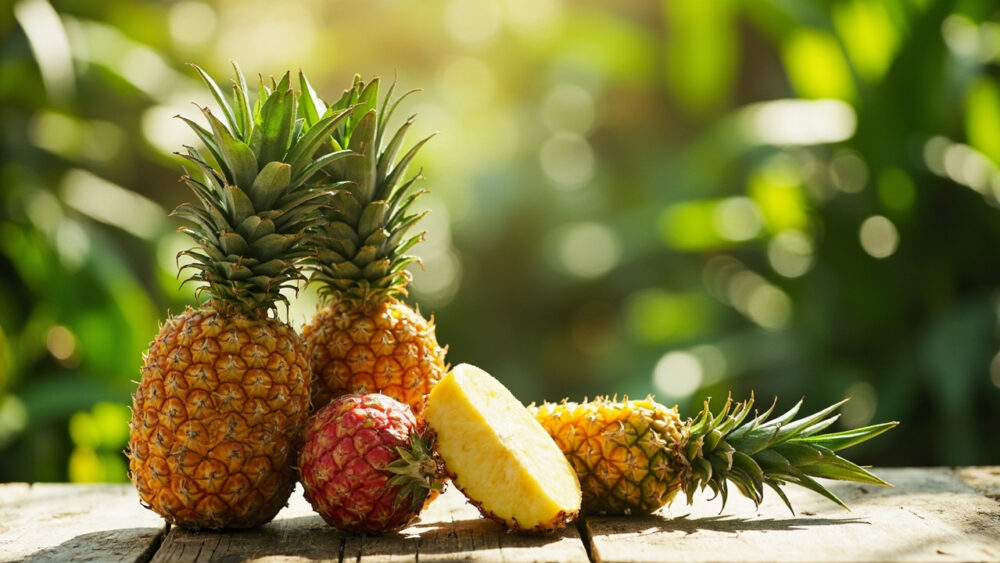
The fastest way to sort out the types of pineapples is by fruit shape and leaf edge: cylindrical fruit with smooth leaves means Smooth Cayenne or one of its relatives, while a more conical fruit with spiny leaf margins points to a Queen or Spanish type. Get that one distinction right and you have already narrowed fifteen options down to three or four.
Most home gardeners grab whatever grocery store pineapple top they rooted, which is almost always Smooth Cayenne, and never learn there are sweeter, smaller, better-suited-to-a-pot options sitting one aisle over in specialty nurseries. Experienced growers quietly favor a different group entirely, the ones bred for containers and patios rather than commercial fields. Number 13 on this list is the one people misjudge the most, usually dismissing it as ornamental only, which is a real mistake.
The last few entries below, plus the actual method for choosing between them, are worth the scroll. That part is at the bottom, after you have seen the full lineup.
The Cayenne Group: What You Are Probably Already Growing
This is the commercial backbone of the pineapple world, and the odds are high that any pineapple top you have rooted from a store fruit belongs here.
1. Smooth Cayenne
Spineless leaves and a large, cylindrical fruit make this the easiest type to identify and the one behind nearly every grocery store pineapple. It grows 3 to 4 feet tall, wants full sun and temperatures that stay above 60°F, and takes 18 to 24 months from planting to fruit. The flavor is reliably sweet but a notch less complex than the smaller heirloom types.
2. Champaca
A Cayenne relative grown mostly in Southeast Asia, Champaca produces a slightly more tapered fruit with pale yellow flesh and a milder acid bite. It suits gardeners in USDA zones 10 to 11 who want Cayenne’s easy habit with a gentler flavor.
3. Hilo
A shorter, more compact Cayenne selection bred in Hawaii, Hilo tops out around 2.5 feet and fruits a bit earlier than standard Cayenne. It handles container life better than its parent, which matters if you are growing on a deck or patio rather than in open ground.
4. Typhoon
Bred for wind tolerance, Typhoon is a Cayenne cross that holds its fruit closer to the crown so storms do not snap the stalk. If you garden somewhere with regular tropical storms or just a lot of open wind, this is the practical choice over showier types.
Cayenne types are the safe, productive default, but the Queen group is where flavor actually gets interesting.
The Queen Group: Smaller, Sweeter, Better for Small Yards
Queen types run smaller in every dimension than Cayenne, and that is exactly why a lot of experienced growers switch to them once they have room to be picky.
5. Ripley Queen
Deep golden flesh and high sugar content define this Australian favorite, along with a fruit that rarely exceeds 3 pounds. The plant stays compact at 2 to 3 feet, making it a genuinely good container candidate, though the leaves carry sharp spines that will remind you every time you weed nearby.
6. Natal Queen
The pineapple most people mean when they say a pineapple tastes “tropical” rather than just sweet, thanks to a sharper acid-sugar balance than Cayenne. It is smaller and slower to establish, needing 20 to 24 months to fruit, but the flavor is why South African and Australian growers keep it in production despite the wait.
7. MD-2 (Extra Sweet)
Bred specifically to reduce acidity, MD-2 has become the dominant export variety worldwide because it ships well and tastes consistently sweet with almost no tartness. Home growers get a Cayenne-sized plant with Queen-level sugar, which explains why nurseries now sell more MD-2 tops than true Cayenne.
8. Alexandria
A South African Queen type valued for its deep orange interior color and firm texture that holds up well in fresh cutting. It grows to about 2.5 feet and tolerates slightly cooler nights than most Queen varieties, useful if your zone dips toward the lower end of 10.
If sweetness and size are your priority, the Queen group already answered the question, but the next category solves a completely different problem.
The Compact and Container Types
These exist because not everyone has a field, and some of the best flavor now comes out of pots on a sunny balcony.
9. Pineapple ‘Ivory Coast’
A dwarf West African selection that rarely tops 2 feet, making it one of the few true pineapples you can grow start to finish in an 18-inch pot. Fruit size is modest, roughly 1 to 1.5 pounds, but for a windowsill or patio grower that is the whole point.
10. Pineapple ‘Dwarf Sugarloaf’
White, fiberless flesh and almost no core toughness set Sugarloaf apart, along with a habit that stays under 3 feet. It is genuinely one of the sweetest pineapples you can grow at home, but it bruises easily and does not ship, which is exactly why you never see it in stores.
11. Pineapple ‘Baby Cayenne’
Not a separate species but a naturally smaller Cayenne strain selected for container performance, producing fruit at 1.5 to 2 pounds instead of the standard 4 to 6. It is the closest thing to “the grocery store pineapple, but it actually fits on my balcony.”
Compact types solve the space problem, but the next group solves a completely different one: looks.
Ornamental and Novelty Types
These are grown as much for the plant as the fruit, and a couple of them get written off by beginners who assume ornamental means inedible.
12. Pineapple ‘Variegata’
Cream and green striped leaves edged in pink under bright light make this one of the showiest houseplant pineapples sold. The fruit is smaller and more acidic than a standard Cayenne, so most growers treat this one as a foliage plant that happens to fruit, not the other way around.
13. Pineapple ‘Tricolor’
The one most people get wrong, assuming its dramatic pink, cream, and green striped foliage means the fruit is purely decorative or even inedible. It is not. Tricolor produces a genuinely edible, sweet-tart fruit, just a smaller one than its plain green cousins, and it needs bright, consistent light to keep that pink edge from fading back to green.
14. Red Spanish
A reddish-orange rind and unusually long storage life set Red Spanish apart, along with a squarish, blocky fruit shape unlike the cylindrical Cayenne. It is slower to mature, often 20 months or more, and the leaves are heavily spined, but the fruit’s dense texture makes it a favorite for canning and cooking rather than fresh eating.
15. Pineapple ‘Abacaxi’
Golden, conical fruit with an almost citrus-bright flavor distinguishes this Brazilian heirloom from the rounder commercial types. It is more cold-sensitive than Cayenne and wants consistent warmth above 65°F, so it suits warm-zone growers or greenhouse setups better than marginal climates.
Fifteen types down, and the only thing left is matching one of them to your actual growing conditions.
How to Choose the Right One
- Check your space first: a full-size Cayenne or Red Spanish needs 3 to 4 feet of room and eventually a large container or open ground, while dwarf types like Ivory Coast or Baby Cayenne live happily in an 18-inch pot.
- Match your climate: pineapples want temperatures that stay above 60°F and ideally above 65°F, which limits outdoor, year-round growing to USDA zones 10 and 11; everyone else grows in containers that come indoors or into a greenhouse before frost.
- Decide if you are growing for fruit or foliage: Variegata and Tricolor earn their space with color even if the fruit is a bonus, while Queen and Cayenne types exist purely to eat.
- Weigh your patience: most pineapples take 18 to 24 months from planting to first fruit regardless of type, so there is no shortcut variety, only a size and flavor choice.
- Consider light honestly: full sun for at least 6 hours a day is non-negotiable for fruiting; variegated types especially will lose their color and their fruit quality in shade.
- Pick sweetness over size if you are eating fresh: Queen types and Sugarloaf beat Cayenne on flavor every time, even though Cayenne wins on fruit size and shelf life.
Any of these fifteen will grow the same way, from a rooted crown, in well-draining soil, with patience measured in years rather than months.
Pick the one that matches your space and your patience, and let it do the rest on its own schedule.