To grow cucumbers, plant them in full sun after your soil hits at least 65 F, give the vines rich, well-drained soil and steady moisture, and expect straight-to-harvest fruit in 50 to 70 days depending on variety. That is the whole plant in a sentence. The details are what decide whether you get a wheelbarrow of cucumbers or a patch of yellow, wilting vines by July.
Most first-time failures trace back to one of three things: planting too early into cold soil, letting the soil dry out during flowering, or missing the early signs of a beetle or mildew problem until it has already taken the plant down. There is also a sign almost everyone misreads on their first crop, a plant loaded with yellow flowers that never turns into fruit, and the real explanation has nothing to do with fertilizer.
Stick with me through this and you will know exactly when to plant, how to set up the bed so you are not fighting the plant all summer, and how to read the vine when something is wrong. Save the Cucumbers at a Glance card at the very bottom for your phone, it has the numbers you will actually need standing in the garden.
When to Plant Cucumbers
Cucumbers are warm-season plants through and through, and they will sulk or rot if you rush them. Wait until all frost danger has passed and soil temperature is reliably at least 65 F, ideally 70 to 85 F, which usually lands two to three weeks after your last spring frost date.
If you are starting seed indoors, do it three to four weeks before that outdoor planting window, cucumbers hate root disturbance so use biodegradable pots you can transplant whole. Direct-seeding outdoors once soil has warmed is often just as fast and skips transplant shock entirely.
In cooler zones (5 and below), black plastic mulch or row cover can warm the bed by several degrees and buy you a week or two. In hot southern zones, get an early spring crop in fast and consider a second planting in mid to late summer for a fall harvest before heat and disease pressure peak.
Get the timing right and the next decision, where you actually put the plant, matters just as much.
Choosing the Spot and Prepping the Soil
Cucumbers want six or more hours of direct sun and soil that drains fast after rain. Standing water around the roots is one of the quickest ways to lose young plants to rot.
Work in two to three inches of compost or aged manure before planting. Cucumbers are heavy feeders and shallow-rooted, so rich, loose soil in the top 6 to 8 inches matters more than deep tillage.
Aim for soil pH between 6.0 and 6.8. If you grew squash, melons, or other cucurbits in that bed last year, move the patch if you can, shared pests and diseases carry over in the soil.
Decide now whether you are trellising or letting vines sprawl, because it changes your spacing math before you ever drop a seed.
Planting Cucumbers Step by Step
1. Pick your method: vertical or sprawling
Trellised cucumbers take a fraction of the space, get better airflow, and produce straighter fruit. Sprawling vines need 4 to 6 feet of open ground per plant but need no structure.
2. Set your spacing
For trellised plants, space seeds or transplants 12 inches apart along the support. For sprawling vines, thin to 18 to 36 inches apart in rows spaced 4 to 6 feet apart, or plant in hills of 2 to 3 plants spaced 4 to 5 feet apart.
3. Sow at the right depth
Plant seeds about 1 inch deep. Deeper than that in cool soil and germination slows dramatically or fails.
4. Water in and mulch
Water gently right after planting, then add 2 to 3 inches of mulch once seedlings are a few inches tall to hold moisture and keep soil-borne disease off the lower leaves.
Germination usually shows up in 5 to 10 days when soil is warm enough, if nothing has emerged after two weeks the seed likely rotted in cold, wet soil and it is worth reseeding rather than waiting longer.
Watering and Feeding Through the Season
Cucumbers are roughly 95 percent water, and it shows in how fast they punish inconsistency. Aim for about 1 to 1.5 inches of water per week, more during fruit set and hot stretches, delivered at the soil line rather than overhead to keep foliage dry.
Check soil moisture by feeling an inch down, if it is dry there, water. Uneven watering is the number one cause of bitter-tasting or oddly shaped fruit, far more often than variety or soil fertility.
Feed with a balanced fertilizer or compost tea at planting, then side-dress with something higher in nitrogen once vines start running, switching to a bloom-boosting feed (higher phosphorus and potassium) once flowers appear. Too much nitrogen late pushes leafy growth at the expense of fruit.
Now, about those flowers that never turn into cucumbers, that mystery has a straightforward answer.
Why All Those Flowers Aren’t Turning Into Cucumbers
If you assumed a plant covered in yellow blooms but no fruit needs more fertilizer, that guess is wrong and adding nitrogen will only make it worse. Cucumbers produce male and female flowers separately, and most varieties bloom male-only for the first week or two before female flowers (look for a small bulge at the base, the baby cucumber) show up.
Once both types are blooming, pollination is the real bottleneck. Cool, rainy, or windless stretches keep bees from working the flowers, and no pollination means the tiny fruit yellows and drops within days.
There is not much to fix here except patience and, if you are worried, hand-pollinating with a small brush between a male flower’s center and a female flower’s center in the morning. This resolves on its own within a week or two as more female flowers open and bee activity picks up.
The other thing that ends a promising cucumber season fast is pests and disease, and that is worth watching for from day one.
Problems That Take Cucumbers Down Fast
Cucumbers face real pressure, but almost everything is manageable if you catch it early.
- Cucumber beetles: striped or spotted yellow beetles that chew leaves and spread bacterial wilt. Row covers before flowering, then removed for pollination, are the best defense, along with prompt handpicking.
- Powdery mildew: white, flour-like coating on leaves in humid weather. Improve airflow, water at the soil, and remove badly affected leaves. A sulfur or potassium bicarbonate fungicide, applied exactly per the label, helps once it appears.
- Bacterial wilt: sudden, whole-vine collapse with no yellowing first. There is no cure, pull and discard the plant and control cucumber beetles to prevent spread to others.
- Blossom end rot and misshapen fruit: almost always inconsistent watering, not a calcium deficiency in most home gardens. Even out the watering schedule first.
- Squash vine borer and aphids: less common on cucumbers than on squash but worth checking for wilting stems or sticky, curled leaves.
Catch these early and your vines will reward you with the part everyone actually clicked for, a real harvest.
When and How to Harvest Cucumbers
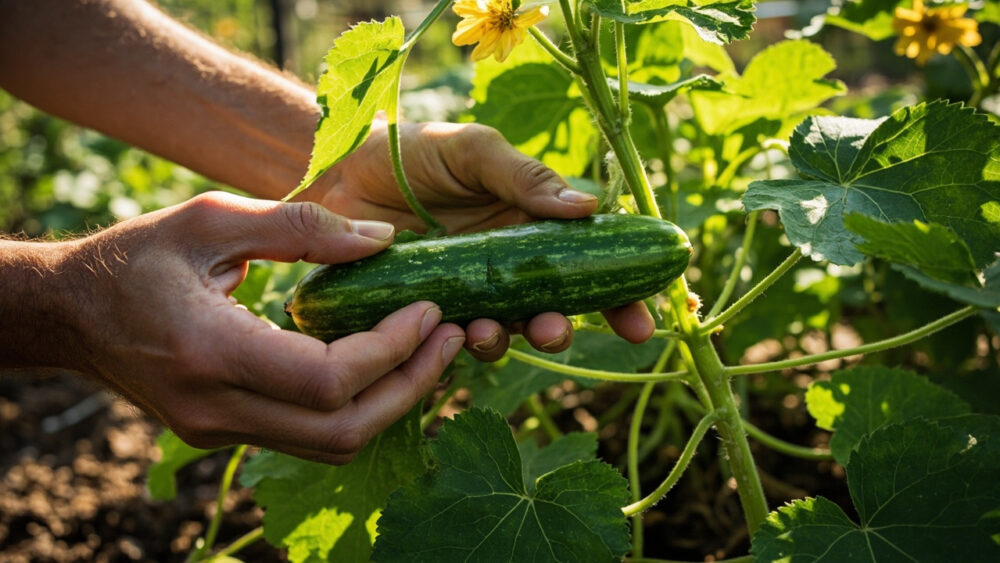
Most slicing cucumbers are ready 6 to 8 inches long, firm, and deep green, usually 50 to 65 days from seed. Pickling types get picked smaller, often 2 to 4 inches, and English or burpless varieties can run 10 to 14 inches.
Check plants every day or two once fruit starts sizing up, cucumbers can go from perfect to oversized and seedy within 48 hours in warm weather. A cucumber left too long turns pale yellow, gets tough skin, and signals the vine to slow down production.
Cut or twist the fruit off with a short piece of stem attached rather than yanking the vine. Frequent picking is the real secret to a long harvest window, the more you pick, the more the plant keeps flowering.
Here is the full card to save before you head back out to the garden.
Cucumbers at a Glance
- When to plant: outdoors two to three weeks after last frost, once soil is at least 65 F, ideally 70 to 85 F.
- Spacing: 12 inches apart on a trellis, or 18 to 36 inches apart sprawling with rows 4 to 6 feet apart.
- Planting depth: about 1 inch for seed, same depth as the root ball for transplants.
- Sun and soil: six or more hours of direct sun, rich well-drained soil with compost worked in, pH 6.0 to 6.8.
- Water: 1 to 1.5 inches per week, steady and even, at the soil line rather than overhead.
- Days to harvest: 50 to 70 days depending on variety, check daily once fruit starts sizing.
- Watch for: cucumber beetles, powdery mildew, and uneven watering, the three most common season-enders.
Consistent water and a daily eye on the vine will do more for your harvest than any fertilizer schedule. Get those two right and cucumbers practically grow themselves.