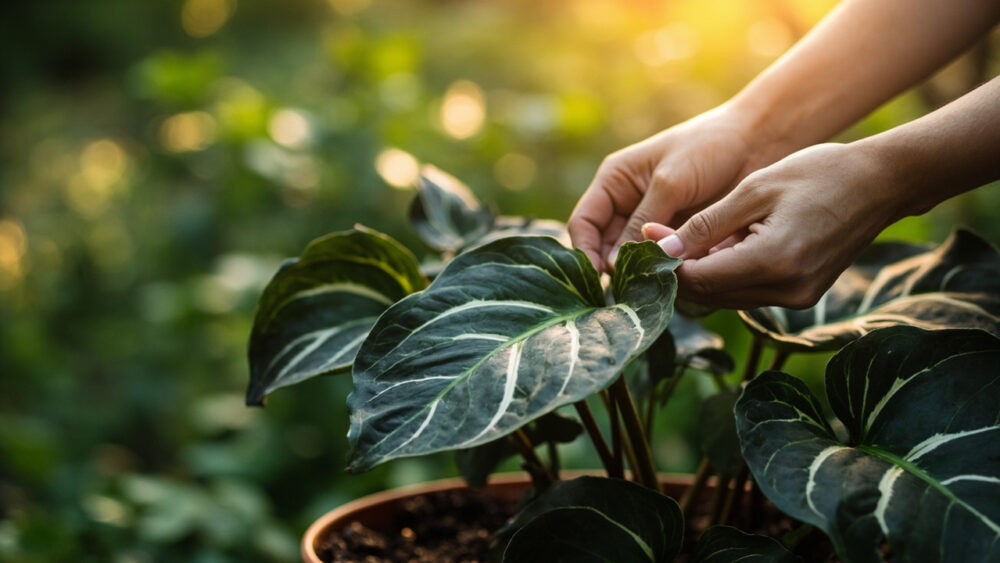
Alocasia black velvet care comes down to four things this plant will not compromise on: bright indirect light, evenly moist but never soggy soil, humidity above 50 percent, and warmth that never dips below 60°F. Get those four right and the velvety, dark green leaves with silver veins hold up fine. Get even one badly wrong and this particular alocasia sulks faster than almost any other houseplant you own.
Here is what trips people up. The mistake that kills most black velvets isn’t underwatering, it’s a pot with no drainage and a schedule based on the calendar instead of the soil. There’s also a sign nearly everyone misreads as disease when it’s actually just the plant doing something completely normal. And there’s an honest answer coming about why this alocasia goes dormant on you every winter, no matter how well you think you’re caring for it.
Stick around for all of it, and save the “at a glance” card at the very bottom for the nights you just need the numbers without the explanation.
Light, Placement, and Temperature
Alocasia black velvet wants bright, indirect lightthe kind you get a few feet back from an east or west window, or filtered through a sheer curtain in a south window. Direct sun scorches the velvety leaves in under an hour on a bright day. Too little light and the plant stretches, leaves get smaller, and the dark color fades toward dull green.
Temperature matters just as much as light. Keep it between 65°F and 85°F, and never let it sit below 60°F for long, especially near a drafty window in winter.
This plant also hates cold drafts from doors and AC vents more than it minds a slightly dim corner.
Get the light and warmth right and you’ve solved most of the battle, but water is where the real damage happens.
Watering: How Much, How Often, and How to Tell
If you assumed this plant wants to stay constantly damp like a fern, that guess is what rots more black velvets than drought ever does. It wants the top inch of soil to dry out between waterings, not the whole pot.
Check by feelnot by schedule. Stick a finger an inch down; if it’s dry, water thoroughly until it runs from the drainage holes, then empty the saucer.
In a warm, bright spot that’s roughly every 7 to 10 days. In a cooler or lower-light spot, stretch that to every 12 to 14 days.
The real tell that something’s wrong isn’t the leaves drooping, it’s yellowing lower leaves combined with soil that’s still wet three days after watering. That combination means root rot is starting, not thirst.
Nail the watering rhythm and the next question is almost always what’s actually in the pot.
Soil, Pots, and Feeding
Alocasia black velvet needs a mix that drains fast but still holds some moisture, something like a standard houseplant potting mix cut with perlite or orchid bark at roughly one-third extra drainage material. Straight potting soil packs down and suffocates the roots within a couple months.
The pot matters more than the mix. A container without drainage holes is the single fastest way to lose this plant, no matter how careful your watering is. Choose a pot only slightly larger than the root ball; alocasias actually prefer being a little snug.
Feed monthly during spring and summer with a balanced liquid houseplant fertilizer diluted to about half strength. Skip feeding entirely in fall and winter when growth slows or stops.
Get the container and mix right once, and you won’t be fighting soggy roots all year.
Routine Tasks: Pruning, Repotting, and Cleaning
Prune only what’s actually dead or yellowed, cutting the stem near the base with clean scissors. Don’t remove healthy green leaves just because growth looks slow. Alocasias often push out only two or three new leaves a season.
Repot every 12 to 18 monthsor sooner if you see roots circling the drainage holes or the plant drying out within two or three days of a full watering. Spring, right as new growth starts, is the best window.
Wipe the leaves with a damp cloth every couple of weeks. Dust blocks light and gives spider mites an easier foothold.
Even with perfect care, though, this plant has a habit that catches almost everyone off guard.
The Dormancy Nobody Warns You About
Here’s the honest answer to the question you’re about to ask when this happens: your alocasia black velvet may drop most or all of its leaves in late fall or winter, and that is very often normal dormancy, not a plant you killed.
The corm, the bulb-like base at the soil line, is what’s alive. Reduce watering significantly during dormancy, keep it warm, and resist the urge to fertilize or repot. New leaves typically return in spring as light and warmth increase.
The mistake people make here is panicking and repotting a “dying” plant in December, which disturbs a corm that’s simply resting and can cause actual rot.
Knowing what’s dormancy and what’s disease saves you from making a healthy plant sick.
Problems Most Likely to Strike
Most black velvet problems trace back to water, light, or humidity, in that order.
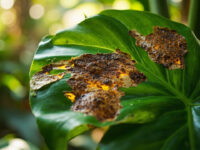
- Yellow, mushy lower leaves: overwatering or poor drainage. Let the soil dry out more between waterings and check the pot has drainage holes.
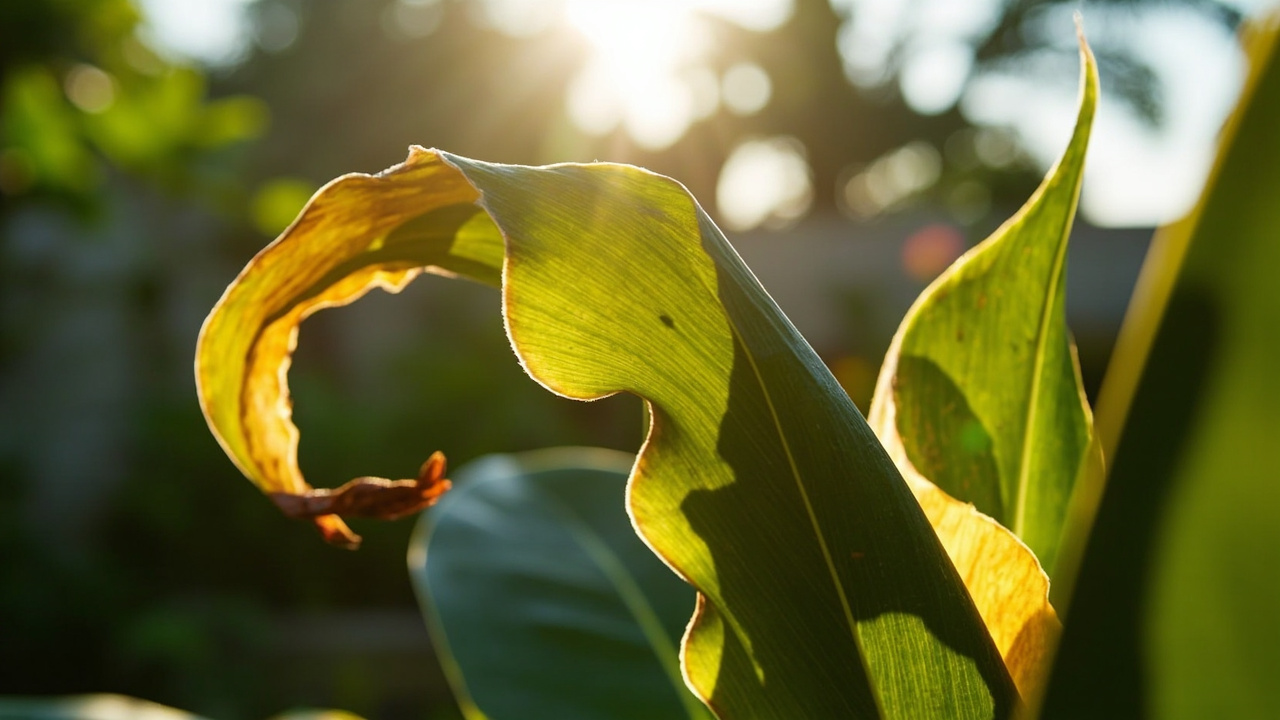
- Crispy brown leaf edges: humidity too low or direct sun. Move it back from the window and consider a pebble tray or humidifier.
- Small, pale new growth: not enough light. Move it closer to a bright window, just out of direct rays.
- Sticky residue or fine webbing: spider mites or mealybugs, especially in dry indoor air. Wipe leaves down and treat with insecticidal soap or neem oil, following the product label exactly.
One more thing worth saying plainly: alocasia black velvet is toxic to cats and dogs due to insoluble calcium oxalate crystals. If a pet chews on it and shows drooling, mouth swelling, or vomiting, call your veterinarian.
Catch these signs early and most of them resolve within a few weeks, but the real goal is knowing what thriving actually looks like.
Signs the Plant Is Actually Thriving
Here’s the sign almost everyone misreads: a curled new leaf that unfurls slowly over several days isn’t a problem, it’s exactly how every single new alocasia leaf emerges. People see the tight curl and assume stress.
Real thriving looks like firm, deep-colored leaves that hold their velvet texture, steady new growth every few weeks during spring and summer, and a plant that snaps back to firm leaves within hours of watering rather than staying droopy.
Healthy roots, if you ever check during repotting, are white to light tan and firm, never brown and mushy.
Once you can read these signs, everything else about caring for this plant gets a lot less stressful, which brings us to the card worth saving.
Alocasia Black Velvet at a Glance
- Light: bright, indirect light, a few feet from an east or west window or behind a sheer curtain, no direct sun.
- Watering: when the top inch of soil is dry, roughly every 7 to 14 days depending on light and warmth.
- Temperature: keep between 65°F and 85°F, never below 60°F, away from drafts and vents.
- Soil and pot: a well-draining mix with extra perlite or bark, in a snug pot with real drainage holes.
- Feeding: balanced liquid fertilizer at half strength monthly through spring and summer, none in fall and winter.
- Repotting: every 12 to 18 months in spring, or when roots circle the pot.
- Toxicity: toxic to pets and mildly irritating to people if chewed. Contact a veterinarian for any suspected ingestion.
If you remember one thing, remember this: check the soil with a finger, not with a calendar.
Everything else about this plant follows from getting that one habit right.