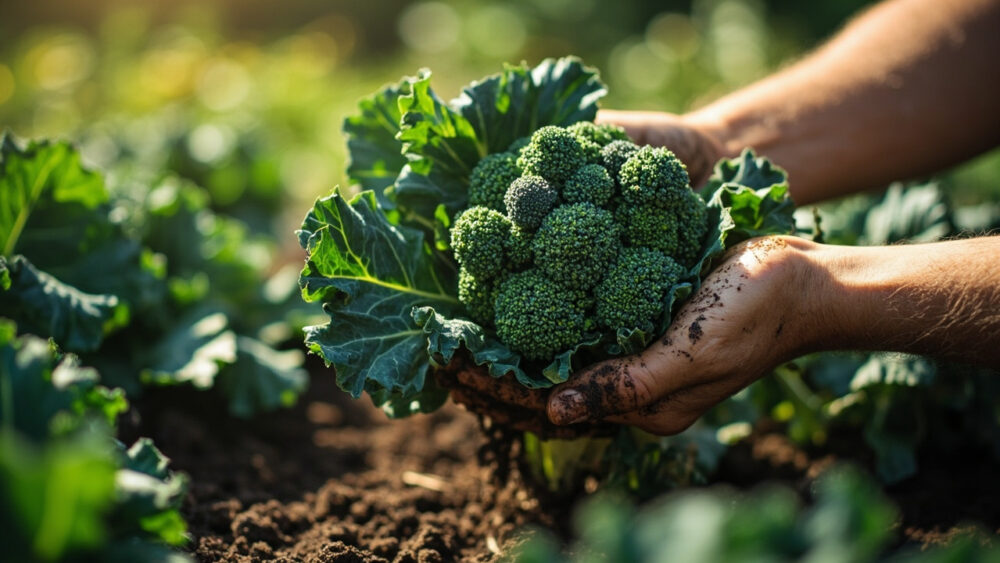
The right way to store broccoli is unwashed and dry, wrapped loosely in a damp paper towel and slipped into a perforated or partly open plastic bag, then set in the crisper drawer of your fridge. Done that way, fresh broccoli holds up for 7 to 10 days. Cooked broccoli only gives you 3 to 5 days, and if you want it for months instead of days, you need to blanch it first and freeze it, not just bag it raw.
That part sounds simple, and it is, but almost every kitchen counter and crisper drawer in the country is quietly ruining broccoli in one specific way. There’s also a yellowing pattern on the florets that most people misread completely, and it is not always the death sentence it looks like.
Stick with me through the sections below and I’ll cure you of the biggest freezer mistake too, the one that turns beautiful broccoli into mush by February. At the bottom you’ll find a save-able Broccoli at a Glance card with every timing and number in one place.
The Best Way to Store Fresh Broccoli
Start dry. Do not wash broccoli before storing it. Water sitting on the florets speeds up rot and mold far faster than anything else you could do wrong.
Trim about half an inch off the stem end if it looks dried or cracked. Wrap the whole head loosely in a slightly damp paper towel. That towel keeps humidity right where broccoli likes it without soaking the florets.
Slide the wrapped head into a plastic bag, but don’t seal it airtight. Poke a few holes or just fold the top over loosely so the broccoli can breathe. Set it in the crisper drawer, ideally the one set to high humidity, at 32 to 40°F.
Some people stand broccoli upright in a jar with an inch of water in the fridge, like cut flowers. It works for a few extra days but only if you change the water daily, otherwise it becomes its own problem.
None of this matters much if the head goes in already bruised or yellowing, so let’s talk about what to look for before you even wrap it.
How Long Broccoli Actually Keeps, By Method
Fresh, unwashed, wrapped in the fridge: 7 to 10 days is realistic. Some heads push past two weeks, but quality drops well before then, the florets get looser and the color dulls.
Cut florets, as opposed to a whole head, don’t last as long. Once you’ve cut broccoli into pieces, count on 4 to 6 days before it starts going soft.
Cooked broccoli lasts 3 to 5 days in a sealed container in the fridge. Reheat it gently, since broccoli that’s already cooked turns to mush fast in a microwave run too long.
On the counter at room temperature, broccoli is on borrowed time, 1 to 2 days at most before it starts yellowing and going limp, especially in a warm kitchen.
Frozen and properly blanched, broccoli holds its quality for 10 to 12 months. That’s the timeline worth planning around if you grew or bought more than you can eat this week.
The freezer numbers only hold up if you prep it correctly first, and this is where most people go wrong.
Freezing Broccoli: Why Skipping This One Step Ruins It
If you’re thinking you can just chop broccoli and toss it straight into a freezer bag, that guess is exactly what leads to mushy, grayish broccoli soup by month three. Raw broccoli has enzymes that keep breaking down cell walls even at freezer temperatures. Blanching stops that cold, literally.
Here’s the method: cut broccoli into florets of a consistent size. Boil water, drop the florets in for exactly 3 minutes. Pull them immediately and plunge them into ice water for another 3 minutes to stop the cooking.
Drain thoroughly and pat dry. Wet broccoli going into the freezer means ice crystals and freezer burn.
Spread the florets on a tray in a single layer and freeze for a couple hours before bagging them. This keeps them from clumping into one solid brick. Once frozen solid, transfer to a freezer bag, press out the air, and label it with the date.
Skip blanching and you’ll still have edible broccoli, technically, but the texture and flavor loss is real and it is not coming back once frozen.
The Yellowing Everyone Misreads
If you assumed any yellow on broccoli means it’s spoiled and headed for the trash, that guess throws out perfectly good vegetables more often than it should. A little yellow tinge on the florets usually just means the head is starting to flower, which happens with age or warm storage, and it is a sign to use it soon, not a sign to toss it.
What actually means spoiled is different: a slimy texture on the stem, dark black or brown soft spots spreading across the florets, a sour or ammonia-like smell, or a head that’s gone visibly mushy when you squeeze it. Any one of those means it’s done.
Small brown flecks scattered across the florets, sometimes called browning or “whiptail,” are usually just age or a touch of frost damage from the field. Cut those spots away and the rest is fine to eat.
Trust your nose here more than your eyes. Broccoli that smells sharp, sulfurous, or off is broccoli that’s turned, no matter how it looks.
Once you know what spoiled actually looks like, the next job is making sure you never get there in the first place.
The Mistakes That Ruin a Batch
Washing before storing is the single biggest mistake. That moisture sits in the crevices between florets and turns into mold within days. Wash right before you cook, never before you store.
Sealing broccoli in an airtight bag is another common one. Broccoli needs to breathe a little. Trapped humidity with no airflow speeds up decay instead of preventing it.
Storing it near apples, pears, or other high-ethylene fruit in the fridge accelerates yellowing. Keep produce that ripens fast in a separate drawer.
Letting cut florets sit out on the counter while you finish cooking is a small habit that costs freshness fast, since cut surfaces lose moisture and nutrients quickly once exposed to air.
And freezing without blanching, as covered above, is the mistake that feels like a shortcut but costs you the whole batch’s texture months later.
Avoid those five things and broccoli storage stops being a gamble and starts being routine.
Broccoli at a Glance
- Fresh storage method: unwashed, wrapped loosely in a damp paper towel, in a perforated bag in the crisper drawer.
- Fresh fridge life: 7 to 10 days for a whole head, 4 to 6 days for cut florets.
- Cooked broccoli life: 3 to 5 days refrigerated in a sealed container.
- Counter life: 1 to 2 days only, then quality drops fast.
- Freezer method: blanch 3 minutes, ice bath 3 minutes, dry fully, flash freeze, then bag.
- Freezer life: 10 to 12 months at consistent freezer temperature.
- Signs it’s spoiled: slimy stems, black or brown soft spots, mushy texture, sour or sulfurous smell.
Keep it dry until the moment you cook it, and blanch before you freeze.
Everything else about storing broccoli is just details around those two rules.