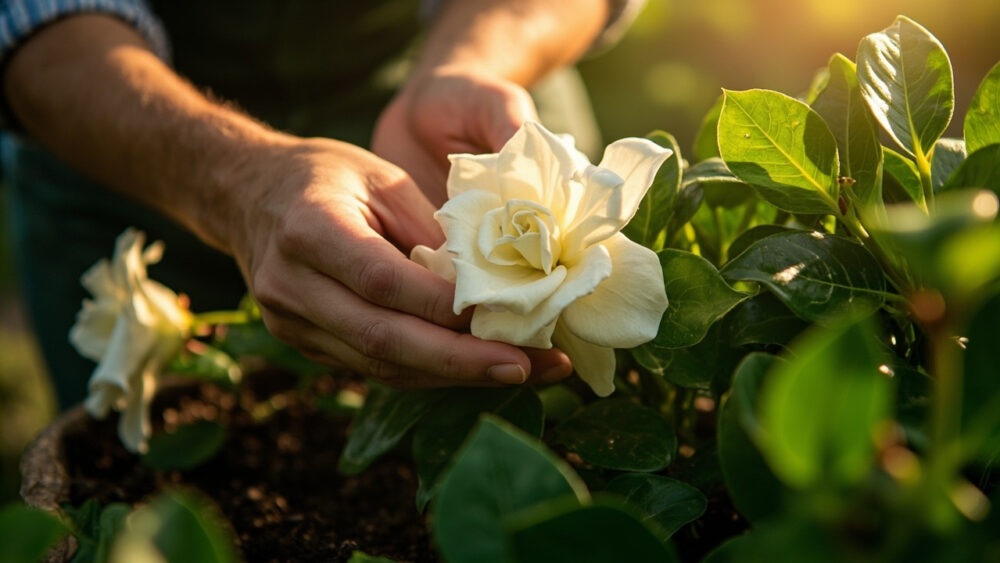
Growing gardenias means giving them acidic soil, high humidity, bright but indirect light, and a spot where the roots stay evenly moist but never waterlogged. Get those four things right and the plant rewards you with waxy white blooms and the kind of fragrance that stops people on the sidewalk. Miss even one, and you get a gardenia that sulks, drops buds, or slowly yellows no matter how much you fuss over it.
Most people who ask how to grow gardenias assume the plant is fussy about water. It is, but that is not usually what kills it.
The real killer is soil pH and root disturbancetwo things almost nobody checks before planting. There is also a bud-drop mistake that ruins a season’s worth of flowers before they even open, and a watering habit that feels responsible but slowly starves the roots of oxygen. Stick with me and you will get all of it, plus a save-able “Gardenias at a Glance” card at the very bottom you can pull up on your phone next time you are standing in the nursery aisle.
When to Plant Gardenias
Plant gardenias after your last frostonce nighttime temperatures stay reliably above 50°F, and soil has warmed enough that it is no longer cold and wet to the touch. In most climates that is mid to late spring. Fall planting works too in mild-winter regions, zones 8 and warmer, giving roots a full season to establish before summer heat arrives.
Gardenias are reliably hardy outdoors in USDA zones 8 through 11. In zone 7 and colder, grow them in containers you can move indoors or into a sheltered spot for winter, because a hard freeze will kill an in-ground gardenia outright.
Timing matters less than most people think, though.
Choosing the Spot and Prepping the Soil
Gardenias want morning sun and afternoon shade, roughly four to six hours of direct light with protection from the harshest part of the day. Too much hot afternoon sun scorches the leaves; too little light and you get a leafy plant with few or no flowers.
Soil pH is the detail everyone skipsand it is the one that actually determines success. Gardenias need acidic soil, ideally in the 5.0 to 6.5 range. If your soil is neutral or alkaline, which is common near concrete foundations or in regions with limestone-heavy ground, the plant cannot take up iron even when the soil has plenty of it, and the leaves turn yellow between green veins.
Work several inches of compost or peat-free acidic planting mix into the bed before you ever put a root in the ground. Test your soil pH with an inexpensive kit rather than guessing.
Get the bed right before planting, because you cannot fix pH easily once the roots are in.
Planting Gardenias Step by Step
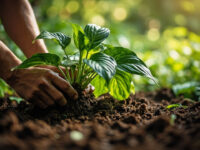
- Dig the hole just as deep as the root ball and twice as wide, so the crown sits at the same level it was in the pot, never buried deeper.
- Loosen circling roots gently with your fingers before planting; gardenias resent having their roots disturbed roughly, so work slowly rather than tearing.
- Space plants 3 to 4 feet apart for shrub varieties, closer for dwarf types, giving each plant airflow to prevent fungal problems.
- Backfill with amended soilfirm gently, and water in immediately to settle air pockets around the roots.
- Mulch 2 to 3 inches deep with pine bark or pine needles, both of which help maintain the acidity gardenias need, keeping mulch a few inches back from the stem.
Getting the plant in the ground correctly is only half the job.
Watering and Feeding Through the Season
If you assumed more water is always safer for a plant this thirsty-looking, that habit is exactly what suffocates gardenia roots. Gardenias want consistently moist soil, not saturated soil. Check the top 2 inches with a finger. Water when it starts to dry out, not on a fixed schedule.
Soggy, compacted soil starves roots of oxygen and invites root rot, which shows up as a plant that wilts despite wet soil, a classic sign that gets misread as needing more water when it needs the opposite.
Feed with an acid-forming fertilizer formulated for acid-loving plants like azaleas and camellias, applied in early spring and again in early summer, following the label rate exactly. Stop feeding by late summer so the plant can harden off before cooler weather.
Humidity matters as much as water. Gardenias grown indoors or in dry climates often need a pebble tray or regular misting to keep the air around the leaves from turning too dry.
Even with perfect watering, gardenias have a reputation for problems, and here is where most of them actually come from.
Problems Most Likely to Strike
Bud drop is the one that ruins a season, and almost everyone blames the wrong cause. It is rarely underwatering. It is far more often a sudden temperature swing, a move to a new location, or the soil drying out and then getting drenched right after buds have formed. Keep conditions steady once buds appear and resist relocating the plant.
Yellowing leaves with green veins point to iron deficiency caused by soil pH that has drifted too alkaline, not a lack of fertilizer. Retest your pH before adding more feed.
Watch for these common pests and issues:
- Aphids and whiteflies: cluster on new growth and buds. Treat with insecticidal soap or horticultural oil, following label directions.
- Sooty mold: a black coating that follows aphid or scale infestations. Control the pest first and the mold fades.
- Root rot: caused by soggy, poorly drained soil. Improve drainage rather than treating with fungicide alone.
- Powdery mildew: shows up in humid conditions with poor airflow. Space plants and prune for circulation.
Handle the environment and most of these never get a foothold.
When and How Gardenias Bloom
Gardenias typically bloom from late spring into summer, with some repeat-flowering varieties putting out a second flush into early fall. Buds form on new growth, so a plant that was pruned hard right before bloom season simply will not flower much that year.
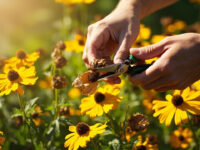
Cut blooms for indoor arrangements in the cool morning hours, choosing flowers that are fully open or just about to open, since gardenias do not continue opening much once cut. Handle the petals carefully. They bruise brown at the slightest rough touch, which is the actual reason florist gardenias look so pristine, careful handling, not a different variety.
Prune lightly right after flowering finishes, not in fall or winter, to avoid cutting off next year’s flower buds.
That timing detail alone saves more blooms than any fertilizer will.
Gardenias at a Glance
- When to plant: after the last frost with nights above 50°F, or in fall in zones 8 and warmer.
- Soil needs: acidic, pH 5.0 to 6.5, rich in organic matter, well drained.
- Light: morning sun, afternoon shade, four to six hours of direct light.
- Spacing and depth: 3 to 4 feet apart, planted at the same depth it sat in its nursery pot.
- Watering: consistently moist, never soggy, checked by feel in the top 2 inches of soil.
- Feeding: acid-forming fertilizer in early spring and early summer, none after late summer.
- Bloom time: late spring through summer, with buds forming on new growth.
Get the soil pH right before you plant, and keep conditions steady once the buds set.
Everything else with gardenias is just consistency.