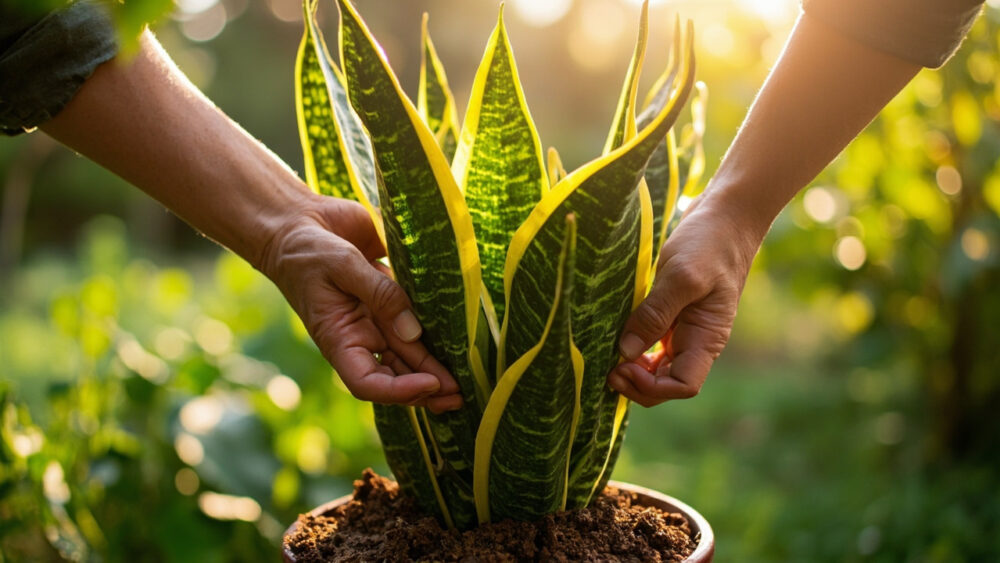
Snake plant light requirements are about the widest of any houseplant you’ll grow. It thrives in bright indirect light near an east or west window, tolerates the low light of a north-facing room or an interior hallway, and will even take a few hours of gentle direct morning sun without complaint. The one thing it genuinely cannot handle long term is total darkness, and the one thing that quietly ruins it isn’t too little light at all.
Most people assume the danger is a dim corner. That’s the guess almost everyone makes, and it’s usually backwards. The mistake that actually kills snake plants is watering a low-light plant like it’s sitting in a sunny window, which is a light problem wearing a water problem’s clothes.
Before you move this plant an inch, stick around for the sign of too much light that gets misread as sunburn, the honest answer to “will it survive my dark bathroom,” and the seasonal shift almost nobody adjusts for. The full save-it-to-your-phone rundown is waiting at the bottom.
The Plain Answer: What Light Level Does a Snake Plant Actually Need
Bright, indirect light is ideal, but snake plant (Dracaena trifasciata, formerly Sansevieria) is one of the few houseplants that genuinely tolerates low light and keeps growing, just slower. Think of its needs on a spectrum rather than a single sweet spot.
On the high end, it handles a few hours of direct sun, especially softened morning light. On the low end, it survives in rooms lit only by a window across the space, or under office fluorescents, though growth nearly stalls.
What it does not tolerate is a windowless room with no light source at all, indefinitely. It can limp along there for months, but it will not push new growth.
That range is generous, but where you land inside it changes almost everything else about how you care for the plant.
What Good Light Actually Looks Like in a Real Room
Picture an east-facing window: a snake plant set within 3 to 5 feet of the glass gets soft morning sun and bright light the rest of the day, which is close to ideal. A west window works the same way, just with hotter afternoon light, so pull the plant back to 4 to 6 feet or keep it off to the side rather than dead center.
South-facing windows in the northern hemisphere throw the most intense light of the day. Snake plant can sit a few feet back from one of these and be happy, but pressed right against the glass in summer it can scorch.
North-facing windows and interior spots 6 to 10 feet from any window are the low end of workable. The plant will survive and even grow, just leggier and slower, leaning toward whatever light source it can find.
A simple test: if you can read a book comfortably in that spot without turning on a lamp, there’s enough light here to sustain the plant.
The Sign of Too Little Light Everyone Actually Gets Right
This one’s less of a trap than people expect. In low light, new leaves come in noticeably thinner, paler, and more widely spaced than the older growth, and the whole plant starts leaning hard toward whatever window light exists.
Growth also nearly stops. A snake plant that used to push a new leaf every month or two in brighter light might go six months to a year without one in a dim corner.
None of this is an emergency. It’s a plant conserving energy, not a plant dying.
The real trouble starts on the other end of the light spectrum, and that’s the one people misread.
The Too-Much-Light Sign That Gets Blamed on the Wrong Thing
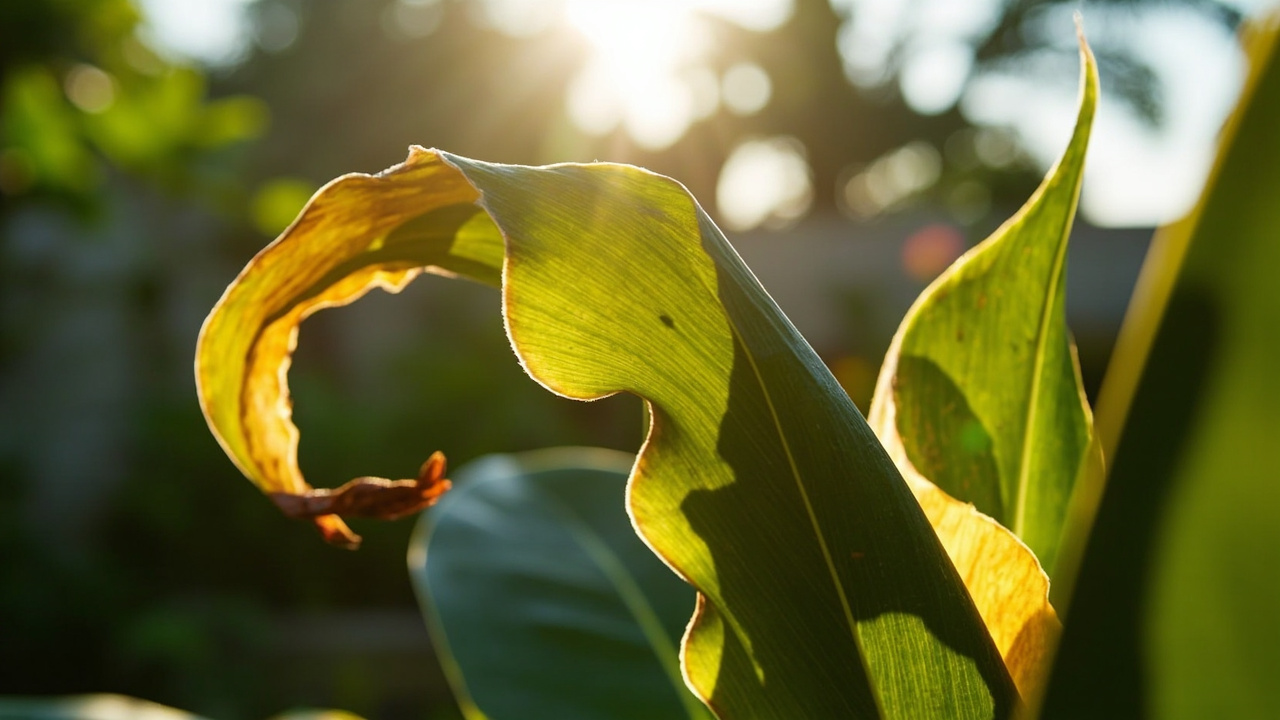
Here’s the subversion: most people assume brown, crispy patches on a snake plant mean underwatering, because that’s the story every other houseplant tells. On this plant, brown or bleached patches on leaves facing a hot south or west window in summer are far more often sunscald from direct, intense afternoon light than thirst.
Sunscald shows up as flat, dry, yellowish-tan or bleached patches specifically on the side of the leaf facing the glass, not as overall droop or uniform yellowing. Check the water first with a finger an inch into the soil, but if it’s dry down there and the damage is one-sided, light is the culprit.
The fix is simply distance or a sheer curtain between plant and glass, not more water.
Get the placement right for one season and you’d think you’re done, except the sun itself doesn’t stay still.
Why the Same Windowsill Can Turn on You Seasonally
The sun’s angle drops through fall and winter, which means a spot that was gentle indirect light in July can become several hours of direct, low-angle sun hitting the plant square on by December, especially at south and west windows. Watch for new sunscald patches appearing in winter on a plant that was fine all summer.
The reverse happens too: a plant that gets full shade from deciduous trees outside in summer may suddenly sit in unfiltered light once the leaves drop.
Growth also naturally slows in the shorter, dimmer days of late fall and winter regardless of where the plant sits, so don’t panic if it seems to pause. That’s expected, not a light problem.
Cutting back watering to match that slower winter growth matters more than chasing the light, but a small seasonal shift in placement helps too.
Placement Fixes That Don’t Require a Greenhouse
You don’t need a plant room to get this right. A few practical moves cover almost every situation:
- Too dark: move the plant within a few feet of the brightest window available, or rotate it to a spot near a doorway that opens onto a sunnier room.
- Too intense: hang a sheer curtain, or pull the plant back 2 to 3 feet from a south or west pane.
- No good window at all: a full-spectrum grow light run 8 to 10 hours a day, set a foot or two above the leaves, will sustain healthy growth in an interior room or windowless bathroom.
- Uneven growth: give the pot a quarter turn every couple of weeks so it doesn’t grow lopsided reaching for one light source.
Any of these gets a struggling plant back on track within a few weeks of new growth.
Once placement is sorted, the only thing left to remember is the short version, so save it.
Snake Plant at a Glance
- Ideal light: bright, indirect light a few feet from an east or west window, with occasional gentle morning sun.
- Minimum tolerated: low light from a north window or interior spot 6 to 10 feet from any window, with much slower growth.
- Maximum tolerated: a few hours of direct sun, but full unfiltered afternoon sun through south or west glass risks scorch.
- Sign of too little light: pale, thin, widely spaced new leaves and heavy leaning toward the window.
- Sign of too much light: flat, bleached or tan patches on the side of the leaf facing the glass, not overall wilting.
- Seasonal adjustment: watch for new sunscald in winter as the sun’s angle drops, and expect slower growth in short-day months.
- No good window fix: a full-spectrum grow light for 8 to 10 hours a day works fine as a substitute.
If you remember one thing, remember this: snake plant forgives almost any light level, but it does not forgive being watered on a sunny-window schedule while sitting in a dark corner.
Match the water to the actual light it’s getting, and this plant will outlast most of the other things in your house.