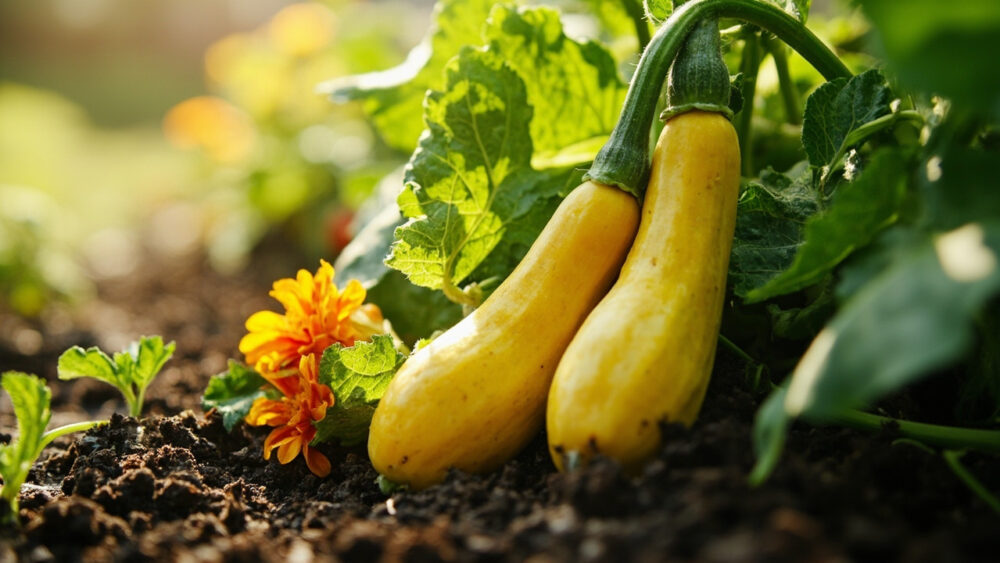
The best companion plants for yellow squash are bush beans, nasturtiums, radishes, dill, borage, and corn, because each one either repels the pests that go after squash, feeds the soil, or draws in the pollinators your squash blossoms depend on. The plants to avoid are potatoes and most other vining squash or pumpkins planted too close, since they compete hard for the same root space and can trade pests and diseases back and forth. That much gets you started, but the details are where a squash bed actually succeeds or fails.
There is one spacing mistake that wrecks more squash companion plantings than any pest ever does, and almost nobody expects it. There is also a “everyone plants this together” pairing that sounds smart and does close to nothing for your squash. And there is the honest answer to the question you are probably about to ask next: can you really fit all of this in a normal-size garden bed, or is this a Pinterest fantasy.
Stick around for all of it, including the save-able Yellow Squash at a Glance card at the very bottom with the numbers you will actually want pulled up on your phone this weekend.
The Companions Worth Planting
Each of these earns a spot near your squash for a specific, provable reason, not just because someone said “companion planting” once.
Bush Beans
Bush beans fix nitrogen in the soil through bacteria on their roots, and squash is a hungry feeder that appreciates the boost. Keep them as bush beans, not pole beans, since pole varieties will climb your squash and shade it out.
Plant beans about 12 to 18 inches from your squash mounds so neither crowds the other’s root zone.
Nasturtiums
Nasturtiums are the classic squash bug and aphid trap crop. Squash bugs and aphids prefer nasturtium foliage, so they land there first and you can spot and remove them before your squash takes the hit.
Let nasturtiums sprawl at the base of the plant, they take up ground space without competing for light.
Radishes
Radishes mature fast, usually in 3 to 5 weeks, and their sharp scent is thought to confuse squash vine borers and cucumber beetles hunting by smell. Even if the repellent effect is modest, radishes are out of the ground before squash needs the space, so you lose nothing by trying.
Dill and Other Umbels
Dill, fennel flowers, and cilantro left to bolt attract parasitic wasps and hoverflies, both of which prey on squash bug eggs and aphids. This is one of the few companion effects with solid, repeated backing: more beneficial insects around your squash patch means fewer pests surviving to adulthood.
The catch with dill is next.
Borage
Borage pulls in bees hard, and yellow squash blossoms need bee visits to set fruit. A squash plant with poor pollination gives you flowers and then shriveled, aborted baby squash instead of full-size fruit, so anything that keeps bees working your bed is doing real work.
Corn
Corn gives light shade and a windbreak without stealing the ground squash needs, and it is one leg of the classic three sisters pairing (corn, beans, squash) that actually holds up agronomically. Just give the corn several feet of separation from your squash crown so you are not fighting for the same 18 inches of soil.
That is the “yes” list, now for the plants that will cost you the season if you ignore the warning.
What to Never Plant Near Yellow Squash
Potatoes top the avoid list. Both potatoes and squash are heavy feeders competing for the same nutrients and root depth, and potatoes can also host early blight and other soil fungi that spread easily to squash leaves.
Other vining squash, pumpkins, cucumbers, and melons are the second trap. They are not toxic to each other, but planted too close they physically tangle, shade each other’s leaves, and share nearly every major pest, including squash vine borers, squash bugs, and powdery mildew. One infested plant becomes three infested plants fast.
If you assumed the danger with mixing squash families is cross-pollination ruining the fruit’s flavor, that guess is wrong and it is the most common myth in this whole topic. Cross-pollination between squash varieties affects next year’s seeds if you save them, not this year’s fruit on your plate. The real danger is shared pests and disease pressure, not flavor contamination.
Give any other cucurbit at least 4 to 6 feet of separation, more if space allows.
Laying Out the Bed Without Overcrowding It
Yellow squash plants sprawl 2 to 4 feet wide once mature, and this is the mistake that ruins most companion attempts: people plant the companion ring right up against the seedling on day one, forgetting the squash triples in size by midsummer.
Plant squash in mounds or rows spaced 24 to 36 inches apart, seeds sown about 1 inch deep once soil has warmed past 60°F, typically a week or two after your last frost.
Put fast, low companions like radishes and nasturtiums right at the base, since radishes will be harvested and out of the way before squash fills in, and nasturtiums are happy to be shaded later.
Set taller or slower companions like dill, borage, and bush beans on the outer edge of that mound spacing, not inside it, so they are not swallowed by squash leaves by July.
Get the spacing right at planting and you will not be fighting your own companions for sunlight in six weeks.
Companion Planting Myths That Do Not Hold Up
Marigolds get recommended for nearly everything, squash included, on the theory that they repel squash bugs. The actual evidence is thin. Marigolds are genuinely useful against certain nematodes and can draw in some beneficial insects, but treat “marigolds will stop your squash bug problem” as folklore, not a plan.
Garlic and onions near squash is another repeat suggestion, and the repellent effect on squash-specific pests is weak at best. They will not hurt your squash, but do not count on them as your pest defense.
The honest answer is that no companion plant replaces row covers early in the season, hand-picking squash bug eggs off the undersides of leaves, or pulling and destroying a vine that already has borers inside the stem. Companions shift the odds in your favor. They do not make you immune.
Once you know which claims are real and which are garden folklore, the only thing left is locking in the numbers.
Yellow Squash at a Glance
- When to plant: direct sow 1 to 2 weeks after your last frost, once soil is consistently above 60°F.
- Spacing: 24 to 36 inches between plants or mounds, seeds 1 inch deep.
- Best companions: bush beans, nasturtiums, radishes, dill, borage, and corn.
- Never plant nearby: potatoes, and other vining squash, pumpkins, cucumbers, or melons within 4 to 6 feet.
- Pollination need: bee-attracting flowers like borage nearby, since poor pollination causes shriveled or aborted fruit.
- Pest watch: squash vine borers and squash bugs, best managed with row covers early and hand removal, not companion planting alone.
- Harvest window: pick at 6 to 8 inches long, every 1 to 2 days once fruiting starts, since oversized squash turns tough and seedy fast.
Get the spacing and the pest-watch habit right, and the companion plants are just a bonus on top of a plan that already works.
Everything else in this guide is detail, that card is the part worth screenshotting.