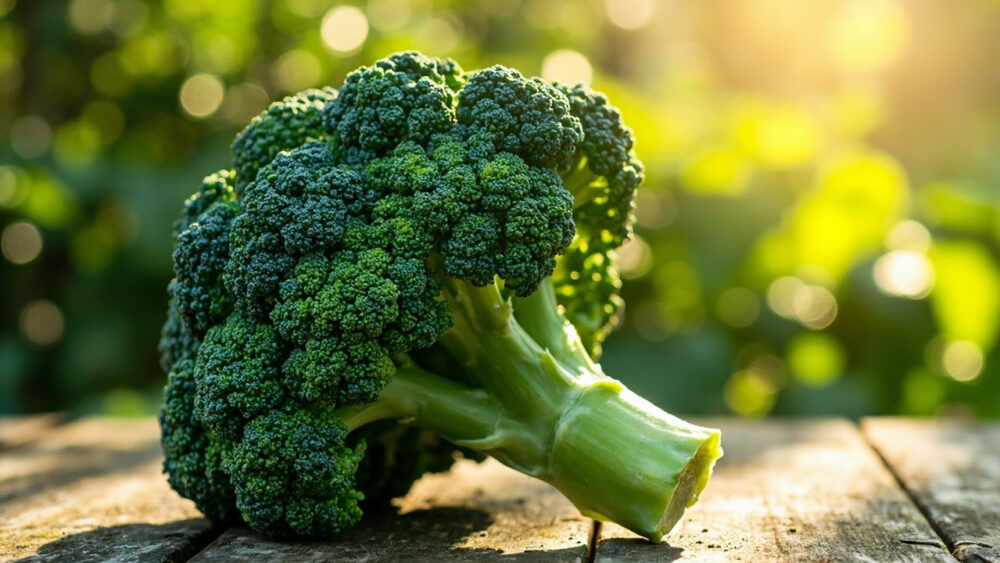
Yes, you can freeze broccoli, and it holds up better than almost any vegetable in the freezer as long as you blanch it first. Skip the blanching step and you will end up with grayish, bitter florets in a few weeks instead of bright green ones that last most of a year. That one step is the difference between a freezer stash you actually use and a bag you quietly toss in August.
Here is where most people go wrong, though, and it is not the blanching itself. It is what happens right after, in the sixty seconds nobody thinks matter.
There is also a second mistake buried in the cutting board step, one that ruins texture on thawing even when the blanching was perfect. And you are probably about to wonder how long this stuff is actually good for once it is in there, because “forever” is not a real answer. Stick around for the Broccoli at a Glance card at the bottom, it is built to save to your phone before you start.
The Right Way to Freeze Broccoli, Step by Step
Cut the head into florets about 1 to 1.5 inches across, uniform size matters more than you would think. Wash them in cool water, no soap, just a rinse and a shake dry in a colander.
Bring a large pot of water to a full rolling boil. Drop the florets in and blanch for exactly 3 minutes, no longer.
Pull them immediately and plunge into an ice bath for the same amount of time, 3 minutes, to stop the cooking dead.
Drain well and pat dry with a towel. Spread florets on a baking sheet in a single layer and freeze uncovered for 1 to 2 hours before bagging.
That freeze-first step is the one almost everyone skips, and it is exactly what saves your batch from turning into one solid green brick.
Why the Ice Bath Timing Is the Real Mistake, Not the Blanching
Everyone assumes the danger is over-blanching, so they undercook it out of nerves. That guess is backwards.
Under-blanching is actually the bigger problem because it leaves enzymes active, and those enzymes keep breaking down flavor and color in the freezer even at 0°F. The florets look fine going in and taste flat and sulfurous coming out.
The real fix is matching your ice bath time to your blanch time, minute for minute. If you boiled for 3 minutes, that pot needs 3 full minutes in ice water, not a quick dunk.
Skipping or shortcutting the ice bath is what actually overcooks the broccoli, since residual heat keeps working while it sits.
Get that balance right and the next question is simply how long you can trust what is sitting in your freezer.
How Long Broccoli Actually Keeps, Fresh and Frozen
Fresh broccoli on the counter lasts maybe a day before it starts going soft and yellowing at the crown. In the fridge, unwashed and in a loose bag, expect 5 to 7 days of good quality.
Blanched and properly frozen broccoli holds excellent quality for 10 to 12 months at 0°F. It stays technically safe well beyond that, but flavor and texture start fading past a year.
Broccoli you freeze raw, without blanching, is only good for 2 to 3 months before it turns bitter and rubbery, and that is the trade-off for skipping a step that takes six minutes total.
None of that shelf life means anything if the broccoli was already tired when you froze it, so the prep before freezing matters just as much as the method.
Prep That Makes or Breaks the Batch
Start with fresh, tight heads, dark green with no yellowing and florets pressed close together. Broccoli that is already going soft or flowering yellow will freeze poorly no matter how well you blanch it.
Cut florets to a consistent size, because uneven pieces blanch unevenly. A tiny piece can overcook in the same 3 minutes a chunky piece barely gets warm.
Dry thoroughly after the ice bath. Wet florets clump into ice chunks in the bag, and that extra moisture is what causes freezer burn on the surface pieces.
Use freezer bags, not regular storage bags, and press out as much air as you can before sealing.
Do all of that right and there is still one honest way to check if a batch has gone bad later.
The Signs Your Frozen Broccoli Has Turned
Freezer burn shows up as pale, dry, leathery patches on the florets, usually on whatever touched the bag surface. It is not dangerous, it just tastes flat and turns mushy when cooked.
A sour or musty smell right when you open the bag means something went wrong before freezing, most likely under-blanching or broccoli that was already past its prime.
Excess ice crystals inside the bag mean moisture wasn’t dried off properly or the bag wasn’t sealed tight, and that batch will be watery when cooked but is still safe to eat.
If you are ever unsure whether something in your freezer has actually spoiled versus just freezer-burned, when in doubt, toss it rather than guess.
Most of these problems trace back to a short list of avoidable mistakes, so let’s name them plainly.
The Mistakes That Actually Ruin a Batch
- Skipping the blanch entirely: raw-frozen broccoli turns bitter and loses color fast, often within weeks.
- Blanching too long: anything past 3 to 4 minutes starts precooking the broccoli, so it turns mushy the moment you reheat it.
- Skipping or rushing the ice bath: residual heat keeps cooking the florets from the inside even after you drain them.
- Bagging while still warm or wet: this is the single biggest cause of clumped, freezer-burned bags.
- Overpacking bags: too much broccoli in one bag freezes slowly and unevenly, giving you soft spots.
Fix those five things and your broccoli will come out of the freezer tasting close to fresh, which brings us to the part worth saving.
Broccoli at a Glance
- Best method: blanch 3 minutes in boiling water, then ice bath 3 minutes before freezing.
- Prep: cut into uniform 1 to 1.5 inch florets, wash and dry thoroughly before blanching.
- Freeze technique: flash-freeze on a tray 1 to 2 hours before bagging to prevent clumping.
- Fresh, unwashed, in fridge: good for 5 to 7 days.
- Frozen and blanched: best quality for 10 to 12 months at 0°F.
- Frozen without blanching: only 2 to 3 months before bitterness and texture loss.
- Signs it’s turned: pale leathery patches, sour smell on opening, heavy ice crystals inside the bag.
Blanch it right, cool it fully, dry it before bagging. Do those three things and the freezer will do the rest.