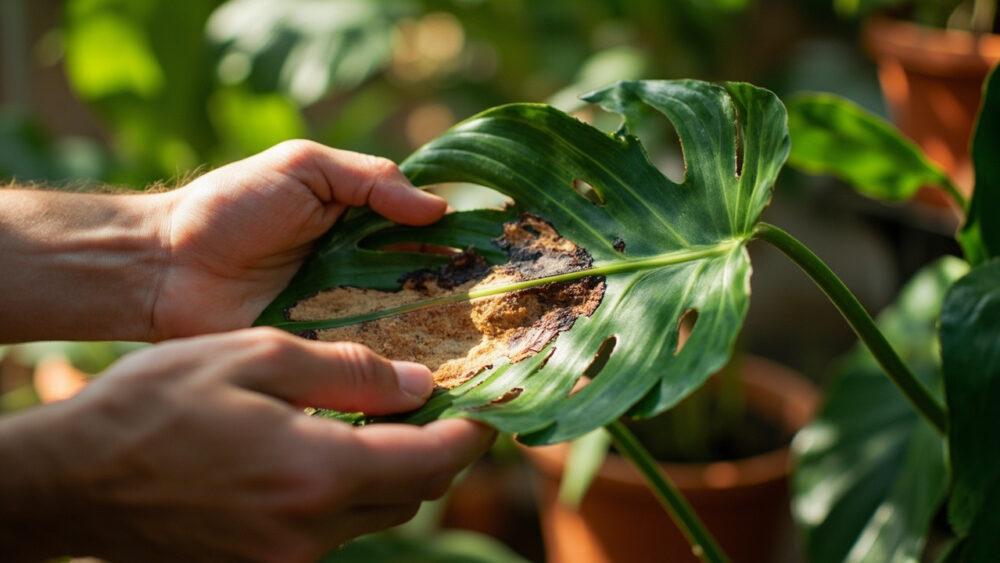
Most monstera brown tips come from low humidity or inconsistent watering, not from too much light or a nutrient problem like most people assume first. The fix in that case is boring but effective: water more consistently and get the humidity above 40 percent. But that is only the most common cause, not the only one, and giving your plant the wrong fix wastes weeks it does not have.
There is a detail on the leaf itself that tells you which cause you are actually dealing with, and most people never look for it. Salt buildup, underwatering, low humidity, and even normal aging all leave slightly different signatures on the tip and the edge, once you know where to look.
I will also give you the honest recovery outlook, because a brown tip itself never turns green again, and that surprises people every time. Scroll to the bottom and you will find a two-minute diagnosis checklist you can save and run right at the plant.
Why Monstera Leaves Get Brown Tips
Low Humidity
Monsteras come from humid tropical understories, and most homes run drier than that, especially with heating or air conditioning on.
Confirm it: the brown is concentrated right at the leaf tip and along the thin margin, crispy and papery to the touch, and it shows up worse in winter or in a dry room.
Fix it by grouping plants together, running a humidifier nearby, or moving the pot away from heat vents and drafty windows. A pebble tray helps a little but a humidifier actually moves the number.
That crispy-tip look is common, but a few other causes fake it almost perfectly.
Inconsistent Watering
Letting the soil go bone dry between waterings, then drenching it, stresses the roots and shows up as tip burn a few days later.
Confirm it: stick a finger two inches into the soil. If it is dry all the way down and has been for days, or if you can not remember your last watering schedule, this is likely it.
Fix it with a consistent rhythm: water thoroughly when the top two inches are dry, let it drain completely, and do not let the pot sit dry for a week and then panic-water it.
If your watering habits are solid, the next suspect is what is in the water itself.
Salt and Mineral Buildup
Tap water, fertilizer, or both leave mineral salts in the soil that build up over months and burn root tips and leaf tips alike.
Confirm it: check for a white or crusty film on the soil surface or around the drainage holes, and look for pale or yellowish rings around the brown tip itself, not just plain crisping.
Fix it by flushing the pot with plain water, roughly triple the pot’s volume, letting it run all the way through and out the drainage holes. Do this every few months and cut back to half-strength fertilizer.
If there is no crust and no fertilizer history, look at how much you have been feeding it instead.
Over-Fertilizing
More fertilizer does not mean more growth, it means more salt concentration in the soil, and monsteras are not heavy feeders.
Confirm it: you have been feeding on a strict schedule, feeding at full strength, or feeding through winter when the plant is not actively growing, and new growth is smaller or tip-burned right as it unfurls.
Fix it by cutting fertilizer to half strength, feeding only during active growth in spring and summer, and flushing the soil once if buildup is visible.
If feeding habits check out fine, the age of the leaf itself might explain what you are seeing.
Normal Aging or Old Damage
Older, lower leaves naturally brown and die back over time, and a leaf that got physically bumped, scraped, or sunburned weeks ago will show a brown patch that has nothing to do with current care.
Confirm it: the brown is on the oldest leaf on the plant, or it is an isolated spot rather than a tip pattern, and the rest of the plant looks healthy and is still pushing new growth.
Fix it by leaving it alone or trimming the dead portion for looks. This one is not a care problem to solve.
Rarer causes exist too, and they are worth ruling out before you assume you are stuck.
Root Damage from Overwatering or a Cramped Pot
Constantly soggy soil suffocates roots, and roots that can not absorb water properly cause the same tip burn as underwatering, which confuses a lot of people.
Confirm it: the soil feels wet or swampy days after watering, the pot has no drainage hole, or you see brown tips alongside yellowing lower leaves and a sour smell from the soil.
Fix it by checking the roots. Mushy, brown, or black roots mean root rot and need trimming with clean shears and a switch to fresh, well-draining soil. Firm white roots mean the plant is just sitting too wet and needs a longer dry-out between waterings.
Once you have ruled these out individually, the fastest way to nail it down is comparing them side by side.
How to Tell the Causes Apart
Where the browning starts on the plant matters more than how bad it looks.
- Only the newest leaf, tip burned as it unfurls: points to over-fertilizing or salt buildup.
- Every leaf, tips only, crispy and papery: points to low humidity.
- Random leaves, uneven timing, soil swinging dry to soaked: points to inconsistent watering.
- Oldest leaves only, rest of the plant fine: normal aging, not a problem.
- Brown tips plus yellow leaves plus soggy soil: root trouble, check the roots directly.
Once you know which pattern you have, the next question is what happens to that leaf now.
Will It Recover?
The brown part itself never turns green again. That tissue is dead, and no amount of fertilizer, water, or pep talk brings it back. What you are really asking is whether the plant recovers, and that answer depends on the cause.
Humidity and watering issues resolve within a few weeks once you fix the routine. New leaves come in clean, and you can trim the old brown tips off with clean scissors purely for looks.
Salt buildup and over-fertilizing recover after a good flush and a lighter feeding schedule, usually showing improvement in the next one or two leaves that unfurl.
Root rot is the honest exception. Mild cases recover after trimming and a soil change, but a plant with mostly black, mushy roots and collapsing leaves is fighting a battle it may lose, and sometimes the kindest move is taking a healthy cutting and starting fresh rather than nursing a dying root system for months.
Knowing the outlook is one thing, but avoiding a repeat is what actually saves you time.
How to Keep It From Happening Again
Consistency beats perfection with monsteras. Water on a check-the-soil schedule rather than a calendar, and keep humidity above 40 percent if your home runs dry.
Flush the pot with plain water every couple of months to prevent salt buildup, and feed at half strength only during spring and summer.
Use a pot with drainage holes and well-draining soil, and let the top couple inches dry before watering again.
Keep the plant a few feet from heating vents, cold drafts, and direct hot afternoon sun through glass.
Get those habits steady and brown tips become rare instead of routine, but if you are standing there right now trying to decide which cause is yours, run the checklist below.
Diagnosis Checklist
- Check which leaves are affected: if only the newest leaf is tip burned, suspect fertilizer or salt buildup first.
- Touch the brown area: if it is dry, crispy, and papery, and every leaf on the plant shows the same tip pattern, suspect low humidity.
- Check the soil two inches down: if it is bone dry and watering has been irregular, suspect inconsistent watering.
- Look at the soil surface and drainage holes: if you see a white or crusty film, flush the pot with plain water, roughly three times the pot’s volume.
- Review your fertilizer routine: if you are feeding at full strength or feeding through winter, cut to half strength and only feed in active growing months.
- Check if the affected leaf is the oldest one on the plant: if so, and the rest of the plant looks healthy, this is normal aging and needs no fix.
- Smell and feel the soil: if it is soggy days after watering or smells sour, unpot the plant and inspect the roots.
- Inspect the roots directly: firm and white means ease up on watering, mushy and black means trim rot with clean shears and repot in fresh soil.
- Trim any fully brown tips with clean scissors for appearance, since that tissue will not turn green again regardless of cause.
- Watch the next new leaf that unfurls: a clean, tip-burn-free leaf confirms you fixed the right cause.
Brown tips look alarming but they are rarely fatal, and most monsteras bounce back within a few new leaves once the real cause is corrected.
Fix the habit behind it, not just the leaf, and this stops being a recurring problem.