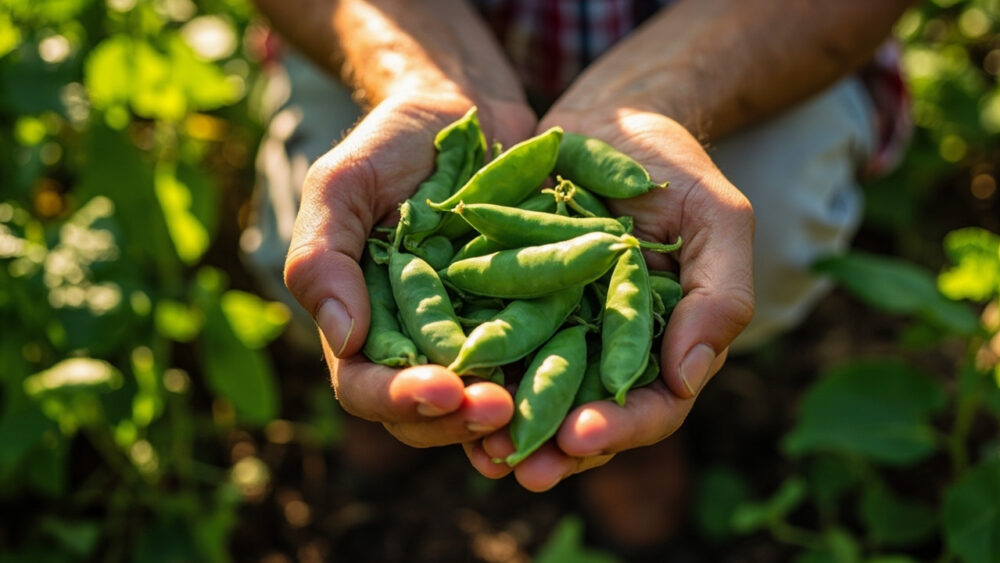
The right way to store snap peas is unwashed and dry in a perforated bag or open container in the crisper drawer, where they’ll hold their snap for about 5 to 7 days. Do not wash them until you’re ready to eat or cook them. Moisture sitting on the pod is what turns crisp peas into slimy ones by day three.
That’s the fast answer, but there’s more worth knowing before you toss that bag in the fridge and walk away. Most people make one packaging mistake that fogs up the bag and speeds up rot, there’s a texture change that fools people into thinking peas are still fine when they’ve actually turned, and freezing them raw is a different mistake entirely, one that costs you the whole point of a snap pea. Stick around for the “Snap Peas at a Glance” card at the bottom, it’s the version worth saving to your phone before you forget any of this in the produce aisle next week.
The Best Way to Store Fresh Snap Peas
Snap peas keep longest when they go into the fridge dry, unwashed, and loosely enclosed. Pat off any field dirt with a dry towel if needed, but skip the rinse. Load the pods into a perforated plastic bag, a partially open zip bag, or a container lined with a paper towel to catch excess humidity.
Set them in the crisper drawer on the higher-humidity setting if your fridge has one. Snap peas want cold and slightly humid air, not a dry deep-freeze shelf near the back where frost-free cycling will dehydrate them fast.
Don’t cram them. Airflow around the pods matters almost as much as the bag itself.
Get the packaging right and the clock on freshness slows down considerably.
How Long Snap Peas Actually Keep, Method by Method
On the counter at room temperature, snap peas are living on borrowed time. They’ll go soft and starchy within a day or two, especially in a warm kitchen. Counter storage is really only for the few hours between picking or buying and getting them into the fridge.
In the fridge, unwashed and properly bagged, expect 5 to 7 days of good snap. Some batches, especially freshly picked ones with no field heat still in them, will stretch to 9 or 10 days before they start softening.
In the freezer, after blanching, snap peas hold their quality for 8 to 12 months. Frozen raw and unblanched, they’ll last just as long in terms of safety, but the texture turns rubbery and the flavor flattens within a couple months, which defeats the reason you grew or bought snap peas in the first place.
The method you pick should match how soon you’ll actually eat them.
Should You Wash or Blanch Before Storing? Here’s the Real Rule
If you assumed washing peas before storage keeps them cleaner and therefore fresher, that instinct is backwards for the fridge. Water left on the pod surface accelerates decay and invites mold, especially in a sealed bag. Wash only right before you cook or eat, not before you store.
Blanching is a different question, and it only matters if you’re freezing. Drop the pods in boiling water for 1.5 to 2 minutes, then straight into ice water for the same amount of time to stop the cooking.
This step locks in color and crunch and deactivates the enzymes that would otherwise turn your frozen peas mushy and gray over time. Skip it for fridge storage entirely, it’s not needed and it will only soften pods you plan to eat fresh within the week.
Dry the blanched peas thoroughly before bagging for the freezer, wet peas clump into a single frozen brick.
Get this one step wrong and you won’t know it until you thaw the bag months from now.
The Sign Everyone Misses: When Snap Peas Have Actually Turned
A lot of people think a snap pea is still good as long as it’s still green and firm-ish, but that’s not the tell. The real signal is the snap itself. Fresh pods break with a clean, crisp crack. Once that crack turns into a bend, a fold, or a rubbery give, the pea is past its peak even if the color still looks fine.
Other honest signs of turning: pods that feel slick or tacky to the touch, any sour or off smell when you open the bag, visible white mold spots (usually starting at the stem end), or peas that have puffed and gone dull, losing their bright waxy sheen.
Soft, wrinkled pods with pale, starchy-looking seeds inside are edible in a pinch if there’s no smell or sliminess, but the sugar has already started converting to starch and they won’t snap right in a stir-fry.
When in doubt, trust your nose and the sound of the break over the color of the pod.
The Mistakes That Ruin a Batch
Most ruined snap peas trace back to one of a handful of habits, and they’re easy to fix once you know to watch for them.
- Washing before storage: leaves surface moisture that speeds rot and mold inside a sealed bag.
- Sealing them airtight with no ventilation: traps humidity from the pods themselves and causes the same slimy breakdown as washing them wet.
- Storing near ethylene-producing fruit: apples, bananas, and pears speed up softening and yellowing in nearby vegetables, snap peas included.
- Freezing without blanching: safe to eat, but the texture goes rubbery and the flavor fades fast, usually within 8 to 10 weeks.
- Letting them sit at room temperature after harvest or purchase: even a few warm hours accelerates sugar loss, which is what makes a snap pea taste sweet in the first place.
Fix these five habits and you’ll get more usable days out of every batch you bring home.
Snap Peas at a Glance
- Best fridge method: store dry and unwashed in a perforated bag or vented container in the crisper drawer.
- Fridge shelf life: about 5 to 7 days, up to 9 or 10 days if very fresh when stored.
- Counter shelf life: a few hours only, not a real storage option.
- Freezer method: blanch 1.5 to 2 minutes, ice bath the same amount of time, dry fully, then freeze.
- Freezer shelf life: 8 to 12 months when blanched first, texture drops fast within weeks if frozen raw.
- Wash timing: never before storage, only right before cooking or eating.
- Signs they’ve turned: rubbery bend instead of a crisp snap, tacky feel, sour smell, or white mold at the stem end.
The whole game with snap peas is speed and dryness: get them cold fast, keep them dry, and eat them within the week.
Everything else, the bag type, the blanching, the drawer setting, is just detail in service of those two facts.