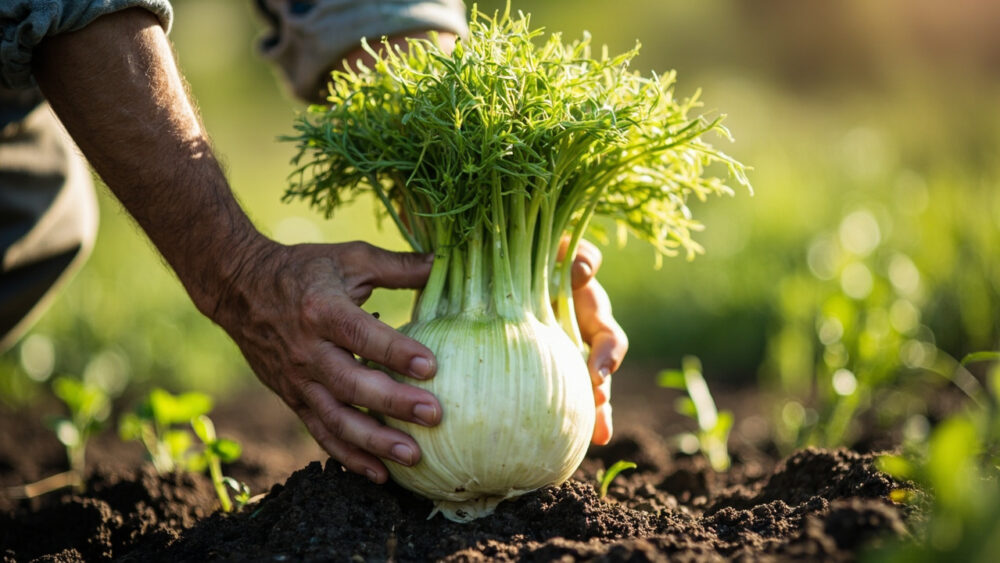
The answer to when to harvest fennel depends on which part you’re growing it for. Bulb fennel is ready when the base swells to the size of a fist, roughly 2 to 3 inches across, usually 60 to 90 days after transplanting. Fronds and seeds run on their own separate clocks, and mixing those up is where most gardeners get into trouble.
Here’s the part nobody tells you: fennel bulbs do not keep getting better if you leave them. There’s a narrow window, maybe 5 to 7 days, where the bulb is perfect, and then it starts to bolt, split, or turn woody and fibrous almost overnight. Miss it and you’ve grown yourself a very fragrant compost contribution.
Below, I’ll walk through exactly what a ready bulb looks and feels like, why the “bigger is better” instinct actively ruins fennel, how to cut it out of the ground without wrecking the plant’s chance at a second flush, and what to do with seeds and fronds if you want to use every part of the plant. Save the harvest-timing card at the bottom to your phone before you head out to the garden bed.
The Real Signs a Fennel Bulb Is Ready
Forget counting days as your only guide. Days-to-maturity numbers on seed packets assume ideal conditions, and fennel rarely gets ideal conditions two years running.
Size and firmness
A ready bulb is firm when you squeeze it gently, with no give in the center, and about the diameter of a tennis ball or a little smaller. Softness at the core means it’s already past peak or bolting from the inside.
The layers are tight
Look at where the bulb meets the soil. The outer layers should be snug against each other, not splayed open like a loose artichoke. Splitting layers is fennel’s way of telling you it’s stressed and racing to flower.
Size alone lies to you more than any other signal.
Why Bigger Is Not Better (The Mistake That Ruins Most Attempts)
If you assumed a bigger bulb means a better harvest, that assumption is exactly what turns tender fennel into stringy, bitter fennel. Once a bulb passes its peak, it doesn’t just sit there waiting for you. It starts pushing energy upward into a flower stalk, and the bulb itself goes woody and hollow-ish as a result.
This happens fastest in hot weather. Fennel is a cool-season crop at heart, and a stretch of days above 80°F pushes it to bolt early no matter what the calendar says. A bulb that would have taken another two weeks to size up in cool spring weather can bolt in three or four days once real heat sets in.
So check plants every couple of days once bulbs start swelling, not once a week.
The Timing Window, and What Early or Late Really Costs You
Bulb fennel typically hits harvest size 60 to 90 days after transplanting, or 90 to 115 days from seed, depending on variety and how much heat and cold it’s dealt with along the way. Spring-planted fennel usually beats the summer heat if you get it in the ground 4 to 6 weeks before your last expected frost, since it tolerates light frost fine as a young plant.
Harvest early (bulb under 2 inches) and you get a fennel that’s mostly flavor concentrated in a small, almost celery-like base. It’s usable, just not the substantial bulb you were picturing for roasting.
Harvest late and the honest answer is there’s no fixing it. A bolted, split, woody bulb will not un-bolt. You can still use the flavor in stock, but the texture people actually want for roasting or shaving raw is gone for good.
That’s the timing story for bulbs, but fronds and seeds don’t follow the same rules at all.
How to Harvest Fennel Bulbs Without Killing the Plant
Cutting fennel wrong either wastes half the bulb or takes out the roots you needed for a second harvest. Here’s the clean way to do it.
- Water the day before if the soil is dry. Damp soil releases the bulb easier and tears fewer roots.
- Cut, don’t pull. Use a sharp knife or garden shears at the base, right where the bulb meets the roots, about half an inch below the soil line.
- Leave the root in the ground if you want a chance at regrowth. Many varieties will send up a smaller second flush of fronds, sometimes a mini bulb, from the leftover root base.
- Trim the fronds to about an inch above the bulb right away, so the cut bulb isn’t wasting moisture trying to feed leaves it no longer needs.
Pulling instead of cutting is the fast way to lose that second-flush chance entirely.
What to Do With Fennel in the First Hour After Cutting
Fennel bulbs lose crispness fast once cut, faster than most root vegetables. Get them out of the sun immediately.
Rinse off garden soil under cool water and pat dry. Don’t wash the fronds you’re saving separately until you’re ready to use them, since wet herbs mold in storage.
Wrap the bulb loosely in a damp paper towel, then a plastic bag, and refrigerate. Stored this way it holds good texture for 1 to 2 weeks, sometimes longer if your fridge runs cold and humid.
Fronds are a different story, and they’re the part most gardeners throw away by mistake.
Fronds and Seeds: The Parts of the Plant Most People Waste
Every fennel plant gives you three harvests if you take them at the right time, and most gardeners only ever use one.
Fronds
The feathery green tops taste like a milder, grassier version of the bulb. Snip them anytime the plant has enough foliage to spare, even weeks before the bulb is ready. They don’t keep well fresh, so use them within a couple of days or freeze them chopped in a little water or oil.
Seeds
If you let a plant bolt and flower on purpose, or missed a bulb harvest, you get another shot: fennel seed. Wait until the flower heads turn brown and dry on the plant, then cut the whole head and finish drying it upside down in a paper bag for a week or two before shaking the seeds loose.
Timed right, one fennel plant can feed you fronds in spring, a bulb in early summer, and seed by late summer.
Keeping the Harvest Coming
Fennel doesn’t regrow a full bulb reliably after cutting, so for a steady bulb supply you’re better off staggering plantings than counting on regrowth. Sow a new round every 3 to 4 weeks through the cool part of your season, spacing plants 8 to 12 inches apart in rows 18 to 24 inches apart, in soil that’s loose and rich to about 8 inches deep.
In hot-summer climates, plan a spring round and a second fall round rather than trying to push fennel through midsummer heat, since that’s exactly the stretch where bolting runs fastest.
Get the spacing and succession right and you’ll have bulbs ready in overlapping waves instead of one glut followed by nothing.
Fennel at a Glance
- When to plant: 4 to 6 weeks before last frost for spring bulbs, or in late summer for a fall crop in hot-summer climates.
- Days to bulb harvest: 60 to 90 days from transplant, 90 to 115 days from seed, faster in cool weather and slower in cold snaps.
- Ready size: bulb about 2 to 3 inches across, firm with no soft center, layers tight against each other.
- Spacing: 8 to 12 inches between plants, 18 to 24 inches between rows.
- How to cut: slice at the base half an inch below soil level, leave the roots in place for a chance at regrowth.
- After harvest: trim fronds, rinse, refrigerate wrapped and damp for 1 to 2 weeks.
- Bonus harvests: snip fronds anytime, collect seed from dried brown flower heads in late summer.
Check bulbs every couple of days once they start swelling, and cut on the firm, tight-layered side rather than waiting for bigger.
That one habit is the difference between tender fennel and a woody, split bulb you’re just composting.