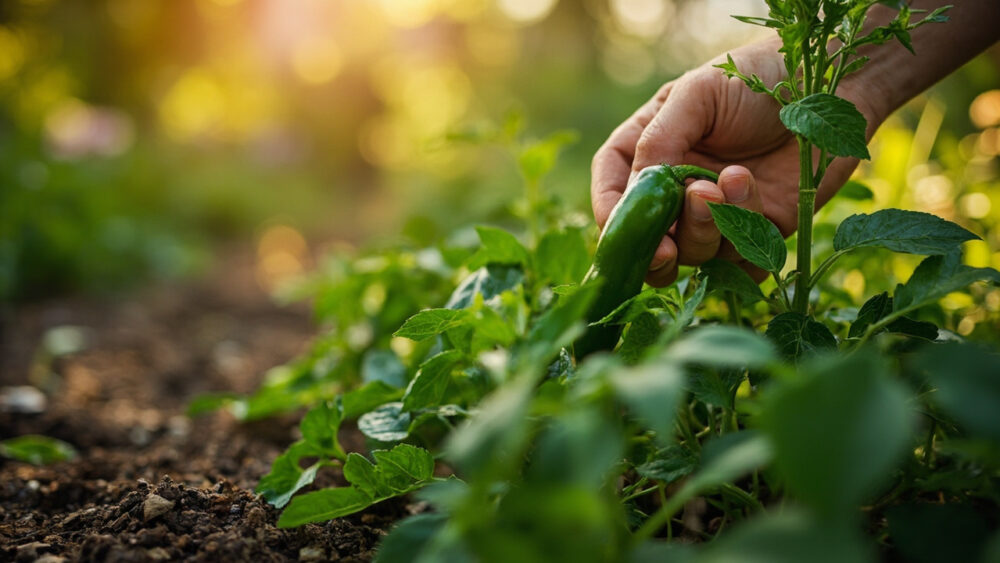
Here’s how to grow jalapenos that actually produce: start seeds indoors 8 to 10 weeks before your last frost, transplant them out only after nights stay above 55°F, give each plant 18 to 24 inches of space in full sun, and keep the soil evenly moist but never soggy. If you already know how to grow jalapenos in general terms and just planted a wimpy nursery start, the real fix is usually heat and patience, not fertilizer.
Most first-time pepper growers make the same mistake, and it happens weeks before the plant ever shows a symptom. There’s also a sign on the plant itself that gets misread constantly, one that makes people panic and overwater right when they should be doing the opposite.
And the question everyone asks eventually, when do the peppers actually turn red, has an honest answer that surprises people who assumed jalapenos had to be red to be ready. Stick around, because the full save-and-screenshot Jalapenos at a Glance card is waiting at the bottom once you’ve got the whole picture.
When to Plant Jalapenos
Jalapenos are slow starters and heat lovers, so timing matters more than almost any other decision you’ll make. Start seeds indoors 8 to 10 weeks before your average last frost date, since they can take 10 to 21 days just to germinate at cool temperatures.
Don’t move transplants outside until nighttime lows hold above 55°F and soil temperature is at least 65°F, ideally closer to 70°F. Peppers planted into cold soil just sit there sulking, sometimes for a month, and rarely catch up to plants set out two weeks later into warm ground.
In zones 9 and up you can often direct sow or transplant earlier and get a second flush late in the season. In zones 6 and colder, transplants are basically mandatory if you want a real harvest before fall.
Getting the timing right sets up everything else, but the spot you choose matters just as much.
Choosing the Spot and Prepping the Soil
Jalapenos want full suna minimum of 6 hours of direct light daily, though 8 or more produces noticeably heavier yields. Pick a bed that doesn’t hold standing water after rain, since soggy roots are one of the fastest ways to lose a pepper plant.
Work in 2 to 3 inches of compost before planting, and aim for soil that drains well but holds moisture like a wrung-out sponge. A pH between 6.0 and 6.8 suits them fine, and most garden soils land there without amending.
If you’re growing in containers, use at least a 3 to 5 gallon pot per plant with drainage holes. Smaller pots dry out too fast in midsummer heat and stunt growth permanently.
Once the bed or pot is ready, it’s time to actually get the plants in the ground.
Planting Jalapenos Step by Step
1. Harden off transplants first
Give indoor-grown seedlings 5 to 7 days outside in a sheltered, partly shaded spot before planting them in full sun. Skipping this step causes sunscald and leaf drop that can set plants back two weeks.
2. Dig the hole and set the depth
Dig a hole slightly deeper than the root ball, and bury the stem up to the first set of true leaves. Like tomatoes, jalapenos will root along the buried stem, building a sturdier plant.
3. Space them properly
Set plants 18 to 24 inches apart in rows 24 to 36 inches apart. Crowded plants compete for light and airflow, which invites fungal problems later in the season.
4. Water in immediately
Soak thoroughly right after transplanting to settle soil around the roots and eliminate air pockets. A diluted starter dose of balanced fertilizer at this stage helps but isn’t required if your soil is already decent.
Getting plants in the ground is the easy part, keeping them alive and productive through summer heat is where most people lose the thread.
Watering and Feeding Through the Season
Jalapenos want consistent moisture, roughly 1 to 1.5 inches of water per week between rain and irrigation. The mistake that ruins most attempts isn’t underwatering, it’s inconsistent watering, swinging from bone dry to drenched and back.
That swing is what causes blossom end rot and split fruit, not a calcium deficiency like people assume. Deep, even watering two to three times a week beats a daily light sprinkle every time.
Feed lightly. A balanced fertilizer at planting and again at first flower is plenty; heavy nitrogen feeding late in the season pushes leafy growth at the expense of peppers.
Mulch with 2 to 3 inches of straw or shredded leaves to even out soil moisture and cut down on watering frequency.
Here’s the sign that trips people up next, and it happens right around the time the first flowers show up.
The Flower Drop Everyone Panics Over
When early blossoms fall off without setting fruit, most gardeners assume the plant is sick or underfed and start dumping fertilizer on it. That guess is almost always wrong, and it can make things worse.
Blossom drop is usually caused by temperature stress, either nights consistently above 75°F or below 55°F, or by a lack of pollinators. The real fix is patience and, if pollinators are scarce, a gentle shake of the flowering stems to help pollen move.
Once nighttime temperatures settle into a moderate range, fruit set typically picks up on its own within a couple weeks.
Blossom drop isn’t the only thing that can knock a pepper plant off track, though.
Problems to Watch For
A few issues show up on jalapenos more than anything else, and catching them early saves the plant.
- Aphids and spider mites: look for curled leaves or fine webbing on the undersides; a strong water spray or insecticidal soap applied per the label usually handles light infestations.
- Blossom end rot: shows up as a sunken brown patch on fruit bottoms, caused by inconsistent watering rather than a soil deficiency in most home gardens.
- Bacterial leaf spot: small dark, water-soaked spots on leaves, worsened by overhead watering and crowding. Improve airflow and avoid wetting foliage.
- Sunscald: white or papery patches on fruit exposed to intense afternoon sun after a plant loses leaves. Keep the plant well-leafed and avoid over-pruning.
- Blossom drop: covered above, usually temperature or pollination related, not a nutrient problem.
If a plant is struggling badly with disease late in the season, sometimes the honest move is to pull it before it infects neighbors, not nurse it along for a marginal harvest.
Assuming your plants dodge the worst of it, the last big question is always about timing the harvest.
When and How to Harvest Jalapenos
Jalapenos are ready to pick 65 to 80 days after transplanting, once fruits reach 2.5 to 3.5 inches long and feel firm with glossy, taut skin. You do not need to wait for red.
Here’s the part people misread: green jalapenos are simply less mature jalapenos, not a different, milder variety. Left on the plant longer, they turn red, sweeten slightly, and get noticeably hotter as capsaicin builds with time.
Many gardeners actually watch for corkingthe fine white surface striations that appear on the skin, as the real signal of peak flavor and heat, regardless of color. A jalapeno with heavy corking has more character than a smooth, young green one.
Snip fruit with pruning shears or scissors rather than pulling, since yanking can snap branches. Regular picking, every 3 to 5 days at peak season, keeps the plant producing new flowers instead of pouring energy into ripening existing fruit.
A well-tended plant will keep producing until the first fall frost, and that steady rhythm of picking is exactly what a healthy jalapeno plant should look like all summer.
Jalapenos at a Glance
- When to plant: start seeds indoors 8 to 10 weeks before last frost, transplant outside once nights stay above 55°F and soil hits 65 to 70°F.
- Spacing and depth: set plants 18 to 24 inches apart, burying the stem up to the first true leaves.
- Sunlight needed: full sun, at least 6 hours daily, 8 or more for best yields.
- Watering: 1 to 1.5 inches per week, deep and even rather than daily light sprinkles.
- Feeding: light balanced fertilizer at planting and again at first bloom, avoid heavy late-season nitrogen.
- Harvest window: 65 to 80 days after transplant, fruit 2.5 to 3.5 inches, firm and glossy, corking means peak flavor.
- Biggest threat: inconsistent watering, which causes blossom end rot and blossom drop far more often than pests do.
Keep the watering steady and the soil warm before you ever transplant, and jalapenos mostly grow themselves.
Everything else on this page is just cleanup for when one of those two things slips.