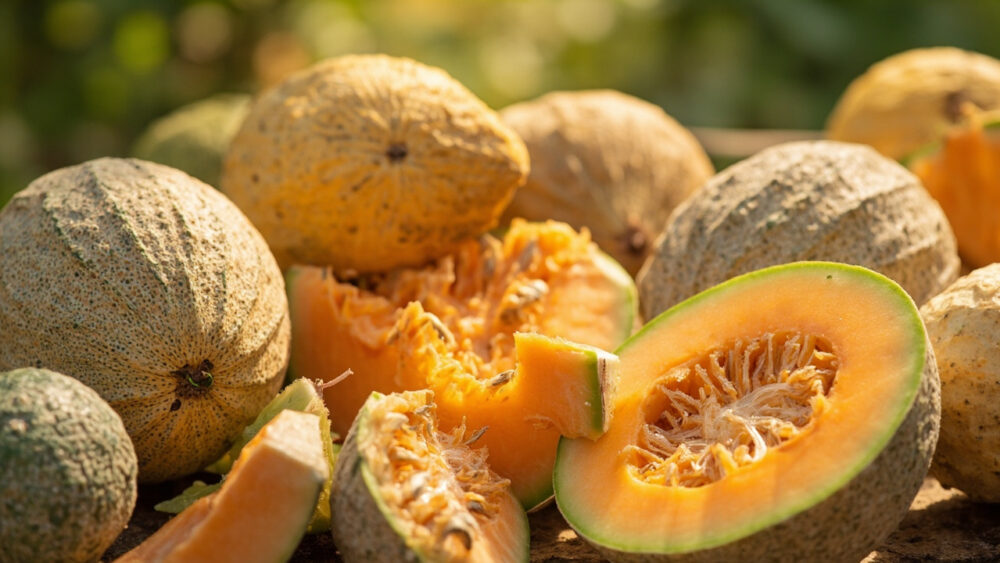
The fastest way to narrow down cantaloupe varieties is figuring out whether you want a true muskmelon for slicing fresh or a smaller, faster type built for short seasons and containers. That one distinction sorts almost this entire list before you even look at flavor. Below you’ll find 15 real picks across those camps, and I’ve used the keyword cantaloupe varieties loosely to mean the whole netted-melon family, since that’s how most gardeners actually shop for seed.
Most beginners grab whatever’s labeled “cantaloupe” at the garden center without knowing that’s usually a modern hybrid bred for shipping firmness, not flavor at the vine. Experienced growers quietly go a different direction, and you’ll see why once you hit the heirloom section. There’s also a widely misread ripeness sign that costs people a whole harvest of mealy melons, and I’ll straighten that out along the way.
Number 13 on this list is the one most gardeners get completely wrong, picking it for looks and ending up disappointed at the table. The last few entries, plus the actual method for choosing between all of these, are waiting at the bottom, so keep scrolling.
Classic Slicing Cantaloupes
These are the standard vine-ripened melons most people picture when they hear the word cantaloupe.
1. Hale’s Best Jumbo
The old standard for good reason: this 1920s heirloom produces heavily netted, oval melons in 80 to 85 days with dense orange flesh and real muskmelon aroma. It’s forgiving for beginners and reliably sweet as long as it gets full sun and consistent moisture through fruit set.
2. Ambrosia
The one most people pick for the wrong reason: it’s sold everywhere as the “sweetest” cantaloupe, but its real advantage is thick, firm flesh that holds up well after cutting, not a dramatic sugar spike over other good varieties. Matures in about 86 days and needs a longer, warm season to hit its best flavor.
3. Athena
The commercial-grade choice for home gardens: Athena is the hybrid you’ve probably eaten from a grocery store, bred for uniform 5 to 6 pound melons with heavy netting and good disease tolerance. It ripens in 75 to 80 days, which makes it a solid pick in regions where summer heat arrives late.
4. Delicious 51
A workhorse for shorter growing windows: this variety produces 3 to 4 pound melons in about 80 days with tender orange flesh and strong sweetness. It’s less fussy about soil than some heirlooms, so it suits gardeners still building up their bed.
If you assumed all cantaloupes taste roughly the same, the next group will change your mind.
Heirloom and Flavor-First Varieties
This is where the flavor jumps, and it’s why experienced growers often skip the grocery-store hybrids entirely.
5. Pride of Wisconsin
The cold-tolerant heirloom worth seeking out: bred for northern short seasons, it sets fruit reliably even when nights stay cool, ripening in 85 days with dense, deeply sweet flesh. Give it full sun and don’t rush the harvest, since the flavor keeps building right up to the point the melon slips.
6. Petit Gris de Rennes
The French heirloom serious flavor chasers grow: small, deeply ribbed, gray-green fruit around a pound each, with intensely perfumed orange flesh that outclasses most modern hybrids. It’s a slower producer in 80 to 90 days and wants heat, so it struggles in cool coastal summers.
7. Charentais
The one people romanticize without knowing the tradeoff: this French classic has smooth, faintly ribbed skin instead of heavy netting, with fragrant, intensely sweet flesh in a compact 2 to 3 pound melon. It matures fast, around 75 to 80 days, but the thin skin means it’s fragile for anything beyond backyard eating.
8. Noir des Carmes
A dark-skinned heirloom that surprises people: nearly black-green rind ripening to a deep orange-fleshed melon with old-fashioned musk-melon punch. It runs 85 to 90 days and does best where nights stay warm through late summer.
The flavor-forward types ask for patience, but the next category asks for almost none.
Compact and Container-Friendly Types
If space, a short season, or a container is the limiting factor, these are the varieties that actually deliver.
9. Minnesota Midget
The go-to for small gardens and containers: vines stay compact, around 3 to 4 feet, and still produce sweet 4-inch melons in 60 to 70 days, among the fastest on this list. It’s a favorite for raised beds and even large pots on a sunny patio, though yields per plant are modest compared to full-vine varieties.
10. Tigger
A novelty with a real backyard use: small orange-and-yellow striped melons around 1 pound, more decorative than a heavy producer, ripening in about 85 days. Grow it for kids or curiosity rather than volume, since flavor is mild compared to the flavor-first heirlooms above.
11. Sugar Cube
The personal-size hybrid built for snacking: single-serving melons around 2 to 3 pounds with crisp, very sweet flesh, maturing in roughly 80 days. Vines are more manageable than standard cantaloupe, making it a reasonable trellis candidate if you’re tight on ground space.
Short-season and small-space growers are covered, but the next group solves a different problem entirely.
Disease-Resistant and High-Yield Picks
In humid climates, powdery mildew and fusarium wilt end a cantaloupe season early, and these varieties are bred to push through longer.
12. Aphrodite
A modern hybrid built for pressure-cooker climates: strong resistance to powdery mildew and fusarium wilt lets it keep producing where older varieties collapse by midseason. Melons run 5 to 6 pounds, ripening in about 78 days, with reliably sweet, firm flesh.
13. Sarah’s Choice
The one most gardeners get completely wrong: people choose it expecting a giant showpiece melon because of its reputation, then plant it too far apart and end up with fewer, oversized fruit that ripen unevenly. Grown correctly, spaced tighter and picked at the first hint of vine slip, it delivers compact 3 to 4 pound melons in 80 days with genuinely excellent sweet-tart flavor and solid mildew resistance.
14. Halona
A dependable hybrid for humid regions: bred with strong tolerance to powdery mildew, it produces heavily netted 4 to 5 pound melons in 75 to 80 days without much fuss. It’s a good pick if last year’s melons split or mildewed out before harvest.
One entry left, and it solves the problem almost everyone eventually runs into with vining melons.
The Space-Saving Trellis Option
If ground space is the real obstacle, this last pick earns its spot by growing up instead of out.
15. Honey Rock
The trellis-friendly heirloom: vines are more restrained than standard cantaloupe and take well to vertical support with slings for the fruit, freeing up ground space other varieties would sprawl across. Melons run 3 to 4 pounds, ripen in about 80 to 85 days, and have that old-time deep orange, richly sweet flesh gardeners plant this variety to get back.
How to Choose the Right One
Here’s the ripeness fact almost everyone misreads before we get to the method: a cantaloupe softening at the blossom end while the skin is still deep green is not ripe, it’s rotting from the inside. Real ripeness shows in full color change of the netting and a stem that slips free with light pressure, not a soft spot appearing early.
- Space first: standard vines need 4 to 6 feet to sprawl; if you don’t have that, choose a compact or trellis-trained type like Minnesota Midget, Sugar Cube, or Honey Rock.
- Climate second: short or cool-summer regions do best with fast, cold-tolerant varieties like Pride of Wisconsin or Delicious 51; long hot seasons can support slower heirlooms like Petit Gris de Rennes.
- Disease pressure: humid climates with a history of powdery mildew or wilt should lean toward Aphrodite, Halona, or Sarah’s Choice over untreated heirlooms.
- Purpose: decide if you’re growing for maximum flavor at the table, decoration, or reliable volume, then match to the category above instead of picking by name recognition alone.
- Care appetite: heirlooms reward attentive watering and full sun with better flavor but forgive less. Modern hybrids are more tolerant of an inconsistent season.
- Days to maturity: count backward from your average first fall frost to confirm your pick actually has time to ripen where you garden.
Pick one that matches your space and climate honestly, not the melon that looks best in a catalog photo.
Get the netting, the slip, and the timing right, and any variety on this list will earn its spot in your garden again next year.