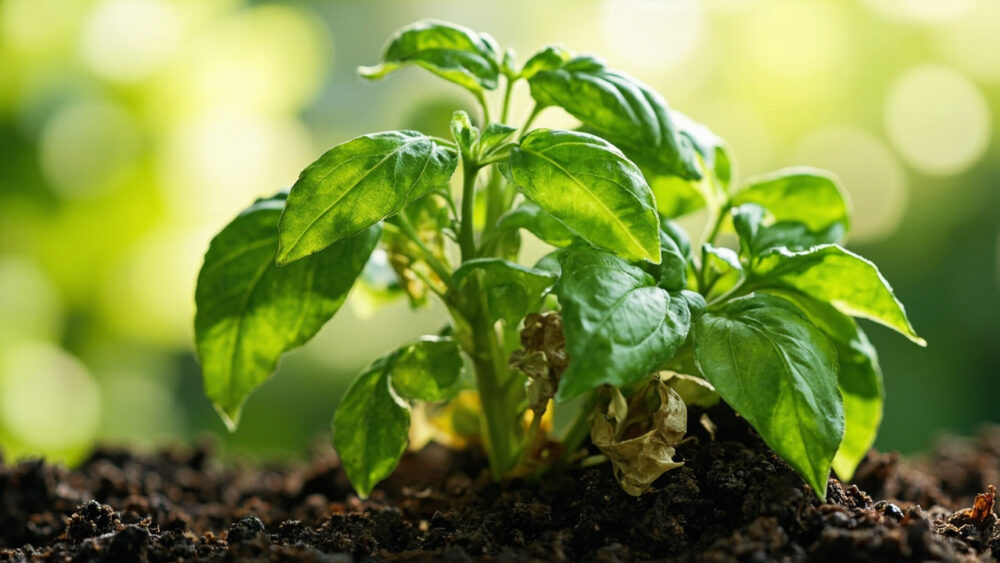
Nine times out of ten, basil wilting means the soil is either bone dry or completely waterlogged, and the fix is checking the soil an inch down with your finger before you do anything else. Dry soil wilts the whole plant evenly and fast. Soggy soil wilts it slowly while the lower leaves turn yellow and the stem gets soft near the base, which is the root rot version and a much bigger problem.
Everyone blames heat first, and heat is usually innocent. Basil droops a little in the early afternoon sun as a normal defense move and bounces back by evening, that is not the same thing as true wilting that does not recover overnight.
There is one detail on the plant, the stem itself, that tells you almost immediately which of the real causes you are dealing with. Stick around and I will show you exactly where to look, plus the honest odds of this plant pulling through, and there is a two-minute diagnosis checklist waiting at the bottom you can run right now standing at the pot.
Causes of Basil Wilting, Most to Least Likely
1. Underwatering
Confirm it: push a finger 1 to 2 inches into the soil. If it is dry and crumbly all the way down and the pot feels light for its size, this is your cause. Leaves and stems droop uniformly, the whole plant looks deflated but the color is still normal green.
Fix it by watering slowly until it runs from the drainage holes, then check again in 20 minutes. Basil usually perks back up within a few hours once the roots rehydrate.
That fast bounce-back is the good news version of wilting.
2. Overwatering and Root Rot
Confirm it: the soil is wet or muddy at 2 inches deep, the pot feels heavy, and the lower stem near the soil line feels soft or looks dark and water-soaked instead of firm and green. Lower leaves often yellow before they wilt.
This one will not fix itself with more water, obviously, but it also will not fix itself by just letting it dry out once rot has started. Pull the plant and look at the roots: white and firm means you caught it early, cut back watering and improve drainage. Brown, mushy, and foul-smelling roots mean the damage is done and you are likely starting over.
This is the cause people mistake for drought and then make worse by watering.
3. Root-Bound or Too-Small Container
Confirm it: the plant wilts within a day of watering even though you are watering regularly, and when you slide it out of the pot the roots are circling in a dense mat with little visible soil left.
Fix it by moving up to a container at least 2 to 4 inches wider in diameter, teasing a few of the circling roots loose first. A basil plant that has outgrown its pot simply cannot hold enough water between waterings no matter how often you irrigate.
Container size problems mimic underwatering almost perfectly, which is why the pot check matters.
4. Fusarium Wilt
Confirm it: wilting shows up on one side of the plant or one branch at a time, often with brown streaking visible if you slice the stem lengthwise near the base. Leaves may twist or curl before they drop, and the plant does not recover with watering changes.
This is a soil-borne fungal disease and there is no cure once it is established. Remove and discard the plant, do not compost it, and avoid planting basil in that same soil or container for a few years since the fungus persists.
It is the least common cause but the one most worth ruling out early, because every other fix on this list is wasted effort against it.
5. Transplant Shock
Confirm it: the plant was moved, repotted, or planted outside within the last few days, and the wilting is uniform with otherwise healthy-looking soil moisture.
Give it light shade for a couple of days, keep the soil evenly moist but not soaked, and resist the urge to fertilize while it is stressed. Most transplant shock resolves within 3 to 5 days on its own.
If it is not one of these five, the pattern of the wilt itself is about to narrow it down fast.
How to Tell the Causes Apart
Where the wilt starts matters more than how severe it looks. Whole-plant, even wilting points to water quantity, either too little or too much. One-sided or single-branch wilting points to fusarium.
Check which leaves go first. Root rot and rootbound stress usually hit lower, older leaves first. Fusarium and severe drought can hit newer growth first since the plant is cutting losses.
The stem itself is the tiebreaker: firm and green at the soil line rules out rot, soft or dark rules it in, and brown streaking inside a sliced stem is fusarium’s signature.
Once you know which one you have, the recovery odds are very different from cause to cause.
Will It Recover?
Underwatering has the best odds by far. Expect visible recovery within hours and full recovery within a day, unless leaves have already crisped and browned, in which case those specific leaves are gone for good even as the plant recovers overall.
Overwatering and early root rot can recover if roots are still mostly white when you check them, usually within a week of correcting drainage. Advanced rot with mushy brown roots is generally not worth saving, take healthy stem cuttings if any remain and start fresh instead.
Root-bound plants recover fully and quickly, often within a day or two of repotting, since the problem was purely mechanical.
Fusarium wilt does not recover under any circumstances and the honest move is removing the plant before it can spread through the soil to anything else you plant there.
Transplant shock resolves on its own in less than a week with basic care and no special intervention needed.
Knowing the odds is useful, but the real win is never getting here again.
How to Keep It From Happening Again
Water on a finger-check schedule, not a calendar. Basil wants soil that dries slightly at the surface between waterings but never dries out completely at root depth, which in warm weather often means checking daily.
Use pots with drainage holes, always, and a potting mix rather than garden soil in containers since garden soil compacts and holds too much water. Repot before roots fully circle the container, roughly every season for actively growing plants.
Space plants 10 to 12 inches apart with decent airflow, since crowded, humid conditions favor the fungal problems. If fusarium has shown up before, rotate basil to new soil or containers rather than reusing the same spot.
Prevention here is mostly about consistency, basil punishes both extremes equally.
Diagnosis Checklist
- Check soil moisture 1 to 2 inches down: dry and crumbly means underwatering, wet and heavy means check for rot next.
- Feel the main stem at the soil line: firm and green is good, soft or dark means root rot, move to the root check.
- Slip the plant from its pot if possible and look at the roots: white and firm is healthy, brown and mushy is advanced rot.
- Look at where wilting started: whole plant evenly points to water quantity, one side or one branch points toward fusarium.
- Slice a lower stem lengthwise if fusarium is suspected: brown internal streaking confirms it, clean white interior rules it out.
- Check the pot size versus plant size: dense circling roots with little soil visible means it is root-bound, size up the container.
- Note any recent move or repotting: wilting within days of transplant with normal soil moisture is shock, give it shade and time.
- Match your findings to the fix above and act today, since basil wilts fast but most causes correct fast too.
Basil is forgiving right up until the stem goes soft or streaks brown, so catch it while the fix is still simple.
Run the checklist once, and the next wilted basil you meet takes thirty seconds to diagnose instead of thirty minutes of guessing.