The short answer: harvest yarrow when the flower clusters are fully open and flat on top, on a dry morning after the dew burns off, cutting the stems 6 to 8 inches below the flower head. For foliage, snip individual leaves anytime the plant is established, but the flowers you want for drying and use hit their peak for only a couple of weeks each summer. Miss that window and you get weaker color, weaker scent, and a harvest that shatters before it dries.
Most people get one thing backwards right away. They wait for the flowers to look their showiest, full, rounded, almost puffy, and that is actually past peak. There is also a step almost everyone skips that determines whether your dried yarrow lasts one season or three, and a very reasonable-sounding harvest time that is actually the worst time of day to cut.
Stick around for the part most guides leave out too: how to cut yarrow so the same plant throws you a second, even a third, flush before frost. And save the Yarrow at a Glance card at the very bottom, it is built to screenshot before you walk out to the garden.
The Real Ready Signs, Not the Obvious Ones
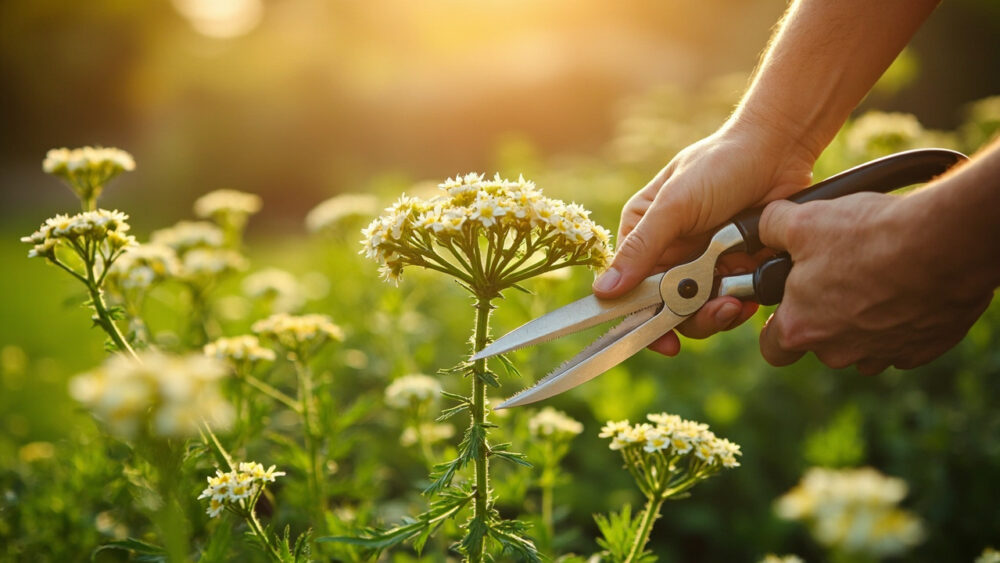
Flat-topped, fully open clusters are what you want. Yarrow blooms in flat umbels, dozens of tiny flowers packed into a disc that looks almost pressed. When at least 60 to 70 percent of the tiny florets in that disc are open, you are in the window.
If you assumed the biggest, showiest heads are the best pick, that guess costs you shelf life. Once the outer florets start browning and the center goes fuzzy or seedy, potency is already dropping and the stems dry brittle instead of sturdy.
Color and firmness matter more than size. Look for solid white, yellow, or pink coloring depending on your variety, with no gray or tan creeping in at the edges. Stems should snap cleanly, not bend rubbery, when you test one near the base.
Once you know what ready looks like, the next question is when in the season, and in the day, to actually go out and cut.
The Timing Window: Morning, Midsummer, and Not After Rain
Yarrow typically blooms from early summer into fall depending on your zone, but the strongest, most fragrant harvest comes from the first full flush, usually 8 to 10 weeks after new spring growth starts. That first flush carries the most concentrated oils.
Cut in mid-morning, after dew has dried but before the heat of the day. Cutting while wet invites mold during drying. Cutting in full afternoon heat means the plant has already lost some of its essential oils to evaporation, so you are harvesting a weaker version of the same flower.
Go too early, while florets are still tight and greenish, and you get low fragrance and color that fades fast once dried. Go too late, once heads brown and seed, and you get papery, faded material with almost none of the character that made you want to grow yarrow in the first place.
Rain is the other timing trap. Wait at least a full dry day after a soaking rain before you cut, since wet stems and heads mold in the drying rack instead of curing.
Nail the calendar and the clock, and the next thing that decides your harvest is quality is how you actually make the cut.
How to Cut Yarrow Without Setting the Plant Back
Cut, do not pull. Yarrow spreads by shallow rhizomes, and a hard tug can loosen the whole clump’s root system, especially in the first year or two.
Use clean, sharp snips or garden scissors. Cut stems 6 to 8 inches below the flower head, choosing a point just above a set of leaves or a lateral side shoot.
That cut point matters more than people think. Cutting above a leaf node signals the plant to branch there, which is exactly what pushes out your next round of blooms.
Take no more than about a third of the plant’s flowering stems in any single harvest session. Established clumps, two years or older, tolerate a heavier cut than first-year plants, which need to focus energy on building roots.
Getting the cut right is only half the job, what you do in the next hour decides whether the harvest holds its color.
Right After the Cut: The Step Everyone Skips
Get cut stems out of direct sun immediately. Yarrow left lying in a sunny basket for even twenty minutes starts losing color and aroma before you have even started drying it.
Sort before you bundle. Pull off any damaged, buggy, or browning stems now, not later. One rotting stem in a hanging bundle can mold its neighbors.
Strip the lower leaves from each stem, leaving just the flower head and a few inches of clean stem. This is the skipped step. Leftover foliage packed into a bundle traps moisture right where you need airflow most, and that is the single biggest reason home-dried yarrow molds instead of curing.
Rinse only if the stems are visibly dirty or dusty, and pat completely dry before doing anything else with them.
With clean, sorted stems in hand, the last real decision is how you cure and store what you just cut.
Curing, Storing, and Getting a Second Flush
Bundle loosely, five to eight stems per bunch, secured with a rubber band that will tighten as stems shrink while drying. Hang upside down in a dark, dry, well-ventilated spot. A garage, closet, or covered porch out of direct sun works, and it typically takes 1 to 2 weeks to cure fully.
You will know it is done when a stem snaps rather than bends and the flower head feels papery and light, not cool or springy.
Store dried yarrow in an airtight jar, out of direct light, and it holds good color and scent for about a year. Whole flower heads keep longer than crumbled material, so hold off crushing anything until you are ready to use it.
For a second bloom flush, deadhead any stems you did not harvest as soon as they brown, and keep cutting flowering stems through the season rather than letting the plant go to seed. That repeat cutting, plus a light feeding and consistent watering through summer, is what pushes a healthy clump into a second, sometimes third, round of blooms before fall.
One honest note if pets share your yard: yarrow is considered mildly toxic to dogs, cats, and horses if eaten in quantity, so keep harvested bundles and drying racks somewhere curious noses cannot reach, and call your veterinarian if you suspect an animal has eaten a meaningful amount.
All of that comes together in the quick-reference card below.
Yarrow at a Glance
- Best time to harvest: mid-morning after dew dries, during the first full bloom flush, usually 8 to 10 weeks after spring growth begins.
- Ready sign: flat-topped flower clusters at least 60 to 70 percent open, solid color with no browning at the edges.
- How to cut: snip, do not pull, 6 to 8 inches below the flower head, just above a leaf node or side shoot.
- How much to take: up to a third of flowering stems per session on established, two-year-plus clumps, less on first-year plants.
- Right after cutting: keep out of direct sun, strip lower leaves, discard any damaged stems before bundling.
- Drying time: 1 to 2 weeks hung upside down in a dark, dry, ventilated spot, until stems snap and heads feel papery.
- Storage: airtight jar, out of light, keeps good color and scent for about a year.
Get the timing and the leaf-stripping step right and everything else about drying yarrow takes care of itself.
Cut a little at a time, keep deadheading, and one healthy clump will feed your harvest basket most of the summer.