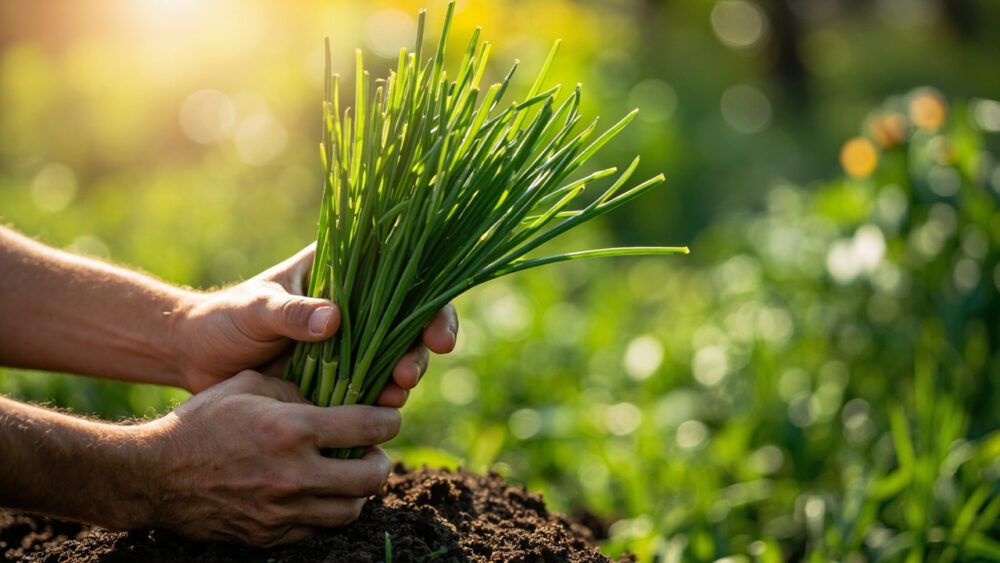
You can start harvesting garlic chives once the leaves reach about 6 to 8 inches tall, snipping them an inch or two above the soil with scissors or a sharp knife. Do it early in the day, take no more than a third of the clump at a time, and it will push out new growth within a couple of weeks. That is the short version of how to harvest garlic chives, but there is more to getting it right than just cutting whatever is closest to the shears.
Most people either cut too low and stall the plant, or they let the whole clump go leggy and flower before touching it, which changes both the flavor and the texture. There is also a specific window right before bloom when the flavor peaks, and almost nobody times it on purpose.
Stick with me and I will walk through the exact signs to check, the cut that keeps the clump productive all season, and what to do with the harvest the moment it hits your kitchen counter. There is a save-able Garlic Chives at a Glance card at the very bottom with the numbers you will want to keep on your phone.
The Signs Your Garlic Chives Are Ready
Garlic chives are ready the first time the grass-like leaves hit 6 to 8 inches, which usually happens 60 to 75 days after seeding or within a few weeks of new spring growth on an established clump. Color and texture matter more than a ruler, though. You want leaves that are a deep, even green, firm when you pinch them, not floppy or pale at the tips.
The Smell Test
Crush a leaf tip between your fingers. It should smell distinctly of garlic, sharper than a regular chive’s onion scent. If it smells weak or grassy, give it another week.
The Flower Buds
Once you see tight round buds forming at the top of a stalk, the leaves are at peak flavor right now, today, not next week.
That bud stage is the window most people miss entirely.
The Timing Window, and What Happens If You Guess Wrong
In spring, established clumps are ready to cut as soon as they clear that 6 to 8 inch mark, which in most climates lands a few weeks after your last frost once soil warms past roughly 50°F. You can keep harvesting every three to four weeks through summer and into early fall, right up until growth slows about a month before your first fall frost.
If you cut too early, when leaves are under 5 inches, you weaken a young clump before its roots have banked enough energy to recover. The plant survives, but it sulks, and regrowth slows for the rest of the season.
If you wait too long, past the point of flowering, the leaves toughen, turn fibrous, and take on a bitter edge. The plant also puts most of its energy into seed production instead of leaf growth, which is why an unharvested clump looks impressive but tastes disappointing.
The real mistake is not early or late timing exactly, it is treating one clump as a single harvest event instead of a rotation.
How to Cut Without Setting the Clump Back
Grab a handful of leaves, about a third of what is growing from that clump, and cut them 1 to 2 inches above the soil line with clean scissors or a sharp knife. Never pull leaves out by hand. Pulling tears at the base and can loosen the whole shallow-rooted clump, especially in looser soil.
Cutting height is the detail everyone gets wrong. Cut too close to the soil and you risk nicking the crown, the dense growing point where all the leaves originate. Damage that and regrowth from that section stops for weeks, sometimes for the season if it happens repeatedly.
Leave at least 2 inches of leaf stub standing so the plant has enough green tissue left to keep photosynthesizing while it regrows.
Rotate which third of the clump you cut each time, and you will always have a section resting while another regrows.
Right After You Cut: What the Harvest Actually Needs
Rinse the cut leaves in cool water and shake or spin them dry. Garlic chives wilt fast once cut, faster than you’d expect for something this sturdy-looking, so get them out of direct sun and into the kitchen within the hour if you can.
Do not leave harvested leaves piled in a bowl on the counter. They lose moisture and pungency within a couple of hours at room temperature. Loosely wrap them in a damp paper towel, slide them into a plastic bag or container, and refrigerate.
Stored this way, fresh-cut garlic chives hold their flavor and texture for about a week, sometimes closer to ten days if the fridge stays cold and the towel stays damp.
That handles today’s harvest, but the bigger question is how to keep the clump producing all season.
Keeping the Harvest Coming All Summer
A healthy, established clump can be cut every three to four weeks from spring through early fall without wearing out, as long as you are rotating sections and never taking more than a third at once. Feed it lightly with a balanced fertilizer once or twice a season and keep the soil evenly moist, since drought stress is the fastest way to get thin, tough leaves regardless of cutting technique.
Snip off flower stalks as soon as you see buds forming, unless you want the white blooms for pollinators or you’re planning to let some seed for new plants. Removing flower stalks redirects energy back into leaf production and extends the good-eating window by weeks.
If you want to preserve a big harvest, garlic chives freeze well chopped into ice cube trays with a little water or oil, and they dry reasonably well too, though drying mutes some of that sharp garlic bite.
Get the rotation right and one clump will feed you from spring clear through the first hard frost.
Garlic Chives at a Glance
- When to start harvesting: once leaves reach 6 to 8 inches tall, typically a few weeks after last frost for established clumps.
- How much to cut: no more than one third of the clump at a time, rotating sections.
- Cutting height: 1 to 2 inches above the soil, leaving the crown untouched.
- Best flavor window: just as flower buds form but before they open.
- How often to harvest: every 3 to 4 weeks through spring, summer, and early fall.
- Storage: damp paper towel in a sealed bag, refrigerated, good for about a week to ten days.
- Season’s end: stop major harvesting about a month before first fall frost so the plant can store energy for winter.
Cut a third, leave the crown alone, and harvest right before the buds open. That single rhythm is the difference between one good cutting and a clump that feeds you all season.