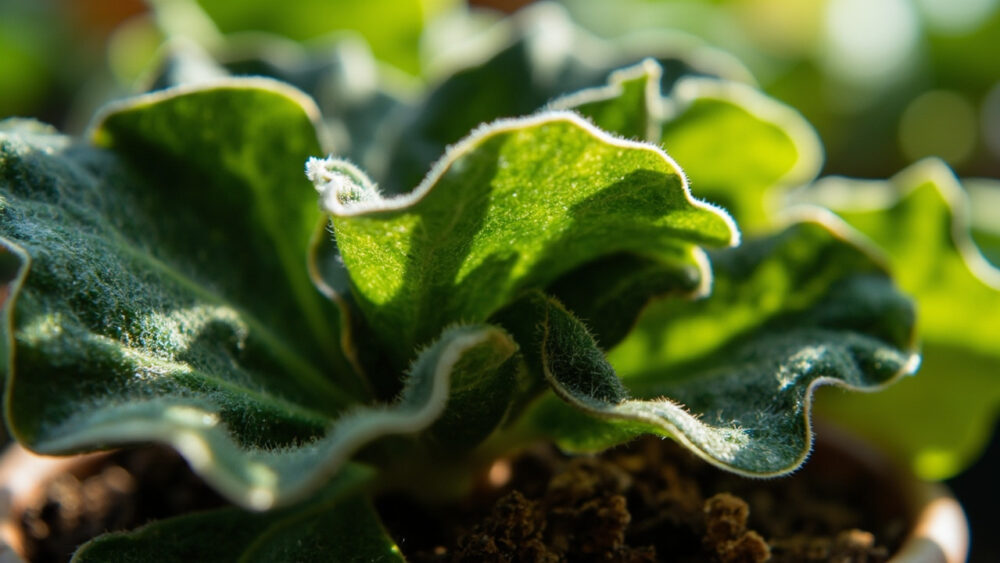
Cold drafts and cold water are the most common reason African violet leaves curlusually curling downward and getting a leathery, dull look. Move the plant away from windows and vents and switch to room-temperature water, and new growth should come in flat within a few weeks. But curling has several other causes that look almost identical at first glance, and one of them, cyclamen mites, is the one most people never suspect until the whole crown is deformed.
Everyone blames light first, and sometimes that is right, but more often the real culprit is temperature or something touching the leaf that shouldn’t be. The detail that actually tells you which cause you’re dealing with isn’t the curl direction, it’s where on the plant it starts and whether the leaf surface feels normal or feels off. Some of these plants bounce back completely within a month. Others, especially the mite cases, may never fully recover and are honestly better started over from a leaf cutting.
Run through the causes below in order, and save the two-minute diagnosis checklist at the bottom for when you’re standing right in front of the plant.
Causes, Most to Least Likely
1. Cold drafts or cold water
African violets are tropical plants that sulk hard below about 60°F. Confirm it by checking the plant’s location: is it near a drafty window, an AC vent, or getting watered straight from the cold tap? Curling from cold usually hits leaves uniformly, and they may also look slightly grayish or limp.
Fix: move the pot at least a few feet from glass and vents, and let water sit out until it reaches room temperature before using it. New leaves emerging after the move should grow in flat.
If the location checks out fine, the problem is more likely coming from the light itself.
2. Too much direct light or heat
Strong afternoon sun through glass heats leaf tissue and makes the edges curl upward and toward the pot, sometimes with a bleached or scorched patch on the leaf facing the window. Confirm it by feeling the leaf in early afternoon; if it’s noticeably warm to the touch, that’s your answer.
African violets want bright, indirect light, like an east-facing sill or a spot a couple feet back from a south or west window, not direct midday sun.
Fix: pull the plant back from the glass or add a sheer curtain. Damaged leaves won’t uncurl, but the next flush will grow normal if the light is corrected.
Light is easy to fix, but chemical exposure from feeding or cleaning products is a lot sneakier.
3. Fertilizer buildup or chemical exposure
Over-fertilizing crusts the soil surface with salts and can cause leaf edges to curl and turn brittle or brown-tipped, usually starting on older, lower leaves. Leaf-shine products and some household cleaners drifting onto foliage cause a similar curl, sometimes with a slightly sticky or waxy residue.
Confirm it by checking for a white or tan crust on the soil surface or pot rim, and by recalling whether you’ve fed heavily in the last month or sprayed anything nearby.
Fix: flush the soil with room-temperature water until it runs freely from the drainage holes, several times over, then hold off feeding for a month. Cut back to a quarter-strength feed every third watering once you resume.
If the soil and feeding history look clean, look closer at the leaf surface itself before you rule anything out.
4. Underwatering or a rootbound plant
When roots can’t take up enough water, older leaves curl downward and go limp, and the plant may wilt visibly between waterings even though you’re watering on schedule. Confirm it by sliding the plant from its pot; if roots circle tightly around the root ball with little soil visible, it’s rootbound.
Fix: repot into a container just one size up, African violets actually prefer being slightly snug, using a light, fast-draining African violet mix. Water from the bottom or at the soil line, keeping water off the crown.
Now for the cause that’s easy to dismiss but does the most lasting damage.
5. Cyclamen mites
These are microscopic and you will not see them with the naked eye, but their damage is distinctive: new leaves in the center of the plant emerge small, brittle, and tightly curled or twisted, often with a grayish, hairy-looking texture, while flowers may be streaked or fail to open properly. Confirm it by focusing on the newest growth in the crown rather than the outer leaves. Mite damage concentrates there, cold or light damage does not.
Fix: isolate the plant immediately, it spreads to neighboring violets fast. Badly affected plants are usually not worth saving with miticides, since mites hide deep in leaf folds. Most growers discard the plant and start fresh from a healthy leaf cutting taken from unaffected growth, or from a different plant entirely.
Once you’ve ruled that in or out, a couple of lower-probability causes round out the list.
6. Low humidity
Very dry indoor air, common in winter with heating running, can cause leaf edges to curl and feel thin or crispy. Confirm it by checking if the curling appeared alongside dry air season and whether other houseplants nearby are also looking crispy at the edges.
Fix: group plants together, use a pebble tray with water beneath the pot, or run a small humidifier nearby. Avoid misting the leaves directly, since water sitting on African violet foliage causes spotting.
With six possible causes on the table, here’s how to actually narrow it down on your specific plant.
How to Tell the Causes Apart
Location on the plant is the biggest clue. Cyclamen mites hit the newest center growth first. Cold, light, fertilizer, and humidity issues usually show up on older, outer leaves first and spread inward over time.
Texture matters as much as shape. Cold-curled leaves feel normal but limp. Mite-damaged leaves feel brittle, stiff, or slightly fuzzy. Chemical or fertilizer damage often comes with brown, crisp edges.
Speed tells you something too. A draft or heat scorch shows up within days of exposure. Mite damage builds gradually over several weeks as new leaves keep emerging wrong.
Once you’ve matched the pattern, the next question is simply how much of the plant you’re going to get back.
Will It Recover?
Cold, heat, and low humidity cases recover well. Existing curled leaves usually stay curled, but once the condition is corrected, new leaves grow in normal within three to six weeks.
Fertilizer and chemical exposure also has a good outlook after a soil flush, though a heavily salt-damaged plant may drop a few outer leaves before it stabilizes. That’s a normal part of recovery, not a new problem.
Rootbound plants bounce back reliably after repotting, typically within a month, once roots have room to take up water evenly again.
Cyclamen mites are the honest exception. Once the crown is distorted, that plant will not go back to normal, and the mites will keep spreading to new growth and to nearby plants. Cutting your losses and propagating a clean leaf is usually faster and less frustrating than trying to nurse the original plant through it.
Knowing the outlook is one thing, avoiding a repeat is another.
How to Keep It From Happening Again
Keep it in stable conditions: bright indirect light, no drafts or heat vents nearby, and room temperature water only. African violets do best in the 65 to 80°F range they’d get on a normal windowsill away from the glass itself.
Feed lightly and consistently rather than heavily and occasionally, a diluted feed every second or third watering beats a strong dose once a month.
Inspect new plants before you bring them near your collection. Cyclamen mites usually arrive on an infested plant, so quarantine anything new for a couple of weeks and check the crown closely before it joins the others.
With prevention covered, here’s the fast version you can run right now, standing at the plant.
Diagnosis Checklist
- Check where the curling starts: outer older leaves point to environment, tight new center growth points to mites.
- Feel the leaf: warm and near glass means heat or direct sun, cool and limp near a window or vent means cold.
- Check the water and feeding routine: cold tap water or heavy recent feeding points to temperature shock or fertilizer burn.
- Look at the soil surface: a white or crusty film confirms salt buildup, flush the pot thoroughly.
- Slide the root ball from the pot: a tight ring of roots with little visible soil means it’s time to repot one size up.
- Inspect the crown closely for brittle, twisted, undersized new leaves and streaked flowers, that combination means cyclamen mites, isolate the plant now.
- Check nearby plants and the general room humidity if nothing else fits, dry winter air is the quiet default cause.
Most curling African violets are telling you something simple about temperature, water, or light, and they forgive you fast once you fix it. Give the plant steady conditions, watch what the newest leaves do next, and you’ll know within a month whether you’re in the clear.