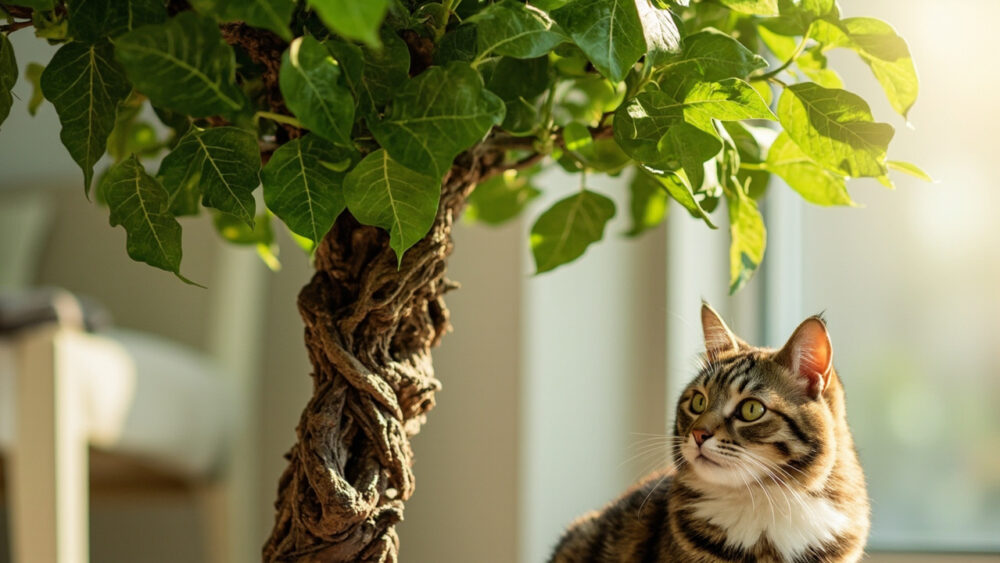
No, the money tree (Pachira aquatica) is not considered toxic to cats. It is one of the few common houseplants that shows up on the ASPCA’s non-toxic list for cats and dogs alike. That said, “non-toxic” does not mean “risk free,” and a cat that eats a big mouthful of leaves can still end up with an upset stomach.
There is a real condition that changes this answer for some households, and it has nothing to do with the plant itself. It is what else is sharing the pot or the room with your money tree.
Stick around for the part most pet owners skip past: how to tell what your cat actually got into, what signs mean “just watch her” versus “call now,” and a save-able quick-reference card at the very bottom you can screenshot before you even finish reading.
The Plain Answer: Money Tree Is Not Toxic to Cats
The braided-trunk money tree sold at nearly every grocery store and garden center is Pachira aquatica, and it is genuinely non-toxic to cats and dogs.
This is one of the safer houseplants you can own if you share your home with curious cats. No leaf, stem, or trunk part contains the compounds that cause the serious reactions you see with true houseplant toxins like lilies or sago palm.
That is the good news, and it is real. But “non-toxic” still comes with fine print.
What Actually Changes This Answer
If you assumed “non-toxic” means you never need to worry, that assumption is where most pet owners get tripped up. Any plant material, toxic or not, can cause vomiting or loose stool if a cat eats enough of it. It is fiber and foreign matter, and a cat’s gut does not love processing either one.
Soil is the other variable. Cats sometimes dig in pots more than they chew leaves, and potting soil can carry fertilizer residue, mold, or perlite that irritates a stomach even though the plant itself is fine.
The real risk in most homes is not the money tree at all, it is what is planted next to it.
Mixed plant displays are common, and a genuinely toxic plant tucked into the same decorative grouping is an easy thing to miss.
Signs to Watch For
Because money tree is non-toxic, most cats who nibble a leaf show nothing at all. When a cat does react, it is almost always mild and mechanical rather than a poisoning response.
Watch for these general signs after any suspected plant ingestion, money tree or otherwise:
- Vomiting or gagging shortly after chewing
- Drooling or pawing at the mouth
- Loose stool within the following day
- Reduced appetite or unusual quietness
None of these are unique to money tree, and none of them mean panic. But they are worth tracking closely for the next section.
What to Do If Your Cat Ate Money Tree
Call your veterinarian or an animal poison control line if you have any doubt about what your cat actually ate, especially if there were other plants nearby. This holds even with a non-toxic plant like money tree, because you want a professional confirming the plant ID, not guessing from a photo at 11 p.m.
Bring or describe a piece of the plant if you can, note roughly how much is missing from it, and note the time you noticed. That timeline matters more than people expect.
Do not give home remedies, induce vomiting, or wait to “see how she does” before calling if you are unsure of the plant. Let the vet make that call with real information in hand.
A quick phone call now beats a guessing game later, and it costs you nothing but five minutes.
Safer Companion Plants Worth Growing Alongside It
If you want a full houseplant collection you never have to second-guess, money tree pairs well with other cat-safe growers that share its light and water needs.
Good companions include:
- Spider plant, tolerant of low light and easy to propagate
- Parlor palm, a slow, forgiving low-light palm
- Calathea varieties, though they want more humidity than money tree
- Haworthia or other non-toxic succulents for a sunnier windowsill
Building a shelf entirely from this list means one less thing to worry about every time you catch your cat sniffing around the pots.
That peace of mind is the whole point, and it is exactly what the card below is built to lock in.
Money Tree: Quick Reference
- Toxic to cats: no, money tree (Pachira aquatica) is on the ASPCA non-toxic list for cats and dogs.
- Real risk: mild stomach upset from eating a large amount of leaf material, not poisoning.
- Bigger danger: other toxic plants often displayed alongside it, not the money tree itself.
- Signs to watch: vomiting, drooling, loose stool, reduced appetite within 24 hours of eating any plant.
- If ingestion is suspected: call your veterinarian or a poison control line, describe the plant and amount eaten, do not treat at home.
- Safer pairings: spider plant, parlor palm, haworthia, and other cat-safe houseplants for a worry-free shelf.
Money tree is genuinely one of the good ones. Keep an eye on what grows next to it, and your cat’s curiosity stays a non-issue.