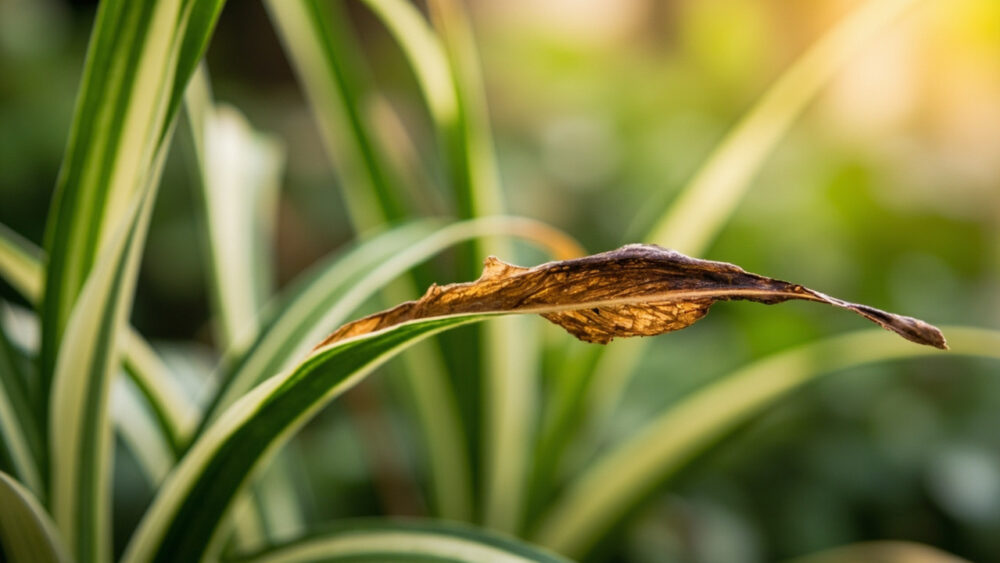
Nine times out of ten, brown tips and edges on a spider plant come from tap water minerals or dry air, not underwatering. The fix is simple: switch to distilled or rain water and raise the humidity around the plant, then trim off the brown parts since they will not turn green again.
But that is not the only cause, and it is not even always the right one. Most people blame the pot size or the sunlight first, and that guess is usually wrong. The real tell is often something you have not thought to check yet: where on the leaf the brown starts, and whether it shows up on the oldest growth or the newest.
Stick around and I will walk you through every likely cause in order, how to confirm each one in under a minute, and the honest truth about whether those leaves are coming back. There is a save-able diagnosis checklist at the very bottom you can run through standing right at the plant.
Most Likely Causes, in Order
1. Mineral buildup from tap water
Confirm it: look at the leaf tips specifically. If the brown is concentrated at the very tips and edges, forming a thin crispy margin while the rest of the leaf stays green, this is almost always fluoride, chlorine, or salt buildup from tap water. Spider plants are notoriously sensitive to it, more than most houseplants.
Fix it: switch to distilled water, rainwater, or water left out overnight in an open container. Flush the soil thoroughly every couple of months to clear out accumulated salts, letting water run through the drainage hole several times.
That is the obvious culprit, but there is a second one that mimics it almost exactly.
2. Low humidity or dry indoor air
Confirm it: if the browning shows up mostly in winter, near a heat vent, or in a house that runs under 40 percent humidity, dry air is competing with mineral buildup as the cause. The tips crisp the same way, but you will often see it happen faster and on more leaves at once.
Fix it: group plants together, run a humidifier nearby, or set the pot on a tray of pebbles and water. Misting helps briefly but does not solve the underlying air dryness.
If neither of those matches what you are seeing, the problem might be coming from below the soil line instead.
3. Overwatering and root rot
Confirm it: pull the plant slightly and check the soil an inch or two down. If it is soggy days after you last watered, or if the roots look brown and mushy instead of firm and white or tan, you are dealing with rot, not drought. Brown patches here often appear at the base of leaves near the crown, not just the tips.
Fix it: let the soil dry out fully before watering again. If rot is confirmed, unpot the plant, trim away mushy roots with clean shears, and repot into fresh, fast-draining soil.
Root rot is the one cause that can genuinely threaten the whole plant, so it is worth ruling out early.
4. Underwatering and drought stress
Confirm it: feel the soil. If it is bone dry more than an inch down and the leaves feel thin, limp, or slightly curled before browning, the plant has simply gone too long between drinks. This tends to hit older, outer leaves first.
Fix it: water thoroughly until it runs from the drainage hole, then get on a consistent schedule, checking soil moisture weekly rather than watering on a fixed calendar.
Water problems are common, but light and fertilizer cause their own distinct kind of damage.
5. Too much direct sun
Confirm it: check which side of the plant is browning. If it is the side facing a bright window, especially south or west facing glass, and the brown patches look scorched rather than crispy at just the tips, that is sunburn, not water stress.
Fix it: move the plant a few feet back from direct glass or add a sheer curtain. Spider plants want bright, indirect light, not hours of direct sun.
Sun damage is easy to fix by relocating the pot, but fertilizer damage needs a different response entirely.
6. Fertilizer buildup
Confirm it: if you fertilize regularly and see browning that starts at the tips and works inward, sometimes with a slightly burnt, dark look rather than papery tan, and you notice a white crust on the soil surface, excess salts from fertilizer are the likely cause.
Fix it: stop fertilizing for a couple of months, flush the soil well, and when you resume, use a diluted houseplant fertilizer at half strength every four to six weeks during active growth.
Once you have narrowed it to a suspect, the next step is confirming it against the others so you do not fix the wrong thing.
How to Tell the Causes Apart
Location on the leaf matters most. Pure tip browning with a green base points to water quality or humidity. Browning that spreads across the whole leaf or starts at the base points to root rot, sunburn, or fertilizer.
Old versus new growth is the next clue. Older, outer leaves browning first usually means general water stress or natural aging. New leaves emerging brown or damaged points to root problems, since the roots cannot support new growth properly.
Pattern across the plant tells you the rest. One-sided browning means light. All-over, sudden browning means root rot or a big humidity swing. Slow, gradual tip crisping over weeks means minerals or dry air.
Once you know which one you are looking at, the real question is what happens to the plant next.
Will It Recover?
Here is the honest part: brown leaf tissue never turns green again. No fix reverses existing damage. What you are doing with any of these treatments is stopping new browning and letting the plant grow fresh, healthy leaves to replace the damaged ones.
For mineral buildup, dry air, sunburn, and fertilizer burn, the outlook is good. Trim the brown parts with clean scissors, following the natural leaf shape, fix the cause, and expect new growth within a few weeks to a couple of months.
Underwatering recovers well too, often faster, sometimes within two to three weeks of consistent watering.
Root rot is the one with real risk. Mild cases recover fully after trimming and repotting. Severe cases, where most of the root system is mush, sometimes cannot be saved, and the honest move is to take healthy plantlets or offsets and start fresh rather than fight for a plant that has lost its root system.
Knowing the plant will likely bounce back is only half the job, since the same problem can come right back without a change in habits.
How to Keep It From Happening Again
Water quality is the single biggest lever. If tap water in your area is hard or heavily treated, switching to distilled or rainwater permanently solves most chronic tip browning.
Keep humidity above 40 percent where you can, especially in winter with the heat running. Water when the top inch or two of soil is dry rather than on a fixed schedule, and always let excess water drain freely so the roots never sit wet.
Feed lightly, at half strength, only during spring and summer growth, and skip it entirely in fall and winter.
Keep the plant in bright, indirect light, and if you move it outdoors for the summer, ease it into sun gradually rather than all at once.
With the cause fixed and habits adjusted, most spider plants stop browning almost entirely for the rest of the year.
Diagnosis Checklist
- Check the leaf tip: crispy, papery brown at just the tip with a green base points to water minerals or dry air.
- Feel the soil two inches down: bone dry means underwatering, soggy for days means check the roots.
- Pull gently at the base and inspect roots if soil is wet: firm and pale is healthy, brown and mushy means root rot.
- Look at which side of the plant is worst: one side facing a bright window points to sunburn.
- Check for white crust on the soil surface: crust plus tip burn points to fertilizer buildup.
- Note whether old or new leaves are affected: new growth browning means a root problem, old growth means general stress.
- Trim confirmed brown tissue with clean scissors, then apply the matching fix and watch for new growth over the next few weeks.
Brown tips look alarming, but on a spider plant they are almost always fixable once you match the cause correctly.
Get the water and light right, and this is one of the most forgiving houseplants you can own.