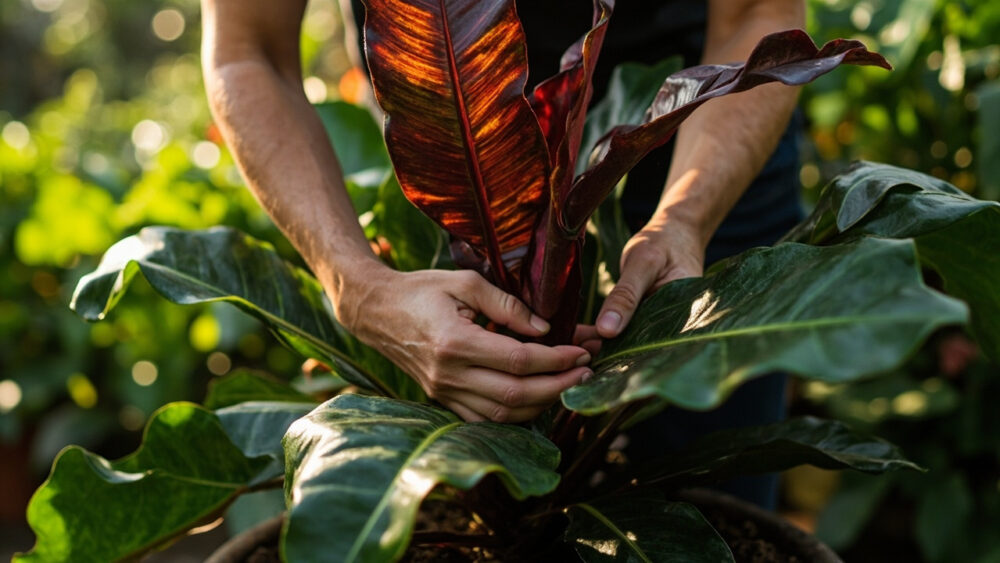
Knowing how to care for rubber plant comes down to four things it genuinely needs: bright indirect light, water only when the top few inches of soil dry out, a warm room with no cold drafts, and a pot that isn’t too big for its roots. Get those four right and a rubber plant (Ficus elastica) will grow into a glossy, waist-to-ceiling-high tree with almost no fuss. Get one of them wrong and you’ll get the leaf drop, the brown-edged leaves, or the leggy bare stem that sends most owners looking for what they did wrong.
Here’s what trips people up first: the plant that looks thirsty is usually the plant that got watered too much. That guess kills more rubber plants than neglect does, and it’s the single biggest mistake I see.
There’s also a sign almost everyone misreads on the leaves, a location mistake that quietly stalls growth for months, and an honest answer to the question you’re probably about to ask next, which is whether that bare lower stem means the plant is dying. All of it gets sorted out below, and I’ve put a save-able Rubber Plant at a Glance card at the very bottom so you don’t have to hunt for the numbers again.
Light, Placement, and Temperature
Rubber plants want bright, indirect lightideally a spot a few feet back from an east or south-facing window, or right in front of a sheer curtain if the window faces south or west. Direct hot sun for hours will scorch the leaves; deep shade will get you a plant that survives but never fills out. A few hours of gentle direct morning sun is fine and actually helps variegated types keep their color.
Temperature-wise, treat it like you’d treat yourself: comfortable room temperature, roughly 60 to 80°F, with no cold drafts from doors or AC vents and no spot pressed against a cold windowpane in winter. Sudden temperature swings cause more leaf drop than people expect.
Placement is where the quiet mistake happens. A rubber plant kept in a dim corner for “decor” reasons will look fine for a surprisingly long time before it stalls, drops lower leaves, and starts stretching toward the nearest light with bare stem showing between leaves. If yours has stopped putting out new leaves for months, light is the first thing to check, not fertilizer.
Once the light is right, the next question is almost always about the watering can.
Watering: How Much, How Often, and How to Check
Water a rubber plant when the top 2 inches of soil are dry to the touch, then water thoroughly until it runs from the drainage holes and empty the saucer. In most homes that’s roughly every 7 to 10 days in spring and summer, stretching to every 2 to 3 weeks in fall and winter, but the calendar is a guess and your finger in the soil is the fact.
Here’s the guess everyone makes: drooping or yellowing lower leaves must mean the plant is thirsty, so they water more. That’s usually backwards. Overwatering, not underwatering, is the more common cause of yellow leaves and soft brown-black patches on a rubber plant, because the roots sit wet, start to rot, and can no longer take up water even though the soil is soaked.
The real tell is the soil itself. If the top few inches are still damp and the leaves are yellowing or dropping, hold off on water entirely and check drainage. If the soil is bone dry and pulling away from the pot edges, that’s genuine thirst, and a good soak will perk the plant back up within a day or two.
Get the water right and the next thing that decides how fast this plant grows is what it’s rooted in.
Soil, Pot, and Feeding
Use a well-draining potting mix, a standard indoor potting soil with some perlite or bark mixed in works well, and always a pot with drainage holes. Rubber plants sitting in a pot with no drainage are the ones most likely to develop root rot regardless of how carefully you water.
Feed during the active growing season, roughly spring through early fall, with a balanced liquid houseplant fertilizer at half the label’s suggested strength, once every 4 to 6 weeks. Skip feeding in fall and winter when growth naturally slows; fertilizing a dormant plant just builds up salts in the soil and can burn the roots.
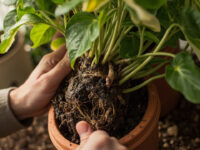
A rubber plant that’s rootbound, roots circling tightly and poking out the drainage holes, will also stop growing even with perfect light and water, which is a good reason to check the pot before blaming anything else.
That rootbound check leads straight into the routine maintenance this plant actually needs.
Pruning, Repotting, and Cleaning: The Routine Tasks
Repot every 1 to 2 years, moving up just one pot size (about 2 inches larger in diameter), in spring when the plant is actively growing. Do this when you see roots circling the surface or emerging from drainage holes, or when it’s drying out much faster than it used to.
Prune in spring or early summer to control height and encourage bushier growth. Cut just above a leaf node with clean shears. The cut will ooze a milky white sap, which is normal, mildly irritating to skin, and worth wiping off tools and hands.
Wipe the big glossy leaves down with a damp cloth every few weeks. Dust blocks light from reaching the leaf and cuts down on how much the plant can photosynthesize, which matters more for a big-leafed plant like this than people assume.
- Repot: every 1 to 2 years, spring, one pot size up
- Prune: spring or early summer, above a leaf node
- Clean leaves: every 2 to 4 weeks with a damp cloth
Keep up with those three tasks and you’ll head off most of the problems that are about to come up next.
The Problems Most Likely to Strike, and What They Mean
Yellow, mushy lower leaves usually mean overwatering or poor drainage. Let the soil dry out further than usual and check that the pot actually drains. Crispy brown leaf edges usually point to low humidity or a draft, especially in winter near a heat vent. Misting helps a little, moving the plant away from the vent helps more.
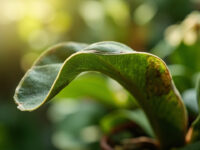
Brown spots with a dry, papery lookas opposed to soft yellow patches, often mean the plant got too much direct sun, particularly through glass in summer. Pull it back a few feet from the window.
Watch for spider mites and scale, both of which show up as tiny specks or bumps on the stems and leaf undersides, sometimes with fine webbing. Wipe leaves down and treat with insecticidal soap or neem oil, following the product label exactly, and isolate the plant from other houseplants while you treat it.
Ficus elastica is toxic to both pets and people if ingested, and the sap can irritate skin and eyes on contact. If a pet or child chews on the leaves or stem, call a veterinarian or poison control and don’t wait to see what happens.
Now for the sign almost everyone misreads: a bare lower stem.
Is a Bare Stem a Sign of Trouble?
A rubber plant naturally drops its oldest, lowest leaves as it grows taller, the same way a tree loses lower branches as the canopy fills in above. A little bare stem near the soil on an otherwise healthy, leafy plant is completely normal and not a symptom of anything wrong.
It only becomes a real problem if leaves are dropping from the top and middle of the plant too, or dropping fast, several at once rather than the occasional oldest leaf. That pattern points back to light, water, or temperature stress, not natural aging.
If the bare stem bothers you visuallythat’s a styling issue, not a health issue, and pruning the top to force bushier branching lower down is the fix, not more water or fertilizer.
So how do you know the plant is actually happy, rather than just hanging on?
Signs Your Rubber Plant Is Genuinely Thriving
A thriving rubber plant pushes out new leaves regularly through spring and summer, and each new leaf unfurls from a reddish protective sheath at the growing tip, bigger and glossier than the last. That sheath dropping off cleanly is a good sign, not a bad one.
Leaves should stand firm and point outward or slightly upward, with a deep, even color, no dull patches, no droop by midday. Growth should feel steady rather than explosive: a few new leaves a month during the growing season is normal and healthy, not slow.
New growth at the very top, rather than leaf drop lower down, tells you the plant is putting energy into getting bigger rather than just surviving.
Here’s everything from above, boiled down to the numbers worth saving.
Rubber Plant at a Glance
- Light: bright, indirect light, a few feet back from an east or south window, some gentle direct morning sun is fine.
- Water: when the top 2 inches of soil are dry, roughly every 7 to 10 days in the growing season, every 2 to 3 weeks in winter.
- Temperature: 60 to 80°F, no cold drafts, no contact with cold window glass.
- Soil and pot: well-draining potting mix with perlite or bark, always a pot with drainage holes.
- Feeding: balanced liquid fertilizer at half strength, every 4 to 6 weeks in spring through early fall, none in winter.
- Repotting and pruning: repot every 1 to 2 years in spring, one pot size up. Prune in spring or early summer above a leaf node.
- Toxicity: toxic to pets and people if ingested, sap irritates skin, contact a veterinarian or poison control for suspected ingestion.
If you only remember one thing, remember this: check the soil before you water, don’t water on a schedule.
Everything else about this plant, the light, the pot, the leaf drop, sorts itself out once that one habit is right.