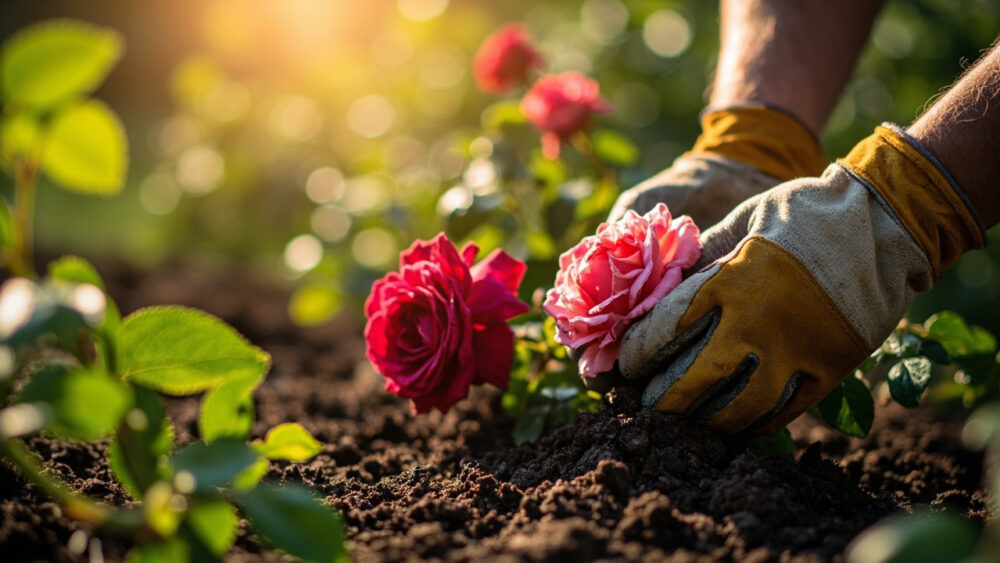
The best time to plant Knockout roses is in early spring, two to three weeks after your last frost date once soil hits about 50 to 55 F, or in early fall at least six weeks before your ground freezes solid. Both windows work because the goal is the same either time: give the roots time to settle into loose, workable soil before heat or cold hits hard. Container roses give you more flexibility than bare-root ones, and that difference matters more than most people realize.
Here is the part that trips people up. Most gardeners assume the window is about air temperature, when it is actually the soil that decides whether your rose thrives or sits there sulking for a year.
There is also a mistake that quietly ruins more Knockout roses than frost ever does, and it happens weeks after planting, not on planting day. Stick with me. The at-a-glance card at the bottom has the exact numbers saved in one place, but the reasoning behind them is worth the scroll.
The Real Planting Window: Soil, Not the Calendar
Spring planting works once soil temperature holds at 50 to 55 F for about a week straight, which usually lands two to three weeks after your last average frost date. Push a soil thermometer four inches down in the morning to check it honestly, air temperature lies.
Fall planting is the quieter favorite among experienced growers. Aim for six to eight weeks before your first hard freeze so roots can establish before the ground locks up. In most of the country that means late September through October.
Knockout roses are hardy in zones 4 through 9, and in the milder end of that range, fall planting often outperforms spring because the rose skips straight to root-building instead of fighting summer heat right out of the gate.
Soil temperature sets the calendar, everything else just fills in around it.
How to Read Your Own Yard, Not a National Chart
Frost date charts give you a starting guess, not an answer. Your yard has its own microclimate, and that is where the real decision gets made.
Check three things before you commit to a date. First, soil workability: grab a handful from four inches down, it should crumble, not clump into mud or stay bone dry and dusty. Second, consistent nighttime lows: you want a stretch where nights stay above about 40 F, not just one warm afternoon. Third, new growth on nearby shrubs, if forsythia or lilac nearby is already leafing out, your ground has warmed enough for roses too.
A south-facing bed against a wall can be plantable two full weeks before an open, low-lying spot ten feet away.
Your own soil thermometer will always beat a generic calendar date.
The Mistake That Costs an Entire Season
Everyone assumes the risk is planting too early and losing the rose to a late frost. That is a real risk, but Knockout roses are tougher than people give them credit for and often shrug off a light frost once hardened off slightly.
The mistake that actually costs a season is planting into cold, wet, compacted soil that never truly warmed up, even if the calendar says it is safe. The rose goes in, sits dormant far longer than expected, and by the time it starts pushing new growth, summer heat is already stressing it. You end up with a stunted first year that never quite catches up.
Planting too late in fall carries a different problem: not enough time for roots to establish before freeze-up, which leaves the rose vulnerable to heaving and winterkill.
Timing errors on either end do not kill the rose outright, but they do steal a year of growth you cannot get back.
What Too Early or Too Late Actually Looks Like
Plant too early into cold soil and you will see slow, weak leaf-out, sometimes four to six weeks after planting instead of two. The leaves that do emerge often stay pale and small until real warmth arrives.
Plant too late in spring, deep into summer heat, and the stress shows as scorched leaf edges and a rose that puts all its energy into just surviving instead of building roots.
Plant too late in fall and the visible sign will not show up until spring: a rose that looks fine in November but comes back sparse or partially dead after winter, because roots never anchored before the freeze.
None of these are fatal on their own, but they are all avoidable with a two-week adjustment either direction.
Prep to Finish Before the Window Opens
Do this work ahead of time so you are not scrambling once the soil hits the right temperature.
- Test drainage: dig a hole 12 inches deep, fill with water, if it has not drained within a few hours, amend or pick another spot.
- Loosen soil: work compost into the bed to a depth of 12 to 18 inches, Knockout roses want rich, well-draining soil, not amended clay.
- Confirm sun exposure: mark the spot and watch it for a full day, you need six or more hours of direct sun for strong blooming.
- Stage the hole: dig it as wide as the root ball and just as deep, ready to go the day soil temperature clears 50 F.
Good prep turns planting day into a ten-minute job instead of an afternoon project.
Region Notes Worth Knowing
In zones 8 and 9, where summers run brutal, fall planting is almost always the smarter call. Spring-planted roses there often hit 95 F stress before they have built enough root mass to handle it.
In zones 4 and 5, spring planting is safer because a young rose needs a full growing season to harden off before its first real winter. Fall planting there risks not enough time before freeze.
In zones 6 and 7, you genuinely have both windows open, and the choice comes down to your own schedule and soil more than anything else.
Wherever you garden, the soil thermometer overrides the zone map every time.
Knockout Roses at a Glance
- When to plant: early spring two to three weeks after last frost, or early fall six to eight weeks before first hard freeze.
- Soil temperature target: a steady 50 to 55 F measured four inches deep, not air temperature.
- Spacing: 3 to 4 feet apart for standard Knockout varieties to allow airflow and mature width.
- Planting depth: set the top of the root ball level with the surrounding soil, no deeper.
- Sun needs: six or more hours of direct sun daily for full blooming.
- Hardiness range: zones 4 through 9, with fall planting favored in zones 8 and 9, spring favored in zones 4 and 5.
- Biggest timing mistake: planting into cold, waterlogged soil that never truly warmed, not planting too close to frost.
Get the soil temperature right and almost everything else about growing Knockout roses takes care of itself.
When in doubt, wait the extra week, a slightly late rose always beats one planted into cold mud.