Yes, you can freeze rhubarb, and it holds up better in the freezer than almost any other vegetable in the garden. Chop it into half-inch to one-inch pieces, spread them on a tray so they freeze separately, then bag them once solid. Done right, frozen rhubarb keeps its texture and tartness for eight to twelve months.
Done wrong, you end up with a solid brick of mush that weeps pink water all over your freezer and cooks down to soup no matter what you do with it. There is one step almost everyone skips that determines which of those two outcomes you get.
There is also a question you have not asked yet but will the second you open the freezer bag in January: do you need to cook it first, or can you throw frozen chunks straight into a pie. The honest answer depends on what you are making, and guessing wrong wastes a whole batch. Stick around for the mistakes that ruin texture, the signs stalks have already turned before you even froze them, and the save-able Rhubarb at a Glance card at the bottom with every number in one place.
The Method That Actually Works: Tray-Freeze First
The whole trick is freezing the pieces separately before bagging them. Wash the stalks, trim the leaf ends and any root end, and cut into half-inch to one-inch chunks. Spread them in a single layer on a baking sheet with a little space between pieces.
Freeze the tray uncovered for two to three hours, until the pieces are hard. Only then transfer them to a freezer bag or container. This is called flash freezing or tray freezing, and it is the difference between scoopable chunks and one frozen block.
Squeeze the air out of the bag or use a vacuum sealer if you have one. Label it with the date. Rhubarb frozen this way pours out like frozen berries, a handful at a time, instead of forcing you to thaw the entire bag to get a cup.
Skip this step and you will find out why it matters the first time you try to chip a single serving off a frozen slab.
Do You Need to Blanch It First
No, and this is where a lot of people overthink it. Rhubarb does not need blanching before freezing, unlike green beans or broccoli. It has enough natural acidity that it does not lose color or develop off flavors in the freezer without that step.
If you were about to blanch it out of habit, skip it. Blanching rhubarb actually softens it further and gives you mushier pie filling later, the opposite of what you want. Raw and tray-frozen is the standard method and the one that keeps the most texture.
The one exception: if you plan to freeze cooked rhubarb sauce or compote instead of raw chunks, that is already cooked through, so texture concerns do not apply. Freeze it in a container with an inch of headspace since liquid expands.
Raw or cooked changes almost nothing about storage time, but it changes everything about what you can do with it later.
How Long Rhubarb Actually Keeps, Each Way
Fresh stalks on the counter last only a day or two before they go limp. In the refrigerator, wrapped loosely in a damp towel or plastic and stored in the crisper drawer, unwashed stalks hold for five to seven days, sometimes up to two weeks if they were freshly cut and firm.
Frozen raw rhubarb keeps well for eight to twelve months at a steady 0°F freezer temperature. It stays safe to eat well past that, but flavor and texture start fading after a year.
Cooked rhubarb sauce or compote freezes just as long, eight to twelve months, and honestly holds its quality a little more consistently since there is no raw texture left to lose.
Twelve months sounds generous until you remember the stalks that got skipped over because nobody checked them first.
The Prep Step Everyone Gets Wrong
Most people either over-wash rhubarb or under-check it, and both cause problems. Rinse the stalks under cold water to knock off garden grit, but do not soak them. Rhubarb is mostly water already, and a long soak waterlogs the stalks before they even hit the tray.
Dry the stalks completely before cutting. Wet pieces going into the freezer form ice crystals on the surface, and those crystals rupture cell walls, which is the real reason thawed rhubarb turns stringy and soft. A few minutes with a kitchen towel solves most of what people blame on freezing itself.
Always trim and discard the leaves entirely before you do anything else. Rhubarb leaves contain oxalic acid and are toxic if eaten. If a pet or a child gets into the leaves, call a veterinarian or poison control and do not wait to see what happens.
Get the stalks dry and the leaves gone, and you have already avoided the two most common ways a batch goes bad.
Signs the Stalks Have Already Turned
If you assumed limp stalks are still fine to freeze because freezing preserves things, that guess is what fills freezers with disappointing rhubarb. Freezing locks in whatever state the stalk was in when you froze it. It does not revive tired produce.
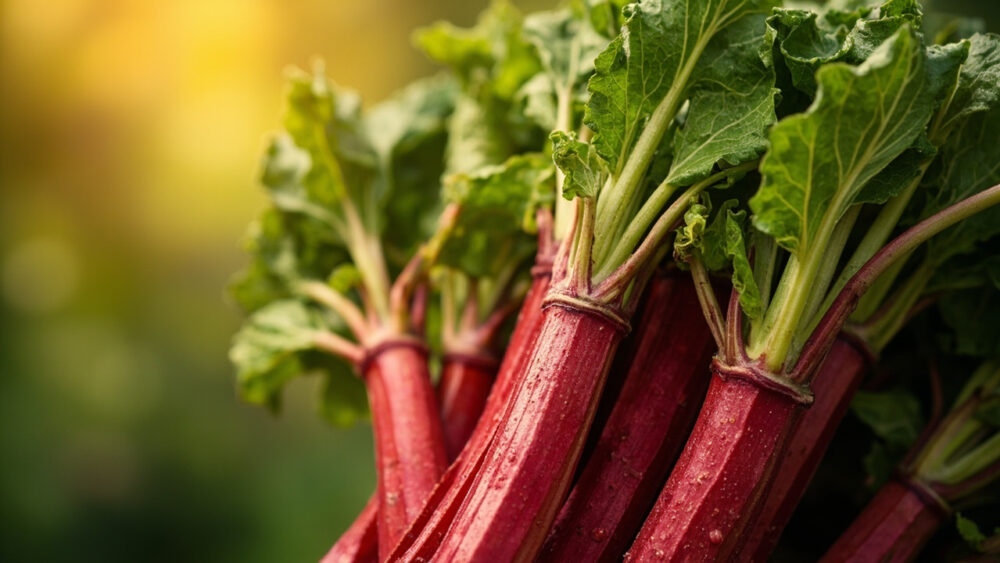
Check for stalks that have gone soft, rubbery, or noticeably bendy instead of snapping crisply. A healthy stalk for freezing should feel firm enough to snap like celery.
Look for sliminess at the cut end, a sour or fermented smell, or dark, water-soaked patches along the stalk. Any of those mean it belongs in the compost, not the freezer.
Mold showing up as fuzzy white, gray, or black patches, usually near the base, is a clear discard signal on the whole stalk.
Freeze rhubarb at its best moment, not its last chance, and every other step in this guide actually pays off.
The Mistakes That Ruin a Batch
- Skipping the tray freeze: bagging cut rhubarb straight into a container freezes it into one solid clump you cannot portion.
- Blanching out of habit: it is unnecessary for rhubarb and leaves you with softer, mushier pieces later.
- Freezing it wet: undried stalks form ice crystals that break down texture and cause mushy, weepy thawed pieces.
- Leaving air in the bag: trapped air causes freezer burn, the pale dry patches that taste flat and papery.
- Thawing before baking: for pies and crisps, frozen chunks go straight into the dish; thawing first just dumps extra liquid into your filling.
Avoid these five and rhubarb becomes one of the most forgiving things in your freezer.
Rhubarb at a Glance
- Can you freeze it: yes, raw or cooked, and it holds texture better than most vegetables.
- Best method: wash, dry completely, cut into half-inch to one-inch pieces, tray-freeze two to three hours, then bag.
- Blanching needed: no, raw rhubarb freezes fine without it.
- Fridge storage: five to seven days, up to two weeks for very fresh stalks, wrapped in the crisper drawer.
- Freezer storage: eight to twelve months at 0°F for best flavor and texture.
- Cooking from frozen: add frozen chunks straight to pies, crisps, and sauces without thawing first.
- Safety note: always discard the leaves, which are toxic; call a veterinarian for any suspected pet ingestion.
Freeze it dry, freeze it in a single layer first, and skip the blanching entirely.
Do that and every stalk you cut this season is a pie you can make in February.