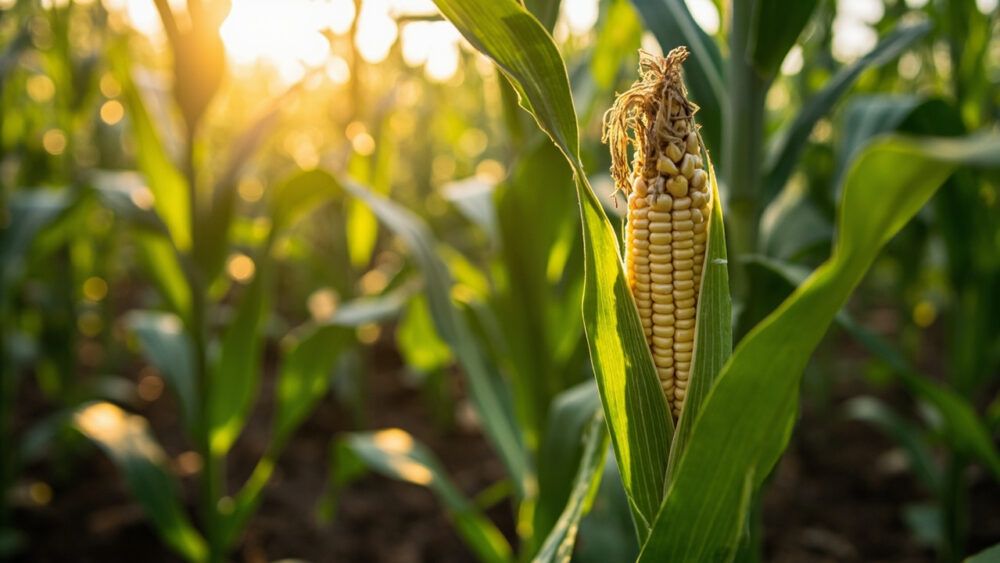
Sweet corn takes about 60 to 100 days from planting to harvest, depending on the variety, and most of the standard varieties gardeners actually grow land in the 70 to 85 day range. That is how long does it take to grow corn in one clean number, but the honest answer has more moving parts than that.
Your soil temperature at planting, the variety you picked, and how hot your summer runs can shift that number by two or three weeks in either direction. There is also a specific visual sign that tells you corn is close, and most people misread it completely.
Stick around and I will show you how to read your own stand of corn, what actually speeds it up versus what just wastes your money, and when a slow-looking patch is normal versus in trouble. There is a save-able quick-reference card at the bottom with the numbers side by side.
The Realistic Timeline, Start to Finish
From seed in the ground to ripe ears, expect 60 to 100 days total. Early varieties bred for short seasons finish around 60 to 70 days. Standard sweet corn, the kind most home gardeners plant, runs 70 to 85 days. Some specialty and ornamental corns push past 90 to 100 days.
That clock starts when the seed actually germinates, not when you drop it in the ground. In warm soil, germination happens in 5 to 10 days. In cool spring soil, it can take two full weeks or more, and that delay counts against your total timeline even though nothing visible is happening yet.
Next comes the part that actually decides your harvest date.
What Controls the Speed: Variety, Soil, and Heat
Variety is the single biggest factor you control. Seed packets and catalogs list “days to maturity,” and that number is the real starting point for your own math, not a generic average.
Soil temperature matters more than the calendar. Corn seed wants soil at least 60°F, ideally 65 to 70°F, to germinate reliably. Plant into soil in the 50s and seeds sit, sulk, and sometimes rot before they ever sprout.
Heat during the growing season is the other lever. Corn is a warm-weather crop that thrives in daytime temps of 75 to 90°F. A cool, cloudy summer can add a week or two onto even a fast variety, while a hot one can push things along slightly ahead of schedule.
Once conditions are right, the plant moves through a fairly predictable set of stages.
Stage by Stage: What to Expect and When
Here is roughly what a healthy corn plant does on the way to harvest:
- Germination, days 1 to 10: seed sprouts and pushes a single blade up through the soil.
- Vegetative growth, weeks 2 to 6: the plant builds leaves and height, often gaining several inches a week in good heat.
- Tasseling, roughly 6 to 8 weeks in: the feathery tassel appears at the top, releasing pollen.
- Silking, right around the same time: silks emerge from the ear tips to catch that pollen, and this is the window that decides how full your ears will be.
- Ear fill, the final 2 to 3 weeks: kernels plump up with milky liquid inside, which is your real readiness test.
That last stage is where most people misjudge things, and it is worth slowing down for.
The Sign Everyone Misreads: Brown Silk Doesn’t Mean Ready
Brown, dried-out silk is the cue most gardeners wait for, and it is not wrong, but it is not sufficient on its own. Silk browns roughly 20 days before an ear is truly ready in many varieties, so acting on silk color alone gets you an underdeveloped ear.
The real test is the kernel itself. Peel back the husk on one ear and pop a kernel with your thumbnail. Clear liquid means too early. Thick, white, milky liquid means ready. Thin and pasty or dry means you waited too long and the ear is heading toward tough and starchy.
Check two or three ears on different plants, not just one, since ears on the same stalk can mature a day or two apart.
Knowing when it is ready is only half the job, though, since plenty of things can push that date around.
How to Actually Speed It Up, and What Doesn’t Work
Warm the soil before you plant. Black plastic mulch or simply waiting one to two extra weeks for soil to hit 65°F does more for your timeline than almost anything else, because it shortens the slow, unpredictable germination phase.
Choose a short-season variety if speed matters more to you than yield or flavor intensity. An 65 to 70 day variety will beat a 90 day variety to harvest every time, in the same yard, same year.
Feed it right, not extra. Corn is a heavy nitrogen feeder, and a genuine nutrient deficiency will slow growth and produce pale, stunted plants. But piling on more fertilizer than the plant needs will not make it mature faster, it just risks burning roots or pushing leafy growth at the expense of ears.
Row covers and starting seed indoors in biodegradable pots can buy you a week or two in short-season climates, but corn resents transplanting more than most vegetables, so treat that as a narrow-use trick, not a default plan.
None of that matters, though, if you cannot tell slow from actually stuck.
When Slow Growth Is Normal, and When It’s a Problem
Corn planted in cool soil often just sits there for a week or two doing seemingly nothing. That is normal, not a failure. Once the soil warms, growth catches up fast.
What is not normal: seedlings that come up pale yellow and stay that way past the two-leaf stage, plants that lean and refuse to straighten, or stunted growth alongside chewed leaves and visible pest tunneling in the stalk.
Corn is also wind-pollinated and needs a block, not a single row. If your stand is one skinny row, poor pollination will give you patchy, gap-toothed ears no matter how much time you give it, and that is a planting-layout problem, not a timing problem.
If plants look pale and stunted for more than three to four weeks with no improvement after a nitrogen feeding, that points to a soil or drainage issue worth digging into rather than more patience.
Here is everything from above, boiled down to the numbers you actually need.
Corn: Quick Reference
- Total time: 60 to 100 days from planting to harvest, most standard varieties fall between 70 and 85 days.
- Germination: 5 to 10 days in warm soil, up to two weeks or more in cool soil.
- Soil temperature needed: at least 60°F, ideally 65 to 70°F, at planting depth.
- Tasseling and silking: roughly 6 to 8 weeks after planting.
- Ripeness test: pop a kernel, thick milky white liquid means ready, clear liquid means wait, dry or pasty means past peak.
- Fastest legitimate speed-up: warm soil before planting and choose a short-season variety, not extra fertilizer.
- Planting layout: grow in blocks of at least four short rows, not one long row, for reliable pollination.
Corn rewards patience more than intervention. Get the soil warm, pick the right variety for your season, and let the calendar do the rest.