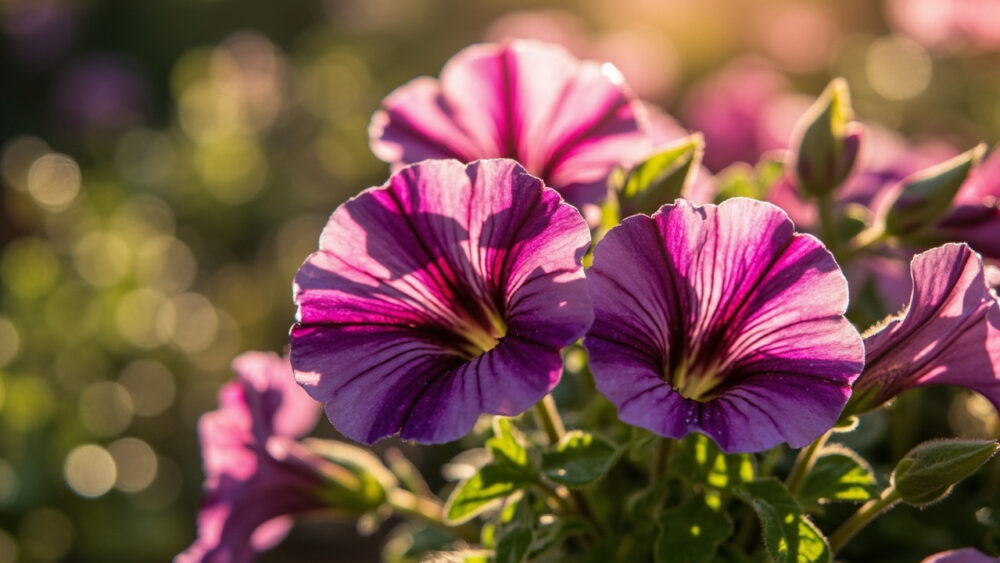
Petunias bloom from spring through the first hard frost, typically starting 6 to 8 weeks after you plant them and running non-stop until fall, as long as you keep cutting off the spent flowers and feeding them. In warm winter climates (zone 9 and up), some varieties even bloom straight through winter.
That is the honest range, but your actual dates depend on when you planted, how much sun the spot gets, and whether you are deadheading or feeding on any kind of schedule. There is also one habit that quietly shuts petunias down mid-summer, and almost everyone does it without realizing.
Stick with me through the sections below and you will know exactly how to read your own plants, plus what to do about the ones that look done for. The save-able quick-reference card is at the bottom once you have the full picture.
The Bloom Window and How Long It Actually Lasts
A healthy petunia blooms for 4 to 6 months straight in most climates, which is longer than nearly any other annual you can buy at the garden center. Plant them after your last frost, once nights stay reliably above 45 to 50°F, and you will usually see the first flowers within 6 to 8 weeks.
From there they just keep going. A single plant does not bloom in flushes with rest periods the way some perennials do.
It produces a steady wave of flowers all season, with individual blooms lasting only a few days each before the next round opens behind them.
That steady wave is the whole appeal, but it only holds up if the conditions behind it hold up too.
What Actually Controls the Timing
Three things drive when your petunias bloom and how heavy that bloom is: light, temperature, and nutrition. Sun is the biggest one. Petunias want 6 or more hours of direct sun a day; give them less and you get a leggy plant with sparse, small flowers no matter how well you feed it.
Temperature matters more than people expect. Petunias stall out and sulk once daytime temps push past the mid-90s for stretches, and they slow way down below 50°F even without frost damage.
So a plant that bloomed beautifully in May can look tired by late July purely from heat stress, not disease and not neglect.
The third piece, nutrition, is where most of the “why did mine stop” complaints actually come from.
How to Get More Flowers, and How to Make Them Last Longer
Petunias are heavy feeders. They bloom on a budget, and if you do not refill that budget they cut spending fast. Feed weekly with a bloom-formulated liquid fertilizer, at half to full label strength, especially for plants in pots, which lose nutrients to watering runoff constantly.
In-ground plants can run on a slow-release granular feed every 4 to 6 weeks plus an occasional liquid boost.
Water matters just as much. Petunias want soil that dries slightly between waterings but never goes bone dry for long, and pots often need water daily once summer heat sets in.
Consistent moisture plus consistent feeding is what turns a decent petunia into the kind that spills over a hanging basket by July.
Get that combination right and the next question is usually why some petunias still slow down anyway.
Why Yours Might Not Be Blooming
If your petunias have gone leafy and green with few flowers, the most common cause is nitrogen overload from a lawn-type or all-purpose fertilizer used too heavily. Too much nitrogen builds foliage at the expense of flowers, so switch to a fertilizer with a higher middle number (phosphorus) built for blooming plants.
If you assumed a plant with no flowers just needs more water, that guess is wrong more often than right. Underwatering causes wilting and crispy leaf edges, not a flowerless but otherwise lush plant.
The real culprits are usually one of these:
- Not enough sun, especially under 5 hours a day
- Skipped feeding for several weeks running
- Heat stress during a stretch of 90s-plus days
- An old, straggly plant that has gone to seed instead of flower
- Root-bound pots that need fresh soil or a bigger container
That last one, going to seed, is tied directly to whether you are deadheading, and that is the habit that changes everything.
Deadheading and the Mid-Summer Slump Nobody Warns You About
Old-fashioned petunia varieties need deadheading, meaning you pinch or snip off spent flowers before they form seed pods. Skip this step and the plant redirects its energy into making seeds instead of new flowers, and bloom count drops hard by midsummer.
This is the mistake that quietly ruins most people’s petunia summer. The plant is not dying. It has simply switched jobs, from flowering to reproducing, because you let it.
Many modern varieties, sold as self-cleaning or spreading types, drop their own spent blooms and need little to no deadheading.
Check your plant tag if you are not sure which kind you bought.
Either way, a hard midsummer trim, cutting leggy stems back by a third to half, forces fresh branching and a strong second wave of flowers through fall.
Do that once in July, keep feeding weekly, and most petunias will out-bloom the plants that never got cut back at all.
Petunias: Quick Reference
- Bloom season: spring through first hard frost, roughly May through October in most temperate zones, potentially year-round in zone 9 and warmer
- Time to first bloom: about 6 to 8 weeks after planting outdoors past last frost
- Sun needs: 6 or more hours of direct sun daily for full flowering
- Feeding: weekly liquid bloom fertilizer for pots, or slow-release granular every 4 to 6 weeks in-ground
- Deadheading: required for old-fashioned varieties, optional for self-cleaning types, always check your plant tag
- Midseason care: cut leggy stems back by a third to half in midsummer to trigger a strong fall rebloom
Petunias reward attention more than any other bedding plant, which is exactly why they punish neglect so visibly.
Feed them, water them, cut them back once, and they will bloom for you right up until frost finally ends the show.