Here is the fact that narrows things down fastest: most aphids look almost identical in shape, so color and the specific plant they are swarming tell you far more than body shape ever will. There are around 4,000 aphid species worldwide, but home gardeners really only run into a couple dozen with any regularity, and most of those sort neatly by the color they wear and the crop they prefer. Learning the types of aphids that actually show up in vegetable gardens, rose beds, and houseplants saves you from spraying the wrong thing at the wrong bug.
The green ones get all the attention because they are the ones everyone can picture, but that is honestly the lazy guess. Some of the worst garden damage comes from aphids that are gray, black, or nearly invisible until the leaf curl gives them away. Woolly ones look like mold. Root aphids never show themselves at all above soil.
Number 13 on this list is the one most gardeners misdiagnose completely, usually blaming the wrong pest for weeks before they catch it. The final entries and the actual method for figuring out which aphid you have, and what to do about it, are waiting at the bottom, so keep scrolling.
The Common Garden Aphids
These are the ones you will meet on tomatoes, peppers, and leafy greens more often than any others.
1. Green Peach Aphid
Pale yellow-green and small, this is probably the single most common aphid in vegetable gardens and greenhouses across the country. It targets a huge range of hosts, from peppers to potatoes to stone fruit, and it is the main reason aphid-transmitted viruses spread so fast through a mixed vegetable bed.
2. Potato Aphid
Larger and pinkish to solid green, this one is easy to mistake for the green peach aphid until you notice the size difference, it is nearly twice as big. It favors potatoes, tomatoes, and other nightshades, and heavy infestations can distort new growth badly enough to stunt the plant.
3. Melon Aphid (Cotton Aphid)
Color that shifts with the season is the tell here, yellow-green in summer heat and dark green to nearly black in cooler weather. It hits cucumbers, melons, squash, and cotton, and it is one of the few aphids that genuinely thrives in hot conditions where other species slow down.
4. Bean Aphid (Black Bean Aphid)
Shiny black or dark olive and clustered so densely on bean and pea stems that the stem itself can look black. It is one of the easier ones to spot on sight because the color contrast against green stems is so obvious, no squinting required.
Those four cover most vegetable garden complaints, but roses and ornamentals bring in a different cast entirely.
The Rose and Ornamental Specialists
If your aphid problem showed up on flowers rather than food crops, look here first.
5. Rose Aphid
Green to reddish-brown and almost always found clustered on new rose buds and tender shoot tips, this is the aphid most people picture when they picture roses covered in bugs, and honestly for the wrong reason. Most gardeners assume it is doing more damage than it usually does, since roses tolerate moderate infestations better than they get credit for.
6. Chrysanthemum Aphid
Dark brown to nearly black, this species sticks tightly to mums and related daisy-family flowers, feeding on buds and stems in a way that can prevent flowers from opening properly. It is a fall-garden problem more than a summer one, showing up as mums push toward bloom.
7. Foxglove Aphid
Pale green with darker leg joints, this one is underrated because it is quieter than the flashier species but does real harm to potatoes, lettuce, and a wide range of ornamentals in cooler, cloudier weather. Experienced gardeners keep an eye on it specifically because it tolerates cold better than most aphids and shows up when nothing else is active yet.
8. Oleander Aphid
Bright orange-yellow with black legs, this is one of the most visually obvious aphids on the list and impossible to mistake for anything else once you have seen it. It feeds almost exclusively on oleander and milkweed, which matters if you are growing milkweed for monarchs, since heavy colonies can weaken host plants right when caterpillars need them.
Ornamentals draw their own crowd, but trees and shrubs bring a stranger set of aphids that barely look like aphids at all.
The Tree and Shrub Aphids
These species specialize in woody plants, and a few of them disguise themselves completely.
9. Woolly Apple Aphid
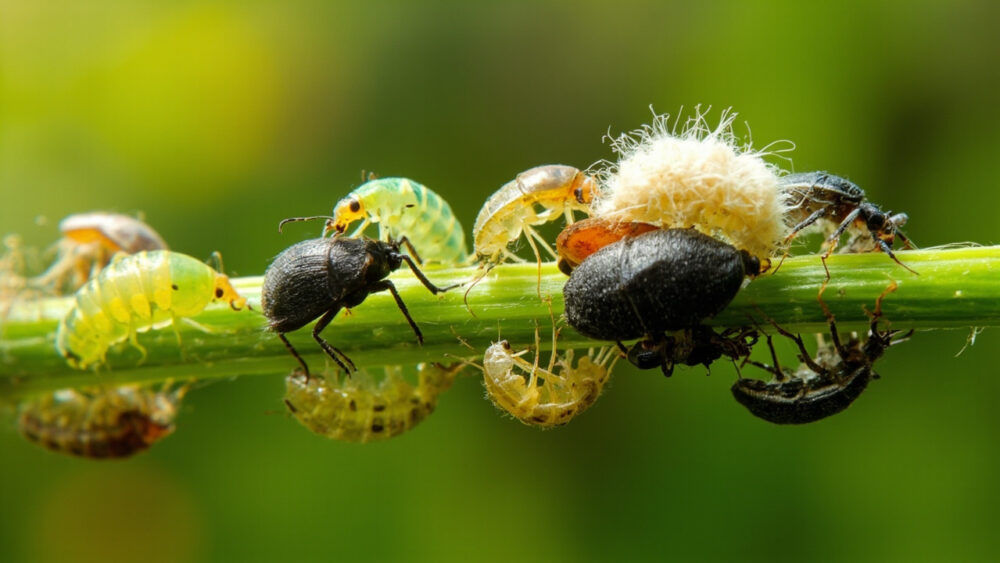
Covered in white, cottony fuzz, this one gets mistaken for a fungus or mold almost every time, since the waxy coating hides the insect underneath completely. It clusters on apple bark, wounds, and roots, and the fuzzy masses are the actual giveaway once you know to look past the “mold” assumption.
10. Giant Bark Aphid
Long-legged and unusually large for an aphid, sometimes reaching a quarter inch, this species looks more like a tiny spider than the typical soft-bodied aphid shape. It feeds on oak, maple, and other shade trees, and while it looks alarming, it rarely causes serious tree damage on its own.
11. Spirea Aphid
Small, pale green, and fast-breeding, this species targets spirea shrubs specifically and can produce generation after generation through a single warm season. New growth tips are where you will find the densest clusters, often curled and stunted by midsummer.
12. Boxelder-Associated Aphids
Not to be confused with boxelder bugs, which are a completely different insect that just happens to share the same host tree. True aphids on boxelder and maple are small and greenish, feeding on leaves and secreting the same sticky honeydew that draws ants and sooty mold to the tree below.
Trees hide their aphids in plain sight, but the next group hides underground entirely.
The Ones Almost Nobody Recognizes
These three trip up even people who have gardened for decades.
13. Root Aphids
Living entirely underground, this is the type most gardeners get completely wrong, usually blaming root rot, nutrient deficiency, or overwatering for weeks before anyone thinks to check the roots directly. Pale, waxy-coated aphids cluster on plant roots and in potting soil, especially in containers and raised beds, causing slow wilting and stunted growth with no visible insects anywhere above the soil line. If a plant is declining for no visible reason and the leaves show no aphids at all, pull it and check the root ball before assuming disease.
14. Woolly Aphids on Alder and Beech
Another fuzzy imposter, these coat twigs and undersides of leaves in white waxy filaments that drift and blow like tiny bits of cotton in a breeze, which is often the first sign people notice, not the insect itself. They rarely threaten a healthy tree’s survival, but the mess of wax and honeydew below the canopy is what actually prompts most people to search for answers.
15. Cowpea Aphid
Glossy black with white legs, this southern and warm-climate species targets cowpeas, clover, and other legumes, and it survives winters in far milder conditions than most aphid species, giving it a head start each spring in zones 8 and warmer. It is one to watch specifically if you grow southern peas or use clover as a cover crop.
Fifteen types down, and the pattern by now should be obvious: color and host plant do almost all the identification work.
How to Choose the Right One
You are not really “choosing” an aphid, you are matching what is in front of you to the right species so you treat it correctly. Work through it in this order.
- Check the host plant first. Aphids are picky. Knowing whether they are on roses, cabbage, milkweed, or roots already eliminates most of this list.
- Look at color and coating. Note whether it is green, black, orange, pink, or hidden under white waxy fuzz, since that alone separates most species instantly.
- Check where on the plant they cluster. New growth tips, stems, leaf undersides, and roots each point toward different species and different urgency levels.
- Consider the season and your climate zone. Cold-tolerant species like foxglove aphid show up early, while warm-climate species like cowpea aphid persist through mild winters in zone 8 and up.
- Match your response to severity, not fear. A strong water spray, insecticidal soap, or encouraging natural predators like lady beetles handles most infestations; always follow product label directions exactly if you reach for a pesticide.
- Recheck weekly. Aphids reproduce fast, often producing a new generation in under two weeks in warm weather, so one clean check does not mean the problem is over.
Get the host plant and the color right, and the species pretty much identifies itself.
Most aphid problems are more annoying than dangerous, and a plant that looks rough today usually bounces back once the colony is knocked down. Watch the new growth for a couple weeks after treatment, that is where you will know for certain whether you won.