The fastest way to sort out types of orchids is by growth habit: monopodial orchids grow from a single upward stem and just need you to leave the top alone, while sympodial orchids spread sideways on a rhizome and build new fans or canes you can eventually divide. Once you know which habit you’re dealing with, the watering and repotting instructions actually make sense instead of feeling like guesswork.
Most beginners grab the wrong orchid for the wrong reason. They buy the moth orchid at the grocery store because it’s blooming and cheap, then panic six months later when the flowers drop and they assume they killed it. Meanwhile, there’s a scruffy, unglamorous type that experienced growers keep quietly multiplying on windowsills because it blooms twice a year and shrugs off neglect that would kill a Phalaenopsis.
Below are 15 types grouped by how they actually grow and what they ask of you, including number 13, which is the orchid most people misjudge as fussy when it’s really one of the toughest ones on this list. The final entries and a step by step method for picking the right orchid for your windowsill are waiting at the bottom, so keep scrolling before you decide anything.
The Beginner-Friendly Monopodials
These grow upward from one stem and tolerate the inconsistent watering most of us are actually capable of giving them.
1. Phalaenopsis (Moth Orchid)
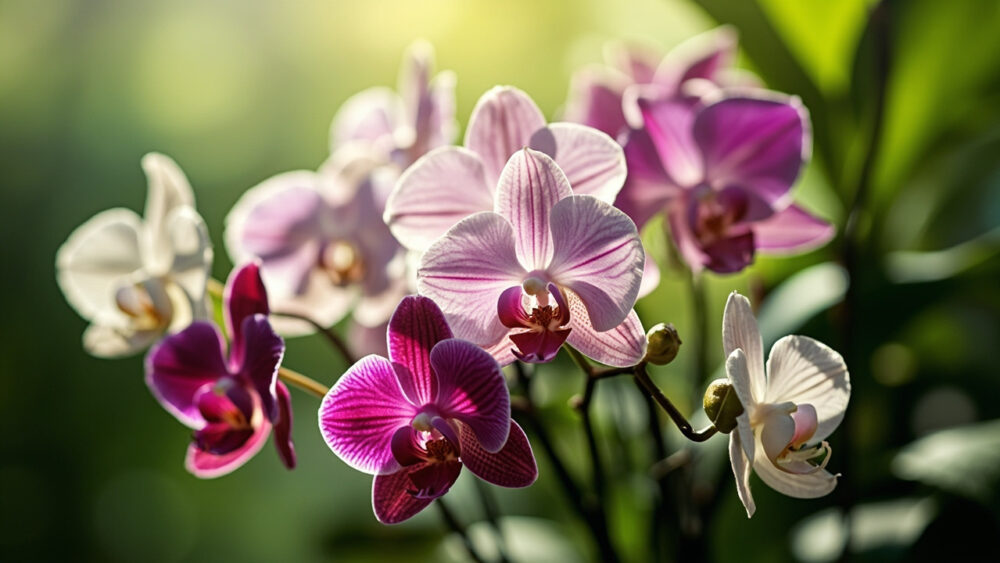
Flat, wide petals in white, pink, or striped patterns mark this as the orchid sold at every grocery store. It tolerates low light, forgives irregular watering, and reblooms for months, which is exactly why it’s the default gift plant, but people underrate how long a single bloom spike lasts, sometimes eight to twelve weeks.
2. Vanda
Roots hanging loose in open air, often with no pot at all give Vanda away instantly. It wants bright light, daily watering or misting in the growing season, and warmth year round, making it a poor houseplant unless you have a bright bathroom or a greenhouse.
3. Ascocenda
Compact size with Vanda-like color saturation comes from crossing Vanda with the smaller Ascocentrum. It fits a sunny windowsill where a full-size Vanda wouldn’t, and the flat, richly colored blooms hold their color better in strong light than most orchids.
4. Angraecum
Star-shaped white flowers with a long backward spur and a heavy night fragrance set this one apart. It grows slowly, wants warmth and humidity, and rewards patience with blooms that can perfume an entire room after dark.
Monopodials are the easy entry point, but the next group is where growers start building a real collection.
The Classic Sympodial Growers
These spread along a rhizome and produce new growths called pseudobulbs, which is also why they’re the ones you eventually divide.
5. Cattleya
Large, ruffled blooms with a bold lip and a thick, upright pseudobulb are the corsage orchid of old photographs. It needs bright light, a real dry-down between waterings, and a distinct rest period, and skipping that rest is the single most common reason it won’t rebloom.
6. Oncidium
Sprays of small, ruffled flowers, often yellow and brown, that resemble dancing figures make Oncidium easy to spot from across a room. It’s a heavier feeder than most orchids, wants bright light, and produces branching flower spikes that can carry dozens of blooms at once.
7. Dendrobium
Tall, cane-like stems with flowers clustered along the upper length define this huge and varied group. Most nursery Dendrobiums want bright light and a deliberate cool, dry winter rest to trigger blooming, and skipping that rest is the same mistake that stalls Cattleya.
8. Miltoniopsis (Pansy Orchid)
Flat, rounded flowers that genuinely resemble pansies in white, pink, and burgundy make this one instantly recognizable. It’s fussier than its cousins, wanting cool temperatures, constant moderate moisture, and no direct sun, which makes it a poor choice for hot climates without air conditioning.
9. Brassia (Spider Orchid)
Long, narrow, spidery petals reaching several inches from the flower’s center are unmistakable once you’ve seen one. It grows and blooms like an Oncidium relative, tolerates similar bright light and regular watering, and the odd, elongated shape exists to lure a specific pollinating wasp in the wild.
That’s the backbone of most collections, but the next group is where orchids start looking less like orchids.
The Cool-Growing and Unusual Shapes
These break the stereotype of what an orchid flower is supposed to look like, and a couple of them need real cold to bloom at all.
10. Paphiopedilum (Lady’s Slipper Orchid)
A pouch-shaped lip below a hood-like dorsal petal makes this the easiest orchid shape to identify by sight alone. It grows in soil-like mixes rather than pure bark, prefers lower light than most orchids, and typically produces one long-lasting flower per stem rather than a spray.
11. Masdevallia
Triangular, often brightly colored flowers with fused, tail-like petal tips give this small orchid a strange, almost insect-like look. It wants cool temperatures, high humidity, and constant moisture, and it genuinely struggles in a hot, dry house, so it suits a basement grow shelf or cool greenhouse more than a sunny windowsill.
12. Cymbidium
Grass-like leaves and tall spikes of waxy, long-lasting flowers make Cymbidium one of the few orchids that tolerates real cold. It needs a genuine temperature drop in fall, ideally into the 40s and 50s at night, to set buds, which is why growers in mild climates can leave it outside in a sheltered spot through autumn.
13. Bulbophyllum
This is the one most people misjudge as impossible to grow because the flowers look so strange and delicate. Small, often bizarrely shaped flowers, sometimes with moving or hair-like parts are the giveaway, and while some species do smell unpleasant to attract flies, the plants themselves are tough, fast-spreading mat growers that do well mounted on bark with regular misting.
The strange shapes are memorable, but the last two entries are the ones worth growing even if you only keep one orchid.
The Fragrant and Fuss-Free Picks
These earn a permanent windowsill spot from experienced growers precisely because they don’t demand much.
14. Zygopetalum
Green and brown mottled petals beneath a blue-purple lip, with a heavy grape or spice fragrance make this an unusual and rewarding choice. It tolerates average home humidity better than most cool growers, blooms in winter when little else in the collection is flowering, and the scent alone justifies the space.
15. Epidendrum (Reed Orchid)
Slender, reed-like stems topped with clusters of small, long-lasting flowers describe the toughest orchid on this list. It tolerates more sun, more drought, and more temperature swing than any other entry here, blooms nearly continuously once established, and is the orchid experienced growers hand to beginners who killed a Phalaenopsis and swore off orchids forever.
How to Choose the Right One
Match the plant to your actual conditions, not to the prettiest bloom at the garden center.
- Check your light first: a west or south window suits Cattleya, Oncidium, Vanda, and Epidendrum, while an east window or a spot back from bright glass suits Phalaenopsis and Paphiopedilum.
- Check your winter temperatures: if your house or porch drops into the 40s and 50s at night in fall, Cymbidium and Dendrobium will reward you with better blooms.
- Decide what you actually want: heavy fragrance points to Angraecum or Zygopetalum, dramatic color points to Cattleya or Ascocenda, and near-constant blooming points to Epidendrum.
- Be honest about your watering habits: if you forget plants for two weeks at a stretch, avoid Miltoniopsis and Masdevallia, both of which punish dry spells.
- Start with one forgiving type before buying a collection: Phalaenopsis or Epidendrum will teach you the watering and light instincts that make every other orchid on this list easier.
- Repot only when the growing medium breaks down or roots spill over the pot edge, not on a fixed yearly schedule.
Pick one, get its light and water rhythm right, and the rest of this list becomes a lot less intimidating.