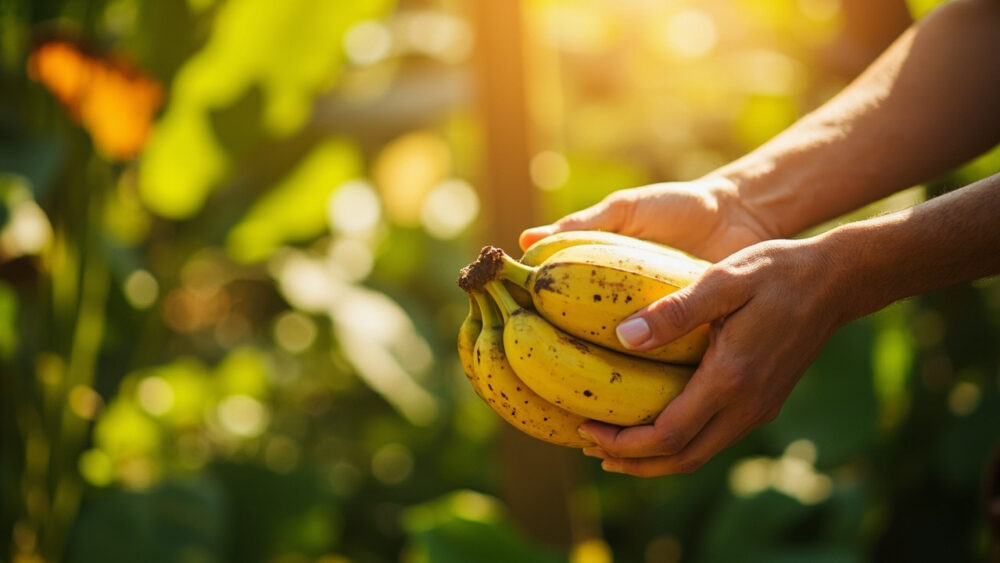
The right way to store bananas depends entirely on how ripe they are and how fast you want to eat them. Unripe or just-ripe bananas belong on the counter at room temperature, uncovered, away from direct sun, where they will finish ripening in a few days. Once they hit peak ripeness, moving them to the fridge stalls them for another five to seven days, and freezing peeled, ripe bananas keeps them usable for two to three months.
That sounds simple, and it mostly is, but there are two or three ways people blow it every week. There is one wrapping trick that actually slows ripening and it is not what most people do with the whole bunch. There is a fridge myth about blackening skin that scares people away from a method that works perfectly well. And there is a freezing mistake that turns a good stash of smoothie fuel into a mushy, waterlogged mess.
Stick with me through the details below and I will also give you a save-able Bananas at a Glance card at the bottom with every timing and trick in one place.
The Best Method: Match Storage to Ripeness Stage
Bananas ripen fast and they do not slow down once they start, so your storage method has to change as they change. Green to yellow-green bananas want a countertop, room temperature, out of direct sun, sitting in open air rather than a sealed bag. This is the stage where they still need to breathe and finish converting starch to sugar.
Once bananas reach the color and softness you actually want to eat, that is your signal to intervene if you are not eating them all right away. Move a few to the fridge to freeze their progress. Leave a couple out if you plan to eat them within a day or two.
This staggered approach, a few on the counter and a few in the fridge, is how you stretch one bunch across a week and a half instead of losing half of it to brown mush by day five.
The stage you catch them at determines everything that follows, including the one packaging trick most people skip entirely.
The Wrapping Trick Almost Nobody Uses Correctly
Bananas release ethylene gas from the crown, the stem end where the whole bunch connects. That crown is the ripening engine. Wrapping just the crown in plastic wrap or foil, rather than wrapping each banana individually, slows ripening by a day or two because it traps the ethylene right at the source instead of letting it circulate.
Most people either skip wrapping entirely or wrap each banana separately, which does very little.
If you are storing a whole bunch on the counter and want it to last, separate a few bananas off the bunch to ripen faster on their own, and wrap the crown of the rest tightly.
It is a small move, but it is the difference between a bunch that all turns brown together and one that ripens in stages so you are not stuck eating five bananas in one day.
Once they are ripe, though, the crown trick stops mattering and the real clock starts.
How Long Bananas Actually Keep, Stage by Stage
Here is the honest timeline, because “how long do bananas last” really depends on where they are in that ripening curve when you start storing them.
- Green on the counter: two to five days to reach full ripeness, depending on room temperature and how green they started.
- Ripe on the counter: one to three days before overripening, faster in a warm kitchen.
- Ripe in the fridge: five to seven more days, sometimes longer, though the peel will darken.
- Peeled and frozen: two to three months at good quality, safe indefinitely but with declining texture after that.
- Whole, unpeeled, frozen: possible but not recommended, since the peel turns nearly impossible to remove once thawed.
The fridge is where most people hesitate, because of a very reasonable-looking sign that turns out to mean nothing.
The Fridge Myth: Black Skin Does Not Mean Rotten
If you assumed a black banana peel means the fruit inside has gone bad, that guess ruins a lot of perfectly good bananas that end up in the trash. Cold temperatures break down chlorophyll in the peel and turn it dark brown or black within a day or two in the fridge. The fruit underneath is unaffected by this and stays firm and sweet.
This is genuinely one of the most misread signs in the produce drawer.
The peel darkening is purely cosmetic, a cold-storage side effect, not spoilage. Peel one open and check texture and smell before you toss it.
Refrigeration is honestly underused for bananas specifically because that black peel looks alarming and it should not.
Once you are past that fear, freezing is the next place people get it wrong, and this mistake is a real one worth avoiding.
Freezing Without Ruining the Texture
The mistake that ruins most frozen banana stashes is freezing them whole in the peel, or peeling them and tossing them straight into a bag without any prep. Whole frozen bananas turn the peel black and rubbery and nearly welded to the fruit. Bare peeled bananas tossed together freeze into one solid clump you have to hack apart with a knife.
The fix is simple. Peel first, always. Slice into coins about half an inch thick, or leave halves if you plan to blend them anyway.
Lay the pieces on a parchment-lined tray in a single layer and freeze for one to two hours before bagging.
This single freeze step, called flash freezing, keeps every piece separate in the bag afterward so you can pour out exactly what you need.
Skip it, and you are stuck thawing the whole bag just to get a few pieces for a smoothie, which brings us to what actually spoils versus what just looks rough.
Signs a Banana Has Actually Turned
Brown speckles on yellow skin are just ripening, not spoilage, and often mean sweeter fruit. Genuine spoilage looks and smells different.
Watch for these real signs:
- A sharp, sour, or fermented smell rather than the normal sweet banana scent.
- Visible mold, which shows as white or greenish fuzz, usually at the crown or any split in the peel.
- Liquid leaking from the peel or a mushy, wet texture you can feel through the skin.
- Flesh that has gone gray or watery inside once peeled, rather than soft and cream colored.
A banana with a few black patches on brown-speckled skin is very often still good, sometimes better than ever for baking.
When in doubt, peel it and look and smell before deciding.
Now that you know what actual spoilage looks like, here is the short list of habits that cause it early.
The Mistakes That Cost You a Whole Bunch
Most banana losses trace back to a handful of repeatable habits, not bad luck.
Storing them in a sealed bag on the counter traps ethylene and moisture, speeding ripening and encouraging mold far faster than open air.
Keeping them near other ripening fruit, especially apples or avocados, exposes them to extra ethylene and pushes them over the edge in a day or two.
Leaving the whole bunch connected at the crown means they all ripen at the same pace, so you lose several at once instead of staggering them.
Refrigerating bananas while still green is the other common error. Cold halts the starch-to-sugar conversion permanently, so a green banana chilled too early may never ripen properly, even after it warms back up.
Fix these five habits and you will waste far fewer bananas than you probably do now.
All of this boils down to a handful of numbers and cues worth keeping on hand.
Bananas at a Glance
- Unripe bananas: store on the counter, uncovered, out of direct sun, away from other ripening fruit.
- Ripening time: two to five days on the counter depending on room temperature and starting color.
- Ripe bananas on the counter: good for one to three days before overripening.
- Ripe bananas in the fridge: five to seven more days, peel darkens but fruit stays fine.
- Frozen, peeled and sliced: two to three months at best quality, flash freeze on a tray first.
- Slow the ripening: wrap the crown, not the individual bananas, in plastic wrap or foil.
- Real spoilage signs: sour smell, mold, leaking liquid, or gray watery flesh once peeled.
Match the method to the ripeness stage and wrap the crown, not the fruit.
Do that and one bunch of bananas will feed you for a week and a half instead of two days.