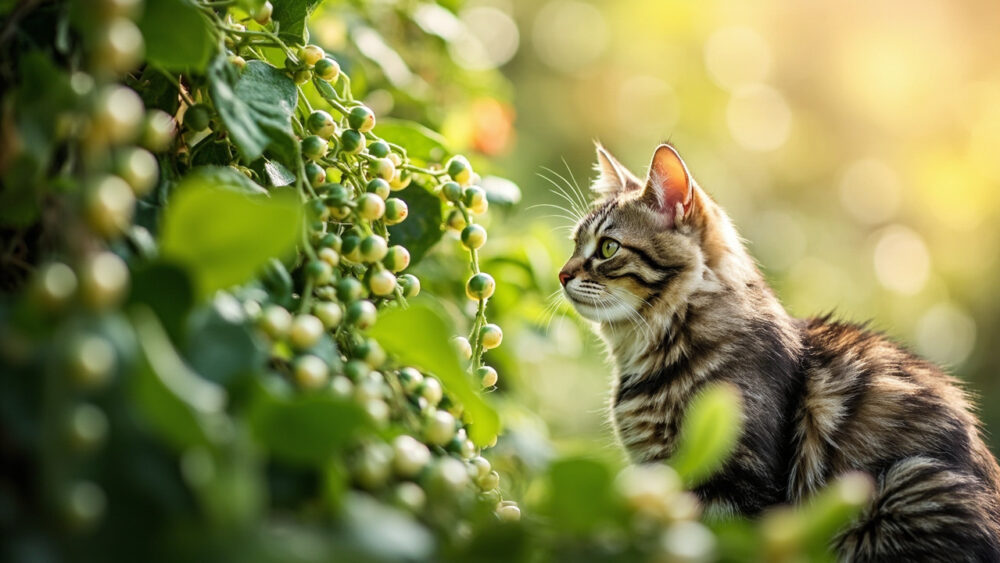
Yes, string of pearls (Senecio rowleyanus, sometimes sold as Curio rowleyanus) is toxic to cats. It is not a plant that causes rapid, severe poisoning, but it does contain compounds that irritate the mouth, stomach, and skin, and vets classify it as toxic to cats, dogs, and horses. The good news is that most exposures are mild if you catch them early.
What changes the answer is exposure, not the plant itself. A cat that brushes past a hanging pot is fine. A cat that chews through a strand of pearls and swallows the sap is dealing with something else entirely, and a cat with a habit of nibbling houseplants is a different risk profile than one that has never shown interest.
Below you will also find a save-able quick-reference card at the bottom of this page, with the toxicity answer, the parts to worry about, and the signs to watch for, all in one place you can screenshot before you forget it.
The Plain Answer, No Hedging
String of pearls belongs to the Senecio genus, and most Senecio species carry the same warning label.
The plant contains compounds that cause gastrointestinal irritation and, in some sensitive cats, contact irritation on the skin or mouth. It is not classified among the truly dangerous “one bite and it’s an emergency” plants like lilies are for cats, but it is genuinely toxic, not just mildly annoying.
Vets and poison control lines list it as toxic for a reason: repeated or larger exposures can cause more than a stomach ache, and every cat reacts a little differently.
The part that actually matters next is how much contact your cat has had, and with what part of the plant.
Which Parts, and How Much Exposure Matters
The bead-like leaves and the milky sap inside them carry the irritating compounds. A cat that licks a leaf gets a small dose. A cat that bites through several pearls or chews a stem gets a much bigger one, because the sap is more concentrated than the surface of an intact leaf.
Sap on the skin or in the mouth is usually what causes the visible reaction, more so than swallowing a leaf whole.
Size matters too. A kitten or a small cat gets a proportionally larger dose from the same amount of plant material than a big adult cat does, so the same nibble means more for a smaller animal.
Dried or wilted plant material does not lose its toxicity, so a fallen, shriveled pearl on the floor is not a safe cleanup to skip.
Next, the signs that tell you something actually happened, versus normal cat weirdness.
Signs to Watch For
If you assumed a toxic plant always means dramatic, obvious symptoms, that guess undersells how quiet this one usually is. Most cats show mild, gut-level signs, not collapse.
- Drooling or pawing at the mouth
- Vomiting or diarrhea
- Mild swelling or redness around the lips or on the skin that touched sap
- Reduced appetite or general lethargy for a day
- Skin irritation or a rash if sap contacted bare skin, not just the mouth
None of these signs are ones you should just wait out on your own. They tell you contact happened, not how serious it is, and that distinction needs a vet, not a guess.
What you do in the next hour matters more than what you do after that.
What to Do If Your Cat Ate It
Call your veterinarian or an animal poison control line right away if you know or suspect your cat chewed on or swallowed string of pearls, even if your cat seems fine.
Bring information, not home remedies. Note roughly how much plant material is missing, when it happened, and what symptoms you have seen so far. If you can, bring a small piece of the plant or a photo of it with you, since it helps confirm exactly what your vet is dealing with.
Do not induce vomiting, give milk, or try any home treatment on your own. Some approaches that seem harmless can make plant-related irritation worse, and this decision belongs to your vet, not the internet.
Rinse visible sap off skin or fur with plain water if you can do it without stressing the cat further, then get to the vet.
If your cat is fine this time, the smarter move is changing the setup so there isn’t a next time.
Safer Look-Alikes to Grow Instead
You do not have to give up trailing, bead-textured succulents to keep a cat safe. A few genuinely non-toxic options give a similar look.
- String of hearts (Ceropegia woodii) has trailing, heart-shaped leaves and a similar cascade, and it is considered non-toxic, though any plant material can still cause mild stomach upset if a cat overindulges
- Burro’s tail (Sedum morganianum) has a plump, beaded look close to string of pearls and is generally regarded as pet-safe
- Haworthia and Hoya varieties offer interesting texture without the Senecio toxicity profile
Always double-check a specific plant against a current pet-safety list before buying, since naming inside a species can vary and marketing names are not always accurate.
Even a safer plant deserves the same placement logic that keeps a curious cat out of trouble.
Setting Up Your Space So It Doesn’t Matter
Cats are drawn to texture and movement, and trailing succulents like string of pearls practically ask to be batted at. Hanging it out of jumping range, not just off a low shelf, solves most of the problem.
Bored cats chew more than well-stimulated ones do, so a few cat-safe plants, a scratching post, or more play time can reduce interest in your succulents generally.
Fallen pearls on the floor are an easy fix: sweep them up promptly rather than letting them sit where a cat can find and mouth them later.
Here is everything from above, condensed into the card worth keeping.
String of Pearls: Quick Reference
- Toxicity: yes, string of pearls (Senecio rowleyanus) is toxic to cats, dogs, and horses
- What causes it: irritating compounds in the leaves and especially the milky sap
- Risk level: usually mild gastrointestinal or contact irritation, not typically life-threatening, but always worth a vet call
- Signs to watch for: drooling, vomiting, diarrhea, mouth or skin irritation, low appetite, lethargy
- What to do: call your vet or animal poison control immediately for any suspected ingestion, no home treatment or induced vomiting
- Safer swaps: string of hearts, burro’s tail, Haworthia, and Hoya are commonly grown non-toxic alternatives
Keep the plant, keep the cat, just keep them a jump apart.
When in doubt about a bite, chew, or missing leaf, your vet is always the right call.