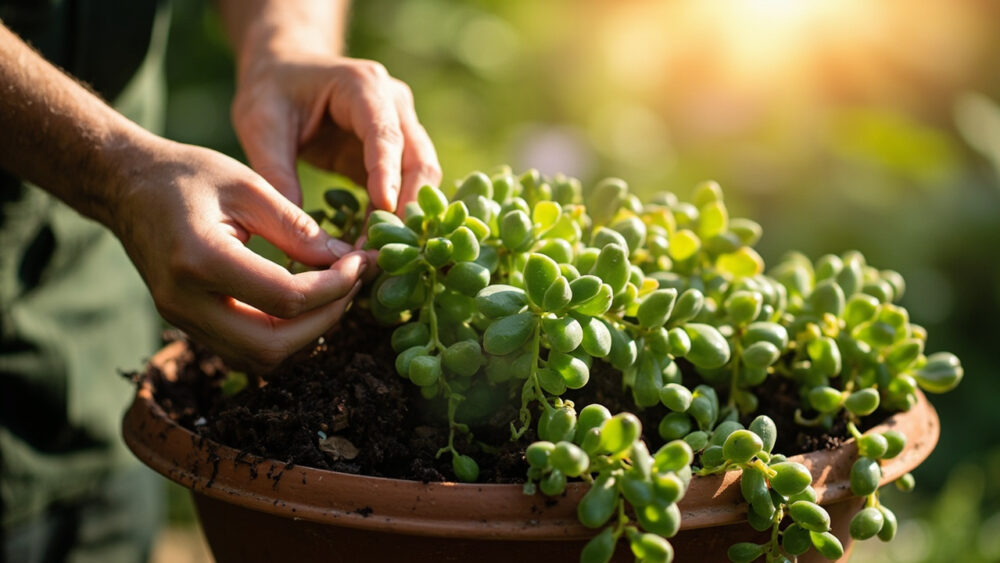
How to care for string of pearls comes down to three things it will not forgive you for skipping: bright light, infrequent deep watering, and a pot that drains fast. Give it a few hours of direct sun or several hours of bright indirect light, let the soil go completely dry between waterings, and plant it in a fast-draining succulent mix. Get those three right and the trailing beads take care of themselves.
Most people who lose this plant do it in the first month, and almost always the same way. There is a mistake with watering that has nothing to do with how often you do it and everything to do with a habit you probably already have.
There is also a sign of stress that looks exactly like a sign of health, so most people read it backward. And once you get past keeping it alive, there is the real question waiting underneath: how do you get it to actually look like the thick, cascading curtain from the photos. Stick around, because the save-able String of Pearls at a Glance card is at the bottom once every piece is in place.
Light, Placement, and Temperature
String of pearls wants strong light, more than most houseplants people keep on a windowsill and call it done. A south or west-facing window with several hours of direct sun works well, and outdoors it tolerates full morning sun with afternoon shade in hot climates. Too little light is the most common placement mistake, and it does not kill the plant outright, it just stretches the pearls thin and spaces them far apart on long bare runners.
Indoors, keep it near the brightest window you have, rotating the pot a quarter turn every week or two so growth does not lean.
Temperature-wise, it prefers 65 to 80°F and will not tolerate frost at all. Bring it in well before your first fall frost date, since even a light freeze kills the pearls fast.
Get the light right and watering gets a lot more forgiving.
Watering: The Mistake That Actually Ruins This Plant
If you assumed the danger is underwatering because the pearls look like they are storing water for a drought, that guess is backward. Overwateringespecially watering on a fixed schedule instead of checking the soil, is what rots string of pearls faster than anything else.
The real rule: let the soil dry out completely, then water it thoroughly until it runs from the drainage holes, then wait again. In bright conditions that might mean every 10 to 14 days in summer, and every three to four weeks in winter when growth slows down.
Check by feel, not by calendar. Push a finger an inch into the mix; if it is dry all the way down and the pearls feel slightly soft rather than taut, it is time to water.
Shriveled, deflated pearls mean thirst. Yellow, mushy, or translucent pearls that drop at a touch mean rot, and by that point the fix is usually cutting away the damaged stems, not more careful watering.
Once you trust your finger over your calendar, the next question is what you are watering into.
Soil and Feeding
Use a mix built for cacti and succulents, or make your own with regular potting soil cut with an equal part of coarse sand, perlite, or pumice. The goal is water that moves through in seconds, not a mix that stays damp for days.
A plastic nursery pot with drainage holes is fine, but terra cotta helps a lot if you tend to water generously, since the clay pulls moisture out faster.
Feed lightly during spring and summer with a diluted balanced liquid fertilizer, roughly once a month, and skip feeding entirely in fall and winter. This is not a heavy feeder, and pushing fertilizer on it mostly just encourages soft, rot-prone growth rather than fuller pearls.
The mix keeps the roots alive, but the pruning shears are what actually make it look full.
Pruning, Repotting, and the Trick to a Fuller Plant
String of pearls almost never needs pruning to survive, but it needs pruning to look good. Trim leggy or bare strands back to the pot’s edge in spring, right as new growth picks up, and use the cuttings to fill in thin spots.
Lay a trimmed strand across the topsoil in the same pot, or a new one, and it will root along its length within a few weeks without any rooting hormone needed. This is the actual answer to getting that thick, cascading look: it is propagation, not patience.
Repot every two to three years, or sooner if roots are circling the drainage holes or the pot feels top-heavy. Spring is the best window, right as the plant is heading into active growth.
Wipe dust off the pearls occasionally with a dry soft brush; a damp cloth can trap moisture in the crevices where beads meet the stem.
Even with good pruning habits, a few problems show up often enough that you should know them on sight.
The Problems Most Likely to Hit Yours
Shriveled or flat pearls mean underwatering. A thorough soak usually plumps them back up within a day or two.
Mushy, yellow, or translucent pearls mean rot from overwatering or a mix that drains too slowly. Cut away affected strands and let the soil dry out completely before watering again.
Long bare stretches of stem with pearls spaced far apart mean insufficient light, not old age. Move it somewhere brighter and prune the leggy growth back.
Mealybugstiny white cottony clusters at the stem joints, are the most common pest here. Dab them with a cotton swab dipped in isopropyl alcohol, and for a heavier infestation, follow the label directions on an insecticidal soap.
One more thing worth knowing before pets or kids get near it.
Is String of Pearls Toxic
Yes. String of pearls is considered toxic to cats, dogs, and humans if ingested, and it can cause irritation to the mouth and digestive upset. If your pet or a child eats any part of this plant, contact a veterinarian or poison control promptly rather than waiting to see what happens.
Keep that in mind for placement, and now for the part everyone actually wants: what thriving looks like.
How to Tell It Is Actually Thriving
A genuinely happy string of pearls has plump, round, tightly spaced beads with no long bare gaps between them. New growth appears as thin pale-green tendrils reaching out from the crown or pot edge, and in the right light with a little maturity, it can even produce small white flowers with a faint cinnamon-like scent, usually in fall.
The trailing strands should feel firm, not soft or wrinkled, and the color should be a consistent green rather than yellowing or translucent at the tips.
If yours checks those boxes, you have already solved the two things that trip up almost everyone else.
String of Pearls at a Glance
- Light: bright indirect light with a few hours of direct sun daily, more light means tighter, fuller pearls.
- Watering: soak thoroughly, then let the soil dry out completely before watering again, roughly every 10 to 14 days in summer and every three to four weeks in winter.
- Soil: a fast-draining cactus or succulent mix, or potting soil cut with perlite, pumice, or coarse sand.
- Temperature: 65 to 80°F, no frost tolerance, bring it indoors before your first fall frost.
- Feeding: diluted balanced fertilizer about once a month in spring and summer, none in fall and winter.
- Propagation: lay trimmed strands across moist soil, they root in a few weeks with no rooting hormone needed.
- Toxicity: toxic to pets and people if ingested, contact a veterinarian or poison control if that happens.
Get the watering habit right and the light bright, and this plant mostly runs itself.
Everything else, the fullness, the flowers, the long cascading strands, comes down to a pair of pruning shears and patience with propagation.