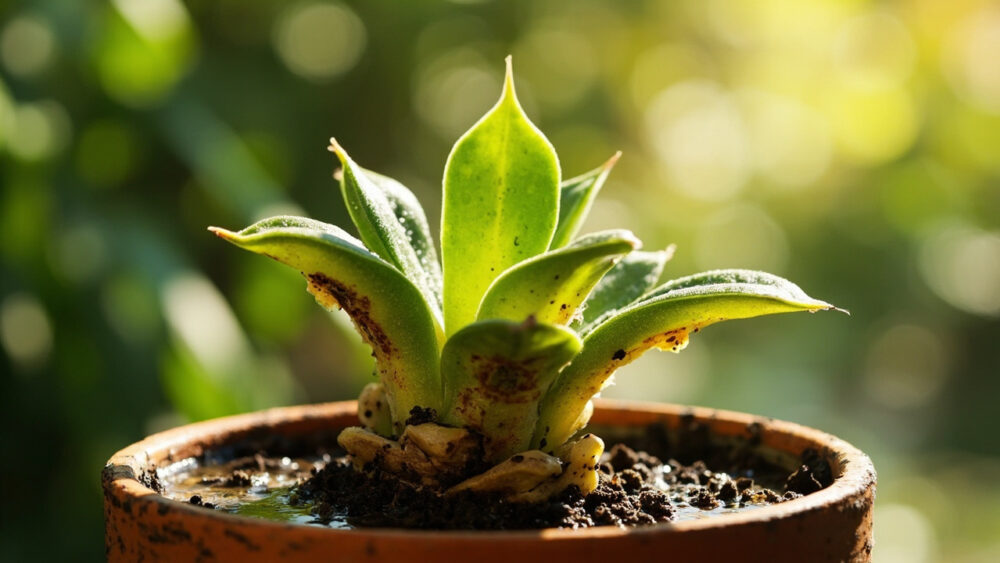
If your gasteria has mushy, translucent, or collapsed leaves, especially near the base, the most likely cause of an overwatered gasteria is soil that stayed wet too long combined with a pot that has nowhere for the water to go. The fix is to stop watering immediately, get the plant out of that soil, and check the roots before you do anything else. That last part matters more than people think, because a plant with rotted roots needs a completely different rescue than one that’s just sitting in soggy mix.
Here’s the thing everyone gets backward: they see soft, sad-looking leaves and assume the plant is thirsty, so they water again. That guess is exactly what kills most gasterias, because the plant is already flooded and you just made it worse. The real tell isn’t how the leaves look from across the room, it’s how they feel and where the damage started.
By the end of this you’ll know exactly which of five causes you’re dealing with, how to tell them apart at a glance, and whether your particular plant has a real shot at bouncing back. Stick around for the diagnosis checklist at the bottom, it’s built to run in about two minutes with the plant right in front of you.
Most Likely Causes, Ranked
1. Watering on a schedule instead of by feel
Confirm it: stick a finger or a wood skewer 2 inches into the soil. If it comes out with damp soil clinging to it and the pot feels heavy, you’ve been watering before the plant needed it.
Gasteria stores water in those thick leaves and wants the soil to run properly dry between drinks, not just dry on the surface.
Fix it: stop watering now. Let the pot go completely dry, then wait another 3 to 5 days past that before the next watering. Water deeply when you do, then don’t touch it again until the soil is bone dry through the whole pot.
This one’s fixable fast, but the next cause is why some plants don’t recover no matter how careful you get.
2. A pot with no drainage hole, or a decorative outer pot trapping water
Confirm it: lift the plant out of its pot, or tip the pot sideways over a sink. If water pools at the bottom or the drainage hole is blocked by compacted roots and soil, this is your culprit.
A lot of gasteria sold in nurseries come in plastic grow pots dropped inside a cute ceramic pot with no hole at all. Water collects in the bottom and the roots sit in it for days.
Fix it: repot into a container with an actual drainage hole. If you love the decorative pot, use it as a cachepot and always pour off any water that collects underneath after watering.
Even a well-drained pot can betray you if what’s inside it is the wrong soil, which brings us to the next cause.
3. Soil that holds water instead of shedding it
Confirm it: squeeze a handful of the soil. If it clumps like damp brownie mix and stays wet for a week or more after watering, it’s the wrong mix. Regular potting soil or garden soil does this to succulents constantly.
Gasteria needs a mix that drains in seconds, not one that holds moisture for the sake of “convenience.”
Fix it: repot into a gritty succulent or cactus mix, ideally cut with extra pumice, perlite, or coarse sand so at least a third of the mix is mineral grit. Fix the soil and the drainage hole problem at the same time if both apply, they usually travel together.
Get the roots out and you’ll know in seconds whether you caught this early enough or not.
4. Root rot already underway
Confirm it: unpot the plant and look at the roots. Healthy gasteria roots are firm, whitish to tan, and don’t fall apart when you touch them. Rotted roots are brown to black, mushy, hollow-feeling, or slip off in your fingers like wet string. There’s often a sour, swampy smell.
This is the cause that scares people, and honestly, it should get your attention, because it changes the whole plan.
Fix it: cut away every rotted root with a clean blade until you only see firm tissue. Let the remaining roots and any cut leaf base air-dry for 1 to 2 days before repotting into fresh, dry succulent mix. Don’t water for at least a week after that.
How much of the plant survives this step depends entirely on how much root you have left, which is exactly what the recovery section below gets into.
5. Cool temperatures slowing the plant down while watering stayed the same
Confirm it: think back on the last few weeks. Has it been a cold snap, a move indoors for winter, or a stretch of gray, low-light days? Gasteria uses far less water when it’s cool or when light drops, but a lot of people keep watering at summer frequency anyway.
Fix it: stretch your watering interval whenever temperatures drop below the 60s Fahrenheit for extended periods, or when the plant moves somewhere dimmer. In a cool, low-light winter spot, many gasterias barely need water once a month.
Once you know which cause fits, the next question is whether it’s the only one, since these often overlap.
How to Tell the Causes Apart
Where the damage starts is the biggest clue. Rot from wet soil almost always begins at the base, the lowest and oldest leaves turn translucent, yellow-brown, or mushy first, while the newest center growth still looks normal for a while.
If the whole plant, top to bottom, looks uniformly soft and deflated rather than starting at the bottom, you’re likely looking at a very recent, severe overwatering event rather than slow rot building over weeks.
A plant that’s simply been on too tight a watering schedule usually still has firm roots when you check, even though the leaves look stressed. A plant with actual rot smells off and the roots fail the touch test.
If only leaves that were already damaged, bruised, or broken are the ones going soft, that’s localized injury, not systemic overwatering, and it’s a much smaller problem.
Once you’ve pinned down the cause, the next honest question is what your plant’s odds actually are.
Will It Recover?
A gasteria caught in the early stage, mushy lower leaves but a firm root system and no smell, has a good prognosis. Trim the bad leaves, fix the water and soil issue, and new growth typically resumes within 3 to 6 weeks.
Root rot changes the math. If you still have a stem base and any firm roots after trimming, the plant can often regrow a root system from scratch in fresh dry soil, though it may sit still for a month or more first. If the rot has reached the central stem and it’s mushy all the way through with no firm tissue anywhere, that plant cannot be saved as a whole.
Don’t despair yet, though: if there are any firm, undamaged leaves left, you can often twist them off cleanly at the base and let them callus for propagation, essentially starting over from a leaf cutting.
That salvage option is also your best insurance going forward, which is where prevention comes in.
How to Keep It From Happening Again
Water by checking, not by calendar. Push a finger or skewer into the soil before every watering, and only water when it comes out completely dry, not just cool or slightly damp.
Use a pot with a drainage hole every time, no exceptions, and a gritty mix with real mineral content, not a moisture-retaining potting soil.
Adjust for the season. Gasteria drinks more in warm, bright stretches and drinks very little in cool or dim ones, so the same watering frequency will not work year-round.
Get those three habits right and you’ll rarely see this problem again, but it helps to have a fast way to check when you’re standing there wondering.
Diagnosis Checklist
- Check the lowest leaves first: if they are mushy, translucent, or yellow-brown while upper leaves look normal, suspect overwatering or rot before anything else.
- Smell the soil and the base of the plant: any sour or swampy odor means rot is likely already active.
- Push a finger 2 inches into the soil: if it is damp and the pot is heavy, stop watering immediately.
- Tip the pot over the sink: if standing water comes out or the pot has no drainage hole, that is a primary cause on its own.
- Squeeze the soil: if it clumps and stays wet for days after watering, plan to repot into a gritty succulent mix.
- Unpot the plant and inspect the roots: firm and tan means good prognosis, mushy and brown or black means trim to healthy tissue and let it dry before repotting.
- Check the central stem after trimming: any firm tissue remaining means the plant can likely regrow, fully mushy through the center means salvage leaves for propagation instead.
- Think back over the last few weeks: cooler temperatures or lower light mean you should stretch the interval before you water again, regardless of what the calendar says.
Run through that list once and you’ll know exactly what you’re dealing with, not just guessing at it.
Fix the water and the pot, and most gasterias forgive you faster than you’d expect.