Water a jade plant every 2 to 3 weeks in spring and summer, and every 3 to 4 weeks (sometimes less) in fall and winter, but only after the soil has gone fully dry. That is the honest starting number, not the actual answer. The actual answer is that you check the soil every time and let it tell you, because a jade plant on a sunny windowsill in a clay pot dries out twice as fast as the same plant in a plastic pot in a dim corner.
Here is where most people lose their jade plant, and it is almost never underwatering. It is a calendar-based habit, watering every Sunday because that is watering day, that eventually rots the roots without a single leaf hinting there is a problem until it is too late.
There is also a sign nearly everyone misreads, wrinkled or squishy leaves get treated as opposite problems by opposite people, and one of those guesses is wrong in a way that costs the whole plant. Stick with this, because the finger test, the pot-weight trick, and the actual tell-apart between too much and too little water are all coming up, and the saveable Jade Plant at a Glance card is waiting at the bottom.
The Honest Schedule, and What Actually Changes It
In active growing months, roughly spring through summer, most indoor jade plants want water about every 2 to 3 weeks. In fall and winter, when growth slows and light drops, stretch that to every 3 to 4 weeks, sometimes longer.
Those numbers shift hard based on light, pot material, and pot size. A jade in bright direct sun dries out faster than one in filtered light. Terra cotta wicks moisture out through the walls; glazed ceramic and plastic hold it much longer. A small pot with little soil volume dries faster than a large one.
Treat the schedule as a reminder to go check, never as permission to water on autopilot.
Stop Guessing: How to Actually Check
If you assumed the finger test means poke the top inch and water if it feels dry, that guess is what keeps jade plants perpetually damp underneath. The top inch dries fastest and tells you almost nothing about the root zone.
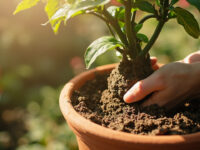
Push your finger in 2 to 3 inches, or use a wooden chopstick and pull it out to check for moisture clinging to it. Jade wants that whole zone bone dry before the next watering, not just the surface.
Pot weight is the trick experienced growers actually rely on. Lift the pot right after watering and remember roughly how heavy it feels, then lift it again before you consider watering again. A pot that still feels heavy still has water in it, full stop, regardless of what the calendar says.
Leaves confirm the timing too, and that is the tell-apart worth learning next.
Watering It Properly, Not Just On Time
When the soil zone is truly dry, water thoroughly rather than a light daily splash. Pour slowly around the base until water runs freely out the drainage hole, then let the pot sit for a few minutes and drain again.
Never let a jade plant sit in a saucer of standing water. That is how root rot starts even when your watering interval was otherwise correct.
A pot with no drainage hole is genuinely a problem for jade, not a minor inconvenience. If you love the pot, use it as a decorative cachepot and keep the plant in a plastic nursery pot with real drainage inside it.
Getting the depth and drainage right only matters if you can tell when the plant is actually asking for water versus warning you it got too much.
Overwatered or Underwatered: The Tell That Actually Works
Here is the mistake almost everyone makes: soft or wrinkled leaves get read as thirst, so the instinct is to water immediately. Sometimes that is correct. Often it is exactly backwards.
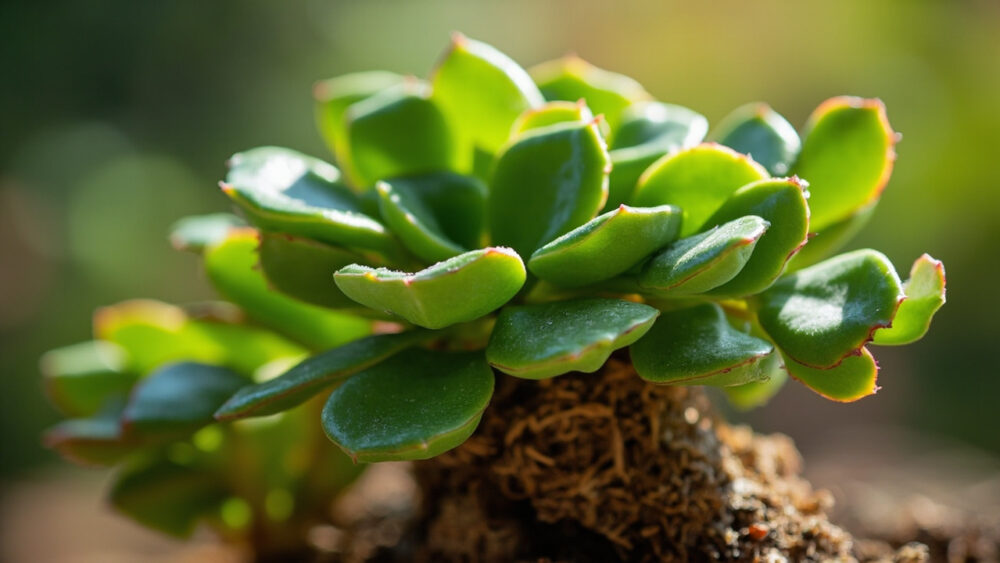
Wrinkled, slightly deflated leaves that still feel firm mean the plant has used up its stored water and is genuinely asking for a drink. That is underwatering, and the fix is simple.
Soft, mushy, translucent leaves, especially ones that drop at a touch or turn yellow and black at the base of the stem, mean the roots are drowning or already rotting. Watering more makes this worse, not better.
The fastest field check: gently squeeze a leaf. Firm and wrinkled is thirst. Squishy and giving way under light pressure is excess water, and if the stem near the soil looks dark or feels soft, pull the plant and inspect the roots for brown, mushy tissue before you water again.
Once you can read the leaves correctly, the schedule stops being guesswork and starts being seasonal common sense.
Adjusting Through the Year
Jade plants slow way down once daylight shortens and indoor temperatures drop, and their water use drops right along with it. Cut back hard in fall and winter, watering only every 3 to 4 weeks or longer, and always checking soil moisture first rather than trusting that interval blindly.
A jade near a cold window in winter can sit for 5 to 6 weeks without water and be perfectly fine. Near a heat vent that dries air out fast, it may want water closer to the 3 week mark even in winter.
Come spring, as new leaf growth resumes and days lengthen, gradually work back toward that 2 to 3 week rhythm. Move it outdoors for summer, if you do, and expect to water more often since wind and heat pull moisture out of the pot much faster than an indoor room does.
Get the season right and the finger test and pot weight will basically never lead you wrong.
Jade Plant at a Glance
- Watering frequency: every 2 to 3 weeks in spring and summer, every 3 to 4 weeks or longer in fall and winter, always checked against soil moisture first.
- How to check: push a finger or chopstick 2 to 3 inches into the soil, water only when that zone is fully dry.
- How to water: pour slowly until water runs from the drainage hole, let it fully drain, never let the pot sit in standing water.
- Underwatered sign: leaves wrinkled but still firm to the touch.
- Overwatered sign: leaves soft, mushy, or translucent, stem darkening near the soil line.
- Light and pot notes: bright light and terra cotta pots dry soil faster, low light and plastic or glazed pots hold moisture much longer.
- Drainage requirement: a pot with a real drainage hole is not optional for jade, use a nursery pot inside a decorative one if needed.
When in doubt, wait a few more days and check again rather than water. Jade forgives drought far more easily than it forgives soggy roots.