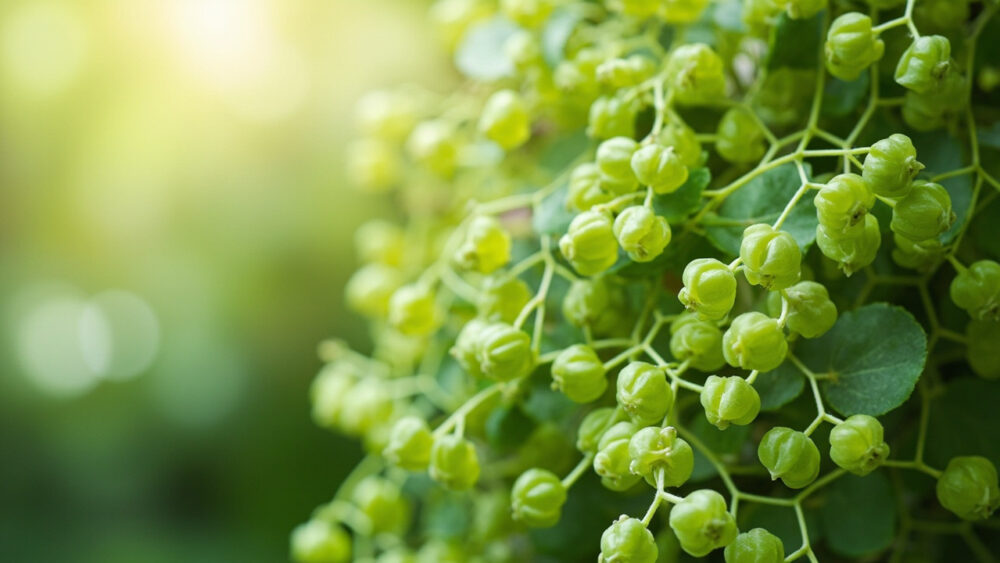
String of pearls needs water about every 10 to 14 days in spring and summer, and every 3 to 4 weeks in fall and winter, but that number means nothing without checking the soil first. This is a plant that dies from a calendar far more often than it dies from thirst. Get the schedule wrong in one direction and you get mushy, translucent pearls within days; get it wrong the other way and the plant just sulks, which is honestly the safer mistake to make.
Here’s what nobody tells you upfront: the mistake that kills most string of pearls isn’t watering too little. It’s watering on a fixed schedule without ever touching the soil, because the “right” interval swings wildly with pot size, light, and season. There’s also a sign almost everyone misreads, a plant that looks fine on top while the crown underneath is already rotting. And there’s a question you’re about to ask right after this one, which is how to tell overwatering damage apart from underwatering damage when both can leave you with shriveled pearls.
Stick around for all of it, plus a save-able String of Pearls at a Glance card at the very bottom with the numbers you’ll actually want pulled up next time you’re standing in front of this plant with a watering can in hand.
The Real Schedule, and What Actually Changes It
In active growth (roughly spring through early fall, whenever the plant is putting out new pearls and trailing growth), water thoroughly, then let the soil dry out completely before watering again. For most pots that lands around every 10 to 14 days. In a small terra cotta pot in a hot, bright window, it might be every 7 days. In a large plastic pot in a cooler room, it might stretch to 18 or 20.
In fall and winter, growth slows or stops and water needs drop hard. Every 3 to 4 weeks is typical, sometimes longer in a cool, dim spot. Pot material matters more than people expect: terra cotta wicks moisture out through the sides and dries faster than glazed ceramic or plastic, so two identical plants in different pots can be on completely different clocks.
None of these numbers replace checking the plant in front of you.
Check, Don’t Guess: The Finger Test, Pot Weight, and Leaf Cues
Skip the calendar and use your hands instead. Push a finger into the soil to the first knuckle, about 1 to 2 inches down. If it’s bone dry at that depth, it’s time to water. If there’s any coolness or dampness, wait.
Pot weight is the trick experienced growers use without thinking about it. Lift the pot right after watering and again a few days later. A fully saturated pot feels noticeably heavier than a dry one, and once you’ve felt that difference a couple of times you can judge water needs by heft alone, no soil probing required.
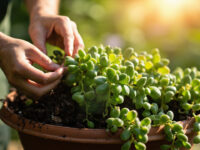
The pearls themselves talk to you too. Plump, firm, round pearls mean the plant is hydrated and happy. Pearls that look slightly deflated or wrinkled, almost like a raisin instead of a grape, mean the plant is asking for water. Catch that stage early and you’re fine.
The pot will tell you what the calendar can’t.
How to Water It Properly Once You’ve Decided It’s Time
When the soil is dry, water thoroughly rather than giving little sips. Pour slowly around the base until water runs freely out the drainage hole, then let the pot finish draining completely and never let it sit in a saucer of standing water.
A pot with no drainage hole is one of the fastest ways to lose this plant, because string of pearls roots rot quickly in trapped moisture. If you love the pot, use it as a decorative cover and keep the plant in a nursery pot with real drainage inside it.
Bottom watering works well too: set the pot in a few inches of water for 10 to 15 minutes, let it wick up through the drainage hole, then remove it and let it drain. This is especially useful once the plant is dense and top watering just runs off the mounded pearls without ever reaching the soil.
Getting the technique right matters just as much as getting the timing right, and mixing those two up is where the next problem starts.
Overwatering vs Underwatering: Telling Them Apart When Both Look Bad
Here’s the part that trips people up: overwatered and underwatered string of pearls can look almost identical at a glance, shriveled, deflated pearls dropping off the stem. If you assumed shriveled pearls always mean the plant needs more water, that guess is exactly what causes people to drown an already-rotting plant.
Underwatered pearls feel light, soft, and wrinkled but the stems stay firm and green, and the soil is bone dry throughout the pot. The fix is straightforward: water thoroughly and the plant usually plumps back up within a day or two.
Overwatered pearls are the sneaky one. They can look shriveled too, but they’ll feel mushy or squishy rather than just light, and the stems near the soil line often turn black, brown, or translucent and feel soft to the touch. The soil stays wet far longer than it should. This is root or stem rot, and it does not fix itself with more water, it fixes itself with less water, better drainage, and sometimes cutting away the damaged section entirely.
Squeeze a shriveled pearl gently between two fingers: firm and wrinkled means thirsty, soft and mushy means rot.
That one tactile check settles the argument every time, but the season you’re in changes how often you’ll even need to run it.
Adjusting for the Season, and the Trap of “Just Water It Like Always”
The biggest seasonal mistake is keeping a summer watering habit going into winter. Growth slows dramatically when light levels drop, so the plant simply can’t use water at the same rate, and soil that dried in 10 days in July might take 25 to 30 days in January.
Watch the light, not just the thermometer. A string of pearls near a bright south or west window in winter still dries faster than one in a dim corner, even at the same room temperature. Let the finger test and pot weight guide you through the transition rather than switching dates on a fixed schedule.
Also ease up during any stretch of low light, cool temperatures, or after repotting, since stressed or dormant plants are far more prone to rot if watered on autopilot.
Once you’ve got the seasonal rhythm down, the rest is just remembering the numbers, which is exactly what the card below is for.
String of Pearls at a Glance
- Watering frequency, active season: every 10 to 14 days, adjusting for pot material, light, and heat.
- Watering frequency, dormant season: every 3 to 4 weeks, sometimes longer in low light and cool rooms.
- Check method: finger test 1 to 2 inches deep, water only when that depth is completely dry.
- Watering technique: water thoroughly until it runs out the drainage hole, then let the pot drain fully, no standing water in the saucer.
- Pot requirement: a drainage hole is non negotiable, use a cover pot if you want a decorative one without a hole.
- Underwatered sign: light, wrinkled pearls, firm green stems, dry soil throughout.
- Overwatered sign: mushy, squishy pearls, dark or translucent stems near the soil line, soil that stays wet for days.
When in doubt, wait a few more days rather than watering early. String of pearls forgives thirst far more easily than it forgives wet feet.