The short answer to how to repot desert rose: do it in spring or early summer when the plant is actively growing, size up the pot by only 1 to 2 inches, use a fast-draining cactus or succulent mix, and let the roots sit slightly high with the swollen base (the caudex) exposed above the soil line rather than buried. Water lightly for the first week or two afterward, not heavily. That is the whole job in one breath, but desert rose punishes sloppy execution more than most succulents.
Here is what trips people up. Most new owners bury the caudex thinking it needs to be anchored like a tree trunk, and that single habit rots more desert roses than bad watering ever does. There is also a repotting mistake that looks helpful but sets the plant back a full season, and a very specific sign in the leaves that tells you the roots are already unhappy before you even pull the plant out of its pot.
Stick with me through the sections below and you will know exactly when to repot, how deep, what mix to use, and how to read the plant’s signals afterward. At the bottom there is a save-able Desert Rose at a Glance card with every number in one place for your phone.
When and Why to Repot a Desert Rose
Repot in spring through midsummer, once nighttime temperatures are reliably staying above 55 to 60°F and the plant is putting out new leaves. Repotting during winter dormancy or a cold snap is the season-costing mistake mentioned above: the plant cannot recover from disturbed roots when it is not actively growing, and a freshly repotted dormant plant sits in damp soil with nothing to do but rot.
Desert roses need repotting roughly every two to three yearsor sooner if you see roots circling the drainage hole, water running straight through without soaking in, or the caudex has outgrown the pot’s rim. Younger, fast-growing plants may need it yearly; mature specimens can go longer.
Next comes the part almost everyone gets backwards: how deep the roots and caudex should actually sit.
Depth and Placement: Why Burying the Caudex Is the Real Killer
If you assumed a bigger, deeper pot with the base tucked into the soil gives the plant more stability, that guess is what kills more desert roses than underwatering does. The caudex, that bulbous swollen trunk at the soil line, needs to stay partly exposed above the surface, not buried like a normal root ball.
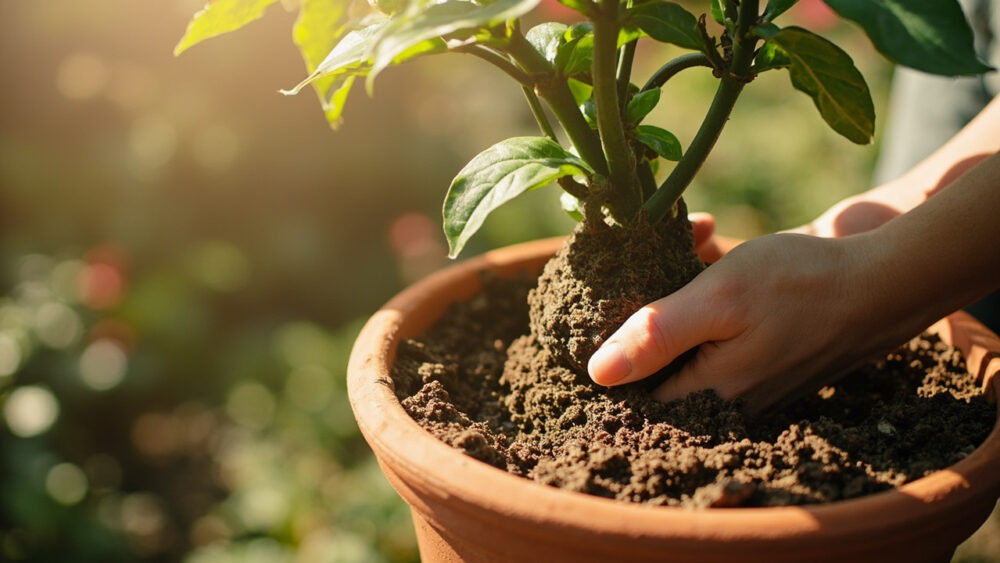
Buried caudex tissue stays damp and has almost no airflow, which invites rot at exactly the spot the plant cannot survive losing. When you repot, set the plant so the top third to half of the caudex sits above the soil line, the same way it likely sat in its nursery pot.
Size the new pot only 1 to 2 inches wider in diameter than the old one. An oversized pot holds excess moisture around the roots for days longer than the plant wants, and that alone causes more losses than choosing the wrong soil.
Get the depth right and the next question is where that pot lives and how much light it needs.
Light, Placement, and Temperature
Desert rose wants full sun: 6 hours or more of direct light daily, either outdoors in a sunny spot or in the brightest south- or west-facing window you have indoors. Too little light gets you a leggy plant with sparse leaves and few, if any, flowers.
It is native to arid parts of Africa and the Arabian Peninsula, so it wants heat. Keep it above 50°F at all times; growth stalls below 60°F and cold exposure near freezing can kill it outright. It is hardy outdoors year-round only in USDA zones 10 to 11. Everywhere else, treat it as a container plant that summers outside and comes in before the first fall frost.
Bring it in gradually if you can, over a week or two, so the light change does not shock it into dropping leaves all at once.
Get the light and warmth right, and watering becomes the next place people either overcorrect or undercorrect.
Watering: How Much, How Often, and the Sign Everyone Misreads
Water thoroughly, then let the soil dry out completely before watering again, roughly every 10 to 14 days in active summer growth and only once every 3 to 4 weeks, or less, in winter dormancy. Stick a finger 2 inches down. If it is even slightly damp, wait.
Wrinkled, slightly soft leaves get blamed on thirst almost every timeand that is the guess that leads people to overwater a plant that is actually fine. Desert rose stores water in its caudex specifically so it can ride out dry spells. Mild leaf softness during a hot dry stretch is normal, not an emergency.
The real warning sign is a caudex that feels soft or mushy to the touch, or leaves that yellow and drop while the soil is still wet. That combination means rot, not drought, and it means you cut back watering immediately and check the roots.
Right after repotting, water lightly for the first 7 to 10 days rather than soaking it, since disturbed roots cannot take up much moisture yet and cut roots are especially rot-prone while they heal.
Get the water rhythm right and soil composition matters just as much as your schedule.
Soil, Pots, and Feeding
Use a mix built for cacti and succulents, ideally cut with extra pumice or coarse sand so water moves through in seconds, not minutes. A dense potting soil that holds moisture around the caudex is a slow rot sentence, no matter how careful your watering schedule is.
Always use a pot with a drainage hole. Unglazed terracotta is a genuine advantage here, since it wicks moisture out of the mix faster than plastic or glazed ceramic.
Feed only during active growthspring through early fall, with a diluted balanced or bloom-boosting liquid fertilizer every 4 to 6 weeks. Skip feeding entirely in winter. A dormant plant cannot use the nutrients and excess fertilizer salts just build up in the soil.
With the growing setup sorted, the routine maintenance around repotting is what actually keeps the plant shapely and clean.
Pruning, Repotting Technique, and Routine Upkeep
Prune in spring, right before or during the active growth push, cutting leggy stems back to encourage the branching, sculptural shape desert rose is prized for. Wear gloves. The sap is irritating to skin and eyes.
When you actually repot, follow this sequence:
- Let the soil dry out fully first, so the root ball releases cleanly instead of tearing.
- Ease the plant out by the base, never by pulling on stems.
- Shake or gently rinse old soil off the roots, and trim any roots that are black, mushy, or clearly dead.
- Let cut roots air-dry for a few hours to a day before repotting, the same way you would cure a cut succulent leaf.
- Set the plant with the caudex sitting high, backfill with fresh mix, and firm gently without packing it tight.
- Hold off watering for 3 to 5 days to let any cut surfaces callus over.
Wipe dust off the leaves occasionally too. It is cosmetic, but it also makes early pest scouting far easier.
Speaking of pests, here is what actually goes wrong once the plant is settled into its new pot.
Common Problems and How to Fix Them
Root and caudex rot from overwatering or a buried caudex is the single most common failure, and it is the honest answer to the follow-up question most readers are about to ask: yes, a badly rotted caudex often cannot be saved, though you can sometimes cut away rotted tissue back to clean, firm flesh and let it callus before repotting into dry mix.
Mealybugs and spider mites are the most likely pests, showing up as white cottony clusters in leaf joints or fine webbing and stippled leaves. Treat with insecticidal soap or a horticultural oil labeled for the pest, following the product label exactly, and isolate the plant from other houseplants while you treat it.
Leaf drop after a move, repot, or temperature swing is usually stress, not disease. It typically stabilizes and regrows new leaves within a few weeks once conditions settle.
Every part of desert rose is toxic if ingested, to people and to pets, and the sap can irritate skin. If a pet or child has eaten any part of it, call a veterinarian or poison control right away rather than waiting to see what happens.
Once problems are ruled out, here is what a genuinely healthy desert rose actually looks like.
Signs Your Desert Rose Is Actually Thriving
A thriving desert rose pushes new leaf growth from the stem tips during the warm months and holds firm, glossy leaves, not wrinkled or yellowing ones. The caudex should feel firm and slightly swollen, visibly thickening year over year as the plant matures.
Flowering is the clearest confirmation of all: mature, well-lit plants bloom in clusters of pink, red, or white trumpet-shaped flowers, often through spring and summer and sometimes on and off year-round indoors under strong light.
No blooms after a year or two usually points to insufficient light rather than anything wrong with your routine.
Everything above compresses into the card below, worth saving before you close this tab.
Desert Rose at a Glance
- When to repot: spring through early summer, once nights stay above 55 to 60°F and new growth has started.
- Pot size: only 1 to 2 inches wider than the current pot, always with drainage holes.
- Planting depth: caudex sits high, with the top third to half exposed above the soil line, never buried.
- Soil: fast-draining cactus or succulent mix, cut with extra pumice or coarse sand.
- Watering: deeply, then dry out completely before the next watering, roughly every 10 to 14 days in summer, every 3 to 4 weeks in winter.
- Light and temperature: 6 or more hours of direct sun daily, kept above 50°F, ideally above 60°F for active growth.
- Feeding: diluted balanced fertilizer every 4 to 6 weeks during active growth only, none in winter.
If you remember one thing, remember this: keep the caudex high and dry, and give the roots a week to settle before you water heavily again.
Get that part right and everything else about desert rose care is forgiving.