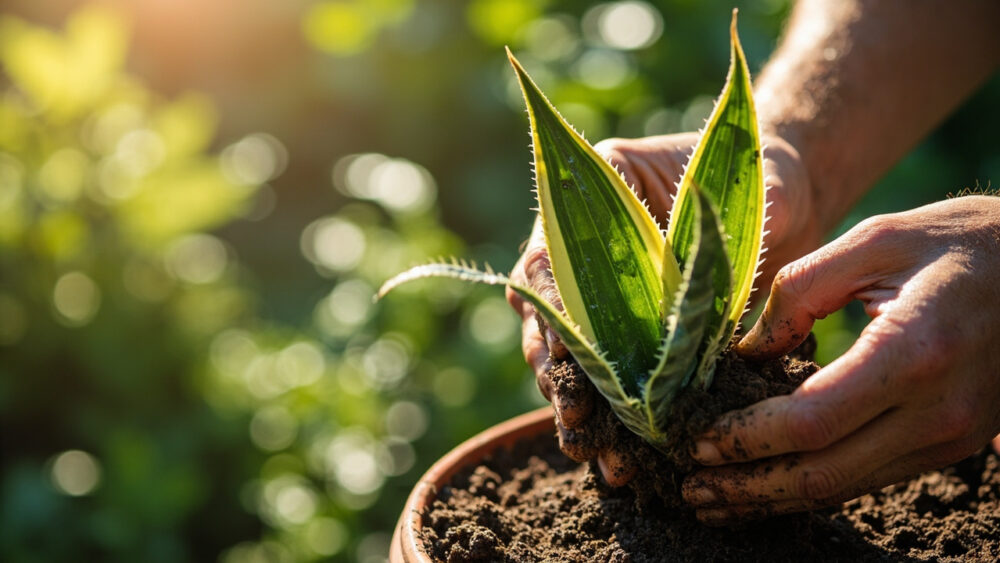
Water propagation is the method most people try first, and it is also the slowest, least reliable way to do this. The method that actually works is division, splitting an established snake plant at the root ball into smaller clumps that already have roots attached. It takes ten minutes, has almost no failure rate, and gives you a plant that looks mature within weeks instead of the better part of a year.
Leaf cuttings work too, and I will walk you through them, but there is a catch almost nobody mentions until their “babies” never show a single pup. There is also a very specific sign people misread as rot when it is actually rooting in progress, and the honest answer to whether you need rooting hormone at all.
Stick with me to the bottom and you will find a save-able Snake Plant at a Glance card with every number you need on your phone while you are standing over the pot.
Why Division Beats Water Jars and Leaf Cuttings
A snake plant grows from a network of thick rhizomes underground, and each rhizome section can already have its own roots and a fan of leaves attached. Split it apart and you are not asking a leaf to grow a plant from nothing. You are just separating a plant that was already whole.
Leaf cuttings root, but the leaf you cut has no growth node on it. It can grow roots for months and never produce a single new shoot. Division skips that entire gamble.
Variegated types like Sansevieria trifasciata ‘Laurentii’ are the biggest reason to care about this. Leaf cuttings from a variegated plant almost always sprout plain green pups, since the yellow-edged pattern lives in cells that don’t reliably pass on through a leaf cutting. Division is the only way to keep the stripe.
Here is exactly how to make the cut without wrecking either half.
Step by Step: Division and Leaf Cuttings
Dividing the rhizome
- Slide the whole plant out of its pot and shake or knock the loose soil off the roots so you can actually see what you are working with.
- Look for natural separations, distinct fans of leaves each attached to their own patch of white or tan roots and a thick rhizome.
- Cut straight through the connecting rhizome with a clean, sharp knife, giving each division at least 2 to 3 leaves and a healthy handful of roots.
- Let the cut sides air-dry for 24 to 48 hours before potting, so the wound calluses over and does not rot in damp soil.
Leaf cuttings, if you want to try them anyway
- Cut a healthy leaf near the base with a clean blade and let the cut end callus for 2 to 3 days.
- Push the bottom 1 to 2 inches into a mix of half potting soil and half perlite or coarse sand.
- Rooting hormone is optional, snake plants root fine without it, but a light dusting can speed things up on a plant that is being stubborn.
What happens next depends entirely on which method you picked, and the timelines are not close.
The Timeline: What to Expect Week by Week
Divisions barely pause. Within 1 to 2 weeks you will see new white root tips pushing into the fresh soil, and the leaves stay upright and firm the entire time because they never lost their root system.
Leaf cuttings are a different story. Roots typically start forming at 3 to 6 weeks in warm conditions, and you will feel a gentle tug of resistance if you nudge the leaf.
A new pup, the actual baby plant, does not show up until 2 to 3 months in, sometimes longer. This is the sign everyone misreads. If your cutting looks fine but nothing is happening above soil, that is normal, not failure.
Rot, on the other hand, shows up as a soft, mushy, darkening base with a bad smell, and it is unmistakable once you see it. That is the difference between patience and a problem.
Once roots and, ideally, a pup are established, it is time to think about the next pot.
When and How to Pot Up
Move a division into its permanent pot immediately after cutting, there is no waiting period needed since it already has working roots.
For leaf cuttings, wait until you can see a pup an inch or two tall, or until roots are at least 2 inches long, before transplanting into regular potting mix.
Pot size matters more than people expect. Snake plants actually prefer being slightly snug in their container, so size up by only 1 to 2 inches in diameter, not into something twice as big.
Use a well-draining mix, a standard potting soil cut with perlite works fine, and a pot with a drainage hole is non-negotiable here. These are succulent-adjacent plants that rot fast in soil that stays wet.
Getting this far is easy. Losing the whole attempt at the last step is easier than you would think, and here is exactly how it happens.
Why Most Attempts Fail (and the Mistake That Ruins Them)
If you assumed overwatering is the top killer here, you are close but not quite right. The real mistake is watering the rooting medium on a schedule instead of by feel.
Cuttings and fresh divisions need soil that is barely damp, not wet, and should dry out noticeably between waterings. Check by pushing a finger an inch down; if it feels damp at all, wait.
The second killer is low light disguised as “bright enough.” Snake plants tolerate low light once mature, but a rooting cutting wants bright, indirect light to fuel that process, not a dim corner.
Temperature is the quiet third factor. Rooting slows to a crawl below 65°F and stalls hard below 60°F, so a cutting on a cold windowsill in winter may simply be waiting out the season rather than failing.
Fix those three things and the odds tip heavily in your favor.
Snake Plant at a Glance
- Best method: divide an established rhizome for near-instant results, use leaf cuttings only if you don’t mind waiting months and losing variegation.
- When to do it: spring through summer, while the plant is actively growing and soil temperatures stay above 65°F.
- Rooting medium: half potting soil, half perlite or coarse sand, always in a pot with drainage.
- Watering: barely damp, let it dry out between waterings, never soggy.
- Light: bright, indirect light while rooting, not deep shade.
- Timeline: divisions root within 1 to 2 weeks, leaf cuttings root in 3 to 6 weeks with pups appearing at 2 to 3 months.
- Warning sign: a soft, mushy, dark, smelly base means rot, a firm base with no visible growth just means keep waiting.
Division is faster, easier, and nearly foolproof, so start there if you have a mature plant to split.
If you only have a single leaf to work with, just expect months, not weeks, and let the calendar prove you patient instead of wrong.