When to harvest pomegranates comes down to sound and skin, not the calendar. A ripe pomegranate makes a metallic clink when you tap it, the skin turns hard and slightly angular instead of round and smooth, and the color deepens to a deep red, maroon, or yellow-blushed red depending on the variety. Most pomegranates ripen five to seven months after bloom, which usually lands somewhere between late August and November depending on your climate and variety.
Here is the part that trips up almost everyone with their first tree: pomegranates do not ripen after picking. Not a little, not at all. Pick too early and you are stuck with sour, half-colored fruit forever, which is exactly the mistake that ruins most first harvests.
There is also a sign most people read backwards, a crack in the skin, and I will get to why that is not always the disaster it looks like. Stick around, because the save-able Pomegranates at a Glance card at the bottom has the exact ripeness checklist and storage numbers you will want pulled up on your phone next time you are standing under the tree.
The Real Ready Signs
Forget the calendar and check the fruit itself. Pomegranates give you several honest signals at once, and you want most of them lined up before you cut anything.
The sound test
Tap the fruit with a knuckle. A dull, metallic clink means the juice sacs inside are full and dense. A hollow, softer thud means it needs more time.
The shape and skin test
Unripe pomegranates are round and the skin is taut and smooth. As they ripen, the skin hardens, dulls slightly, and the fruit develops flat facets or angles where the seeds press outward from inside. That angular, slightly boxy shape is one of the most reliable cues there is.
The color test
Color alone lies to you, because some varieties stay pale even fully ripe and others blush red weeks before they are ready. Use color as a supporting clue, never the deciding one.
Line up sound, shape, and color together and you will rarely misjudge a fruit.
The Timing Window, and What Early or Late Actually Costs You
Most pomegranate varieties mature five to seven months after flowering. In much of the growing range that means harvest runs from late August through November, with plenty of trees still dropping ripe fruit into early winter in mild climates.
Pick too early and the arils, the juicy seed sacs, are pale, hard, and tart with none of the wine-sweet flavor pomegranates are grown for. That fruit never improves once it is off the branch.
Pick too late and you run into splitting, especially after a rain or a heavy watering following a dry spell. A split skin invites birds, ants, and mold, and once it cracks open in the field, the clock on that fruit is now measured in days, not weeks.
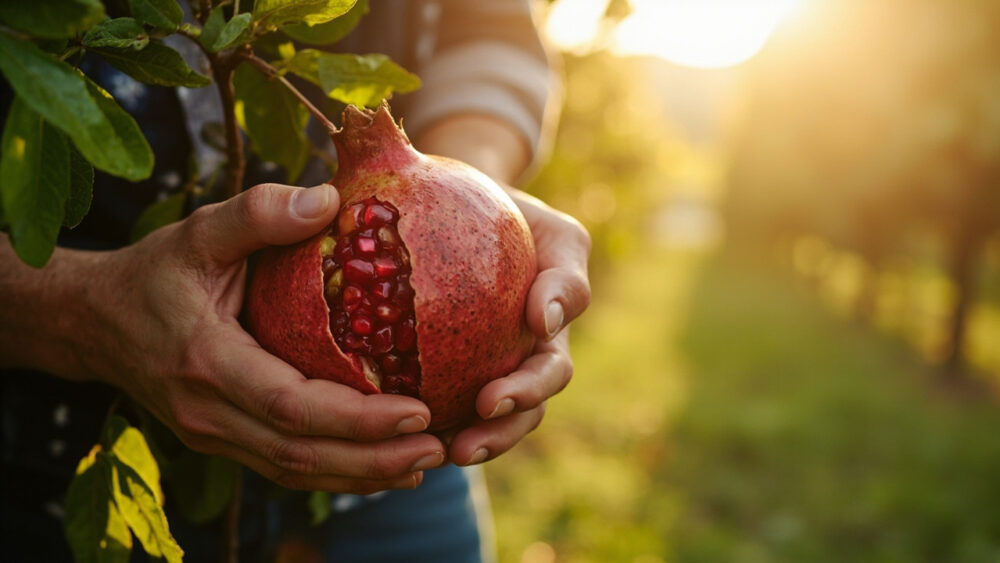
This is the crack-in-the-skin sign I mentioned earlier, and here is the subversion: a hairline crack on an otherwise deep-colored, heavy fruit is often a sign the fruit is at peak ripeness, not a sign it has gone bad. The mistake is assuming any crack means toss it. The real skill is telling a fresh, tight hairline apart from a wide, weeping, or moldy split, the latter of which does mean the fruit is done.
Once you know the difference, cracked fruit stops being scary and starts being a harvest reminder.
How to Harvest Without Wrecking Next Year’s Crop
Pomegranates do not pull free the way an apple does. Twisting or yanking tears the skin and can strip bark or snap the short spur growth that will fruit again next season.
- Use pruning shears or a sharp knife. Cut the stem close to the fruit, leaving a short stub rather than tearing at the branch.
- Support the fruit with your other hand as you cut so its own weight does not rip the stem free at the last second.
- Handle it like a bruisable fruit, not a rock. Dropping a ripe pomegranate a few feet onto hard ground can crack it internally even if the skin looks fine.
- Harvest in the cool part of the day, morning if you can, to reduce moisture loss and stress on both fruit and tree.
Clean cuts now mean healthy spurs and a fuller crop next year.
Right After the Cut
Set harvested fruit somewhere shaded immediately, out of direct sun. Pomegranates left piled in full sun for hours can scald and soften faster than they should.
Sort as you go. Anything with a wide split, soft spot, or mold gets used or eaten first, not stored. Sound, tight-skinned fruit goes into storage.
Do not wash fruit before storing it. Extra surface moisture speeds up rot. Wipe off visible dirt with a dry cloth instead.
Sorting now saves you from a box of moldy fruit spoiling the good ones later.
Curing, Storage, and Keeping the Crop Going
Pomegranates are one of the better-keeping tree fruits, which is the honest good news here. Stored in a cool spot, ideally 32 to 41 degrees Fahrenheit with moderate humidity, whole fruit will hold for one to two months, sometimes longer in a root cellar or the back of a refrigerator.
At room temperature, plan on using them within a week or two before quality drops.
Once you cut a pomegranate open, the arils keep in the refrigerator for about five to seven days in a sealed container, or you can freeze the seeds on a tray and bag them once frozen for several months of use.
As for keeping the harvest coming, a mature pomegranate typically fruits over several weeks rather than all at once, so plan on checking the tree every few days rather than one single harvest day. Fruit on the sunnier, outer branches usually ripens first, with interior and shaded fruit trailing behind by a week or two.
That staggered ripening is actually a gift, since it spreads picking, eating, and storing out instead of dumping the whole crop on you at once.
Pomegranates at a Glance
- When to harvest: five to seven months after bloom, typically late summer through late fall depending on climate and variety.
- Ready signs: a dull metallic clink when tapped, hardened angular skin, and deep color for the variety.
- Ripening after picking: none, pomegranates must ripen fully on the tree before cutting.
- How to cut: snip the stem with shears close to the fruit, never twist or pull.
- Cracked skin: a tight hairline crack on a heavy, well-colored fruit usually means peak ripeness, a wide or weeping split means use it now.
- Storage, whole fruit: one to two months around 32 to 41 degrees Fahrenheit, one to two weeks at room temperature.
- Storage, seeds: five to seven days refrigerated, several months frozen.
Trust the tap and the shape over the calendar every time. Get that right and everything else about growing pomegranates gets easier.