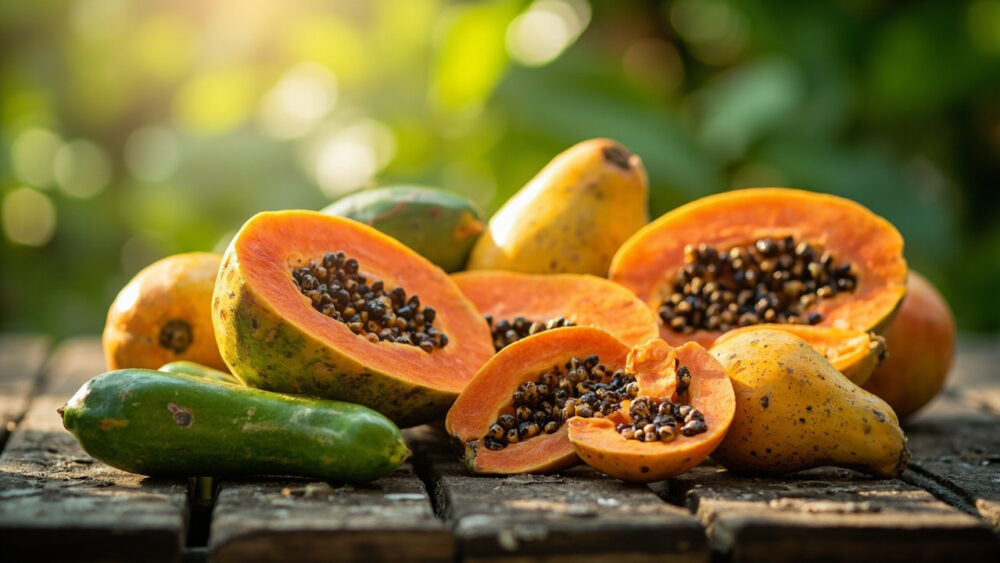
The fastest way to narrow down papaya varieties is by fruit size, because that one trait tells you almost everything else about how the plant will fit your space and your kitchen. Small-fruited “dwarf” types like Solo stay compact and bear young, while the giant-fruited types can produce a single melon-sized papaya that feeds a crowd but needs a full-size tree to grow it on. Papaya varieties is a broader category than most people realize, since it splits into red-fleshed, yellow-fleshed, and even the green cooking types grown for savory dishes rather than dessert fruit.
Most beginners grab whatever seedling is labeled “papaya” at the nursery, which is usually a dwarf hybrid bred for container growers, and that is often the wrong pick if you actually want the deep, musky sweetness of an heirloom red-fleshed type. Experienced growers quietly favor a couple of the less common entries on this list because they hold flavor and texture better in humid climates where papaya ringspot virus and fruit rot are constant pressure.
Number 13 is the one most people get completely wrong, mistaking it for a dessert papaya when it is actually grown almost exclusively green and cooked. The final entries, including that one, plus a straightforward method for choosing the right papaya for your yard, are waiting at the bottom of this list.
Classic Dessert Papayas
These are the all-purpose, eat-it-with-a-spoon types that most home growers actually want.
1. Solo
The standard grocery-store papaya and the most widely grown dwarf variety in home gardens. It produces fruit around 1 to 2.5 pounds, sweet yellow-orange flesh, and starts fruiting within a year on a plant that rarely exceeds 6 to 8 feet, making it the easiest choice for a small yard or large container in zones 9b through 11.
2. Sunrise
A Solo-type selection bred for red-orange flesh instead of the standard yellow. It has a smoother, less fibrous texture and a slightly deeper sweetness, and it holds its color well even in fruit that ripens during cooler, cloudier stretches.
3. Sunset
Sunrise’s close relative, distinguished mainly by a slightly more elongated fruit shape and marginally firmer flesh that ships and stores a touch better. Grow it if you want the same red-fleshed sweetness as Sunrise but plan to hold fruit a few extra days after harvest.
4. Kapoho Solo
A Hawaiian-bred Solo strain selected for disease resistance and reliable yields in humid, high-rainfall climates. It is the backbone of a lot of commercial Hawaiian papaya production, and it is a solid pick for gardeners in the Gulf Coast or similar wet-summer regions where fungal fruit rot is the main headache.
Those four cover the fruit most people picture when they hear the word papaya, but the bigger varieties change the math entirely.
Large-Fruited and Landrace Types
These grow bigger, slower, and reward gardeners with more space and more patience.
5. Maradol
A Cuban-Mexican heirloom known for large, oblong fruit weighing 3 to 6 pounds with deep reddish-orange flesh. It has a stronger, more perfumed flavor than Solo types, but the tree grows taller, sometimes past 10 feet, and needs a longer warm season to fully ripen fruit.
6. Mexican Red
A landrace type grown widely across Mexico for market, producing very large fruit, often 4 to 10 pounds, with sweet red flesh and a musky aroma some people love and others find too strong. It suits growers with room for a full-size tree and a long, hot growing season with minimal frost risk.
7. Mexican Yellow
The yellow-fleshed counterpart to Mexican Red, milder in flavor and aroma with the same large fruit size. Choose this one over Mexican Red if you want the bigger fruit without the heavier musk, especially for eating fresh rather than juicing.
8. Tainung
A Taiwanese hybrid bred for vigor and disease tolerance, producing medium to large fruit with thick, firm reddish flesh that holds up well to shipping. It is a common choice in humid Southeast Asian and Central American production because it resists papaya ringspot virus better than most older varieties, though no papaya variety is fully immune.
Bigger fruit means bigger commitment, so the next group trades size for speed and compact growth instead.
Dwarf and Container-Friendly Varieties
If space, wind exposure, or a short warm season is your limiting factor, start here.
9. Red Lady
A dwarf hybrid bred specifically for container and small-yard growing, bearing fruit low on the trunk starting at just 3 to 4 feet tall. The red-orange flesh is sweet and firm, and because the plant stays compact, it is one of the few papayas that can realistically be overwintered indoors or in a greenhouse in marginal zones.
10. Waimanalo
A Hawaiian dwarf variety similar in habit to Solo but bred for slightly earlier fruiting and better tolerance of cooler nighttime temperatures. It is a good pick for coastal growers just outside the ideal papaya climate who still get warm days but cooler nights than papaya usually prefers.
11. Hortus Gold
A South African bred variety valued for setting fruit reliably even under cooler, less consistently tropical conditions than most papayas need. The flesh is yellow-orange, sweet, and the tree stays moderate in size, which makes it a sleeper pick for subtropical gardeners in zones 9 and 10 who struggle to get other varieties to fruit well.
Compact size solves the space problem, but flesh color and fruit type solve a different one entirely.
Specialty and Cooking Papayas
Not every papaya is meant to be eaten sweet and ripe, and this is where flavor purpose actually starts to diverge.
12. Bettina
An Australian-bred variety prized for very sweet, deep orange flesh and a longer shelf life after ripening than most dessert types. It is a strong choice if you want dessert-quality papaya but need the harvested fruit to hold a few extra days on the counter.
13. Green Papaya (Khaek Dam and similar Thai types)
This is the one most people misjudge, because it is not a separate species, it is papaya harvested unripe and grown specifically for that purpose. Thai green papaya varieties like Khaek Dam are bred for firm, starchy, tart flesh at the immature stage, which is exactly what som tam and other green papaya salads need. Grow one of these if cooking green papaya matters more to you than eating it sweet, since the flesh never develops the same dessert sweetness even left to ripen fully.
14. Formosa (mixed strains, including Tainung derivatives)
A general category of hybrid types developed in Taiwan for both fresh eating and processing, typically producing medium to large fruit with firm, sweet flesh and good disease tolerance. It is a dependable middle-ground choice between the delicate Solo types and the massive Mexican landraces.
15. Sunrise Solo Selections (regional red strains)
Locally adapted red-fleshed Solo strains selected over generations by growers in specific regions for local soil and humidity conditions. These are worth seeking out from a local grower or seed saver rather than a big retailer, because a strain adapted to your exact climate will usually outperform a generic packet of the same named variety.
How to Choose the Right One
Work through these in order and you will land on the right papaya faster than by scrolling variety photos.
- Measure your space first: dwarf types like Red Lady or Solo fit containers and small yards, large landraces like Maradol or Mexican Red need real ground room and height clearance.
- Check your climate next: true tropical zones 10 and 11 can grow almost anything on this list, but zone 9 growers should lean toward cold-tolerant, quick-fruiting types like Hortus Gold or Waimanalo.
- Decide your purpose: sweet fresh eating points to Sunrise, Bettina, or Sunset, while cooking and salads point straight to a green papaya type like Khaek Dam.
- Be honest about your care appetite: papayas need consistent water, sharp drainage, and protection from wind and frost, and the larger varieties demand more staking and longer patience before first harvest.
- Buy from a source that names the actual variety, not just “papaya,” since fruit size, flesh color, and disease tolerance all ride on that name.
- If ringspot virus or fruit rot is common in your area, prioritize varieties bred for tolerance, like Tainung or Kapoho Solo, over flavor alone.
Pick based on space and purpose first, then chase flavor, and you will end up with a tree that actually fits your yard instead of outgrowing it.