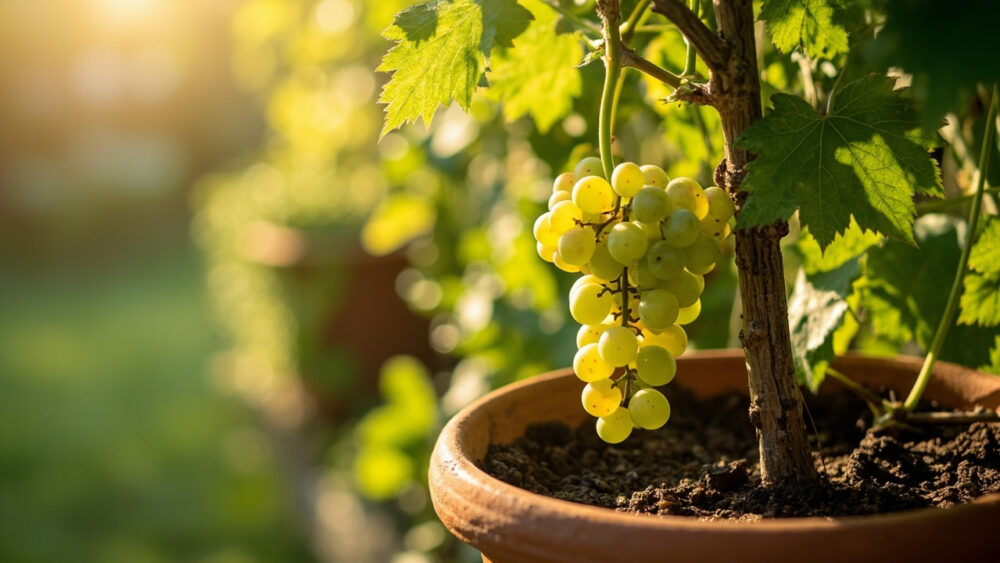
Yes, you can grow grapes in potsand they will fruit, but you need a container at least 15 to 20 gallons, a dwarf or naturally compact variety, and something sturdy for the vine to climb from day one. Skip any of those three and you get a leafy vine with little or no fruit by year three. Grapes grown in containers are a long game, not a summer project.
Here is what trips up almost everyone who tries this: they plant a full-size wine or table grape variety meant for a vineyard row, in a pot that looked big at the nursery but is actually too small once roots fill it. The vine survives. It just never fruits the way it should.
There is also a timing mistake that costs people an entire season of pruning mistakes, a watering habit that rots roots slowly enough that you will not notice until the leaves start telling you, and an honest answer about how many years you will actually wait before your first real harvest. All of that is coming, and the Grapes at a Glance card at the bottom has every number you will want saved to your phone before you buy a plant or a pot.
When to Plant Grapes in Pots
Plant bare-root or potted grapevines in early springright around your last frost date, once the soil has thawed and you can work it without it clumping into mud. In mild-winter regions (roughly zone 7 and warmer) you can also plant in fall, six to eight weeks before the ground freezes, which gives roots a head start.
Grapevines are dormant when nurseries ship bare-root stock, so cold soil will not shock them the way it would a tomato. What matters more is getting them in before they break bud, since a vine that leafs out while still sitting in a nursery pot or a plastic sleeve loses vigor fast.
If you are starting from a potted, actively growing vine instead of bare-root, you have more flexibility and can plant anytime spring through midsummer as long as you keep it watered through the transition.
Timing gets the vine in the ground on the right foot, but the pot and spot decide whether it thrives at all.
Choosing the Right Pot, Spot, and Soil
Grapes need at least 6 to 8 hours of direct sun and a spot that gets airflow, since still, humid air around the leaves is what invites mildew later. A south-facing patio or deck against a wall that reflects heat is close to ideal.
Go with a container that holds 15 to 20 gallons minimum, and bigger is genuinely better here, up to 25 or 30 gallons for a vine you intend to keep for a decade. Terracotta looks good but dries out fast; a heavy-duty plastic, wood half-barrel, or fabric grow pot holds moisture more evenly. Drainage holes are non-negotiable, grapes hate wet feet.
Use a loose, well-draining potting mix, not garden soil straight from the yard. A mix of quality potting soil with 20 to 30 percent perlite or coarse sand drains well and still holds enough moisture between waterings.
Get the container and soil right and the next decision, the variety itself, is what actually determines whether you eat grapes or just grow a vine.
Picking a Variety That Actually Fruits in a Pot
This is the part almost everyone skips, and it is the single biggest reason container grapes disappoint. Choose a compact or naturally short-vine variety bred for containers or small spaces, rather than a full-size vineyard cultivar meant to sprawl 15 to 20 feet.
Compact patio grape varieties, dwarf muscadine types in warm climates, and some seedless table grape cultivars bred for smaller trellis systems all perform far better confined to a root ball that never exceeds 20 or 30 gallons. A full-size Concord or Cabernet vine crammed into a pot will survive for years and mostly sulk.
Check the tag or catalog description for words like “compact,” “dwarf,” or “container,” and confirm the variety’s hardiness zone matches yours, since grapes need a real winter dormancy but not one so harsh it kills roots in an above-ground pot.
Once you have the right vine matched to the right pot, it is time to actually get it in the soil.
Planting Step by Step
- Depth: set the vine so the root ball sits at the same depth it was growing before, with any graft union kept 2 to 3 inches above the soil line.
- Spacing: one vine per 15 to 20 gallon pot; do not double up, roots need the whole container.
- Trellis first: install a stake, small trellis, or tie the pot against a wall support before you back-fill, since grape roots resent disturbance later.
- Backfill and water: fill in around the roots, firm gently, and water deeply until it runs from the drainage holes.
- First-year pruning: cut back to two or three strong buds at planting time to force the vine to build roots before it builds top growth.
That first hard pruning feels wrong to almost every new grower, but skipping it is the second most common way to lose a season.
Watering and Feeding Through the Season
If you assumed more water means a healthier vine, that habit is what rots container grape roots slowly over a season or two. Grapes actually tolerate dry spells better than wet ones. Water when the top 2 inches of soil feel drywhich in summer heat is often every 2 to 3 days for a container this size, and less once fall cools things down.
Feed with a balanced fertilizer in early spring as growth resumes, then again in late spring, but back off nitrogen by midsummer. Too much nitrogen late in the season pushes leafy growth at the expense of fruit and ripening wood.
A slow-release fertilizer worked into the topsoil at spring feeding, plus an occasional dose of diluted liquid feed for potted fruiting plants during active growth, covers most container grapes without guesswork.
Consistent, moderate care beats generous care here, and that same restraint matters even more once problems show up.
Problems That Actually Show Up in Container Grapes
Powdery mildewa gray-white coating on leaves, is the most common issue, especially in humid climates or when air can’t move around the foliage. Prune to open up the canopy and avoid overhead watering that wets the leaves.
Japanese beetles and various leaf-chewing insects will skeletonize leaves in midsummer in many regions. Hand-picking into soapy water works for light infestations. For heavier pressure, an insecticide labeled for edible fruit and beetles is the next step, and you should always follow the product label exactly.
Root rot from overwatering or poor drainage is the quiet killer. Yellowing leaves that still feel plump, combined with soil that stays soggy days after watering, points here rather than to a nutrient problem, which is the mistake most people make first.
Cold-climate growers face one more issue that has nothing to do with pests at all.
Winter Survival in a Pot
Roots in a container freeze far more easily than roots in the ground, since there is no surrounding earth to buffer the cold. In zones colder than about 7, move the pot into an unheated garage, shed, or against a sheltered wall, and mulch heavily around the base once the vine drops its leaves.
A vine that freezes solid at the roots in an exposed pot often does not come back, even if the same variety would have survived fine planted in the ground.
Get a vine through two or three winters this way and you are finally close to the payoff you planted for.
When and How to Harvest
Grapes do not ripen after pickingso timing the harvest by color alone is the guess that disappoints most first-time growers. Wait until the fruit tastes fully sweet, not just fully colored, since grapes can look ripe a week or two before the sugar actually catches up.
Check by tasting a berry from the middle of a cluster, not the tip, since tip berries ripen first. The stem should also start to brown slightly and the berries should feel slightly soft, not hard, and should detach easily with a gentle tug.
Most container-grown vines produce a light, worthwhile harvest starting in year 3, with fuller production by year 4 or 5. That timeline is longer than most fruiting vegetables, and it is the honest tradeoff for growing grapes in a pot at all.
Once you have picked one cluster and tasted it warm off the vine, you will understand why growers put up with the wait, and the quick reference below is what to keep on hand for every season after this one.
Grapes at a Glance
- When to plant: early spring around your last frost, or early fall in mild-winter zones, six to eight weeks before the ground freezes.
- Pot size: 15 to 20 gallons minimum, up to 25 to 30 gallons for a long-term vine.
- Best varieties: compact or dwarf patio grape cultivars bred for containers, not full-size vineyard varieties.
- Sun and spot: 6 to 8 hours of direct sun daily, with good airflow around the foliage.
- Watering: when the top 2 inches of soil are dry, roughly every 2 to 3 days in summer heat.
- Feeding: balanced fertilizer in early and late spring, tapering nitrogen by midsummer.
- Harvest: taste-test berries from the middle of the cluster. Expect a light first harvest around year 3, fuller crops by year 4 to 5.
The pot and the variety decide almost everything before you even plant.
Get those two right, be patient through the first couple of winters, and the vine does the rest.