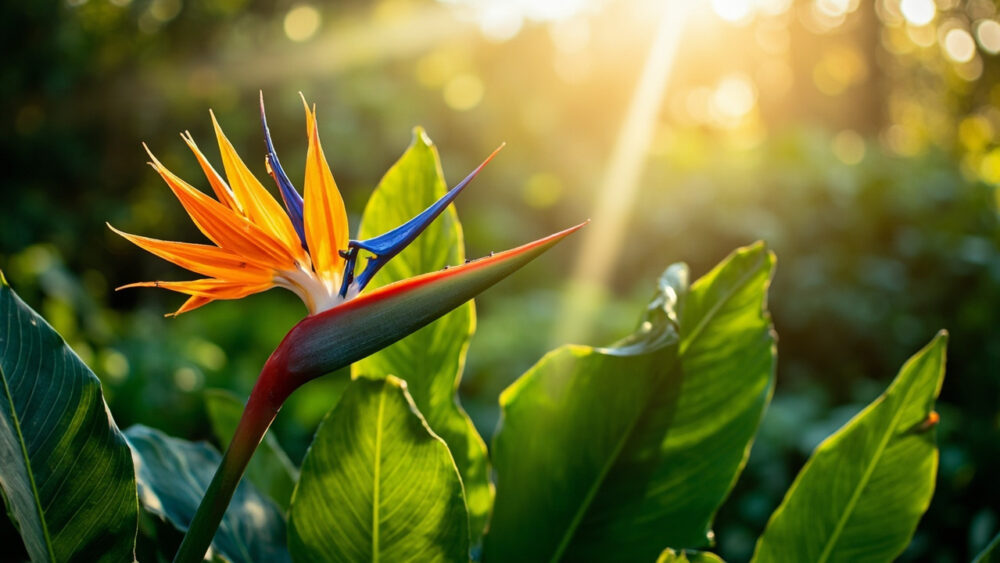
Bird of paradise light requirements come down to one clear standard: bright, direct-to-strong indirect light for at least four to six hours a day, with a few hours of direct sun being ideal, not something to avoid. Most people keep this plant far too dim, treating it like a low-light houseplant, and then wonder why it sulks for two years without pushing a new leaf. This is a plant that grows outdoors in full tropical sun in its native range, and indoors it wants the brightest spot in the house, no contest.
That said, more light is not automatically better once you cross a certain line, and there is a specific kind of leaf damage that fools people into cutting light back when the plant actually needed something else entirely. There is also a seasonal shift almost nobody accounts for, one that quietly starves the plant every winter even when it sat happy all summer in the exact same spot.
Stick with me through this and you will know exactly what “enough light” looks like in your actual room, how to read the leaves when something is off, and how to fix a dim spot without buying a greenhouse. The save-able Bird of Paradise at a Glance card is waiting at the bottom once we get through it all.
How Much Light Does Bird of Paradise Actually Need?
Bird of paradise is a high-light plant, full stop. Indoors, that means the closest thing you can get to unobstructed sun for a good chunk of the day.
A south-facing window in most of the country is the gold standard, giving hours of direct or near-direct sun. East and west windows work too, delivering strong direct light for part of the day, morning or afternoon.
North-facing windows are the weak link. They can keep the plant alive but rarely happy, and you will wait a long time for new growth.
Outdoors, in the zones where it’s hardy, full sun to light afternoon shade is exactly right.
The next question is what that actually looks like once you walk into the room.
What the Right Spot Actually Looks Like in a Real Room
Forget “bright indirect light” as a phrase, it means almost nothing until you can see it. Stand where the plant sits.
If you can see a patch of direct sun crawl across the floor near the plant for at least a couple hours, that’s a strong sign you’re in range. Within three feet of a south-facing window is usually excellent. Within four to six feet of an unobstructed east or west window works well too, especially if the plant catches a couple hours of direct sun there.
Sheer curtains, a covered porch, or six feet back from a bright window all soften light into that gentler indirect category, which the plant will tolerate but grow slowly under.
A good gut check: if you’d need sunglasses standing in that spot at midday, that’s the kind of intensity this plant wants.
Now here’s the part almost everyone reads backwards.
The Leaf Damage That Fools Almost Everyone
Here’s the mistake that costs people a season, sometimes two. Bird of paradise leaves scorch, browning at the tips and edges with crispy patches, and most people assume that means too much sun and immediately drag the plant into a dimmer corner.
Sometimes that’s right. Sudden, harsh scorch right after moving a shade-grown plant into strong direct sun is real sun stress, and the fix is to move it back a bit or acclimate it gradually over a couple weeks.
But far more often, browning tips paired with a plant that’s been in the same bright spot for months point to something else entirely: low humidity, inconsistent watering, or a salt buildup from tap water and fertilizer, not the light at all.
If you cut light after seeing that damage, you fix nothing and start a slow decline from under-lighting on top of whatever the real problem was.
Check the watering and humidity story before you touch the light dial.
The Real Signs of Too Little Light
Too little light shows up slower and quieter than scorch, which is exactly why it goes unnoticed for so long.
- No new leaves for six months or more during the growing season, or growth that feels frozen in place.
- New leaves emerging smaller than the ones before them, a clear sign the plant is rationing energy.
- Long, weak leaf stems (petioles) stretching and leaning hard toward the nearest window.
- A plant that never blooms indoors, which for bird of paradise usually needs very bright light plus real maturity, often a few years and a decently large pot, so low light isn’t the only reason for no flowers, but it guarantees no flowers.
None of this kills the plant fast. It just flatlines it, which is its own kind of frustrating.
The signs of too much light are a different animal entirely.
The Real Signs of Too Much Light
True sun stress on bird of paradise tends to be sudden and tied to a specific event, not a slow drift.
Bleached, pale patches on leaves that face a window directly, especially on a plant just moved outside or into a much brighter room, are the real tell. This is different from tip browning; it looks washed out, almost gray-green or yellowed in blotches rather than crisp and brown at the edges.
Leaves pressed right against hot glass in summer can also scorch from heat radiating off the window itself, which is a heat problem more than a light problem technically, but the fix is the same: pull the plant back a few inches from the glass.
Outdoor plants moved from a shaded nursery bench straight into full afternoon sun can scorch within days.
The fix for real sun stress is gradual acclimation, not a permanent move to shade.
Why the Same Spot Stops Working Every Winter
This is the follow-up question almost nobody asks until it happens to them: why did the plant do fine all summer and then start struggling in the same exact spot come winter?
The sun’s angle drops, days shorten, and windows that delivered strong direct light in July might deliver only weak, glancing light by December, especially north-facing or heavily obstructed ones.
The honest fix is seasonal: move the plant to your brightest window for winter, even if that means swapping spots with something else, and expect slower or paused growth through the darkest months regardless. That slowdown is normal, not a sign of a problem.
Come spring, as light returns, growth picks back up on its own.
If moving furniture around every season sounds like too much, there are simpler fixes.
Fixing a Dim Spot Without a Greenhouse
You do not need a conservatory to grow this plant well. A few practical moves close most of the gap.
- Clean the glass, since dirty windows cut more light than people expect.
- Trim back anything outside blocking the window, trees, awnings, or overgrown shrubs.
- Add a full-spectrum grow light on a timer for 10 to 12 hours a day if your brightest window still isn’t enough, positioned close enough that the plant would cast a defined shadow under it.
- Rotate the pot a quarter turn every week or two so growth doesn’t all lean one direction.
- Move it outside for summer to a bright porch or patio if you can, then acclimate it back indoors gradually before nights turn cold.
Any one of these can turn a stalled plant into an actively growing one within a season.
Now for the part you came to save.
Bird of Paradise at a Glance
- Light needed: bright light for four to six or more hours daily, direct sun tolerated and encouraged once acclimated.
- Best window: south-facing, within a few feet of the glass, east or west also work well.
- Weakest spot: north-facing windows or anywhere more than six feet from a bright window.
- Too little light looks like: stalled growth, smaller new leaves, long stretched stems leaning toward the light, no blooms.
- Too much light looks like: pale, bleached blotches on sun-facing leaves, usually right after a sudden move into stronger light.
- Common false alarm: crispy brown tips on a plant that hasn’t moved in months, usually a watering or humidity issue, not light.
- Winter adjustment: move to the brightest available window as days shorten, expect slower growth, resume normal care in spring.
Get the light right and most other problems on this plant sort themselves out.
When in doubt, give it more sun, not less.