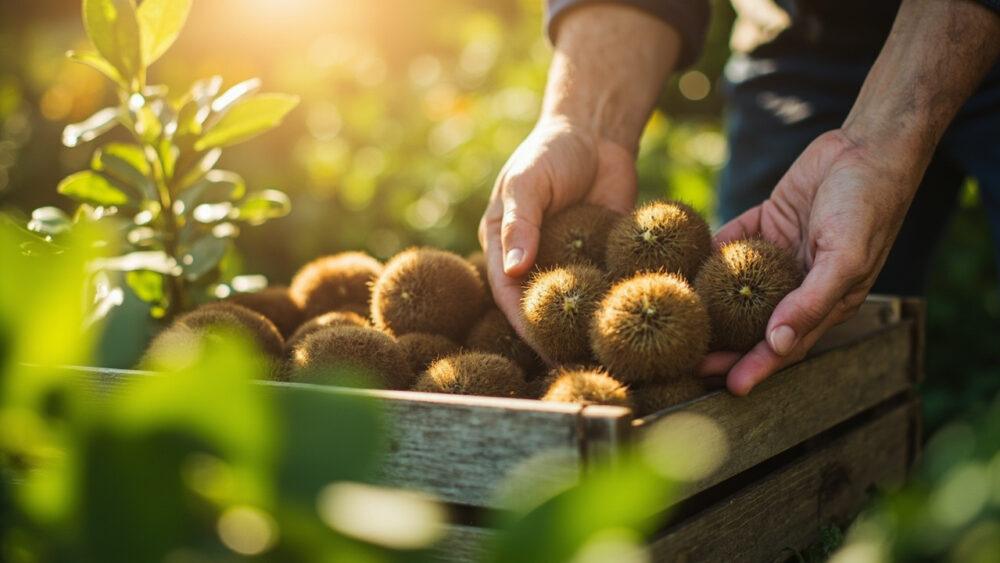
The best way to store kiwis depends entirely on whether they’re still hard or already soft. Firm, underripe kiwis keep for weeks in the fridge, but soft ripe ones only last a few days no matter what you do. Get that one distinction wrong and you’ll either watch a bowl of kiwis rot in three days or wonder why they never seem to ripen at all.
Most people make the same mistake right out of the gate: they toss ripe and unripe kiwis into the same drawer and treat them like one fruit. They’re not. There’s also a trick almost nobody uses that can hold firm kiwis fresh for months, not weeks, and a texture change that tells you a kiwi has crossed from “perfectly soft” to “starting to break down” days before it smells bad.
Stick around to the end and you’ll get a save-able Kiwis at a Glance card with every timing and temperature in one place, so you don’t have to remember any of this next time you’re standing in the kitchen holding a bag of kiwis.
Step One: Sort by Ripeness Before You Store Anything
Press a kiwi gently near the stem end. If it’s hard as a plum with no give, it’s unripe and goes in one pile. If it yields slightly under gentle thumb pressure, like a ripe peach, it’s ready to eat and goes in another.
This sorting step is the one almost everyone skips, and it’s the real reason storage goes wrong. Ripe and unripe kiwis release different amounts of ethylene gas and need completely different conditions.
Mixing them means the ripe ones speed up the unripe ones, and everything turns to mush on the same day instead of giving you a staggered supply.
Once they’re sorted, the actual storage method is almost too simple.
Storing Unripe, Firm Kiwis: The Long Game
Firm kiwis go straight into the fridge, unwashed, in a perforated plastic bag or the crisper drawer. Kept at 32 to 36°F, hard kiwis will hold for four to six weeks, sometimes longer if they were picked properly firm to begin with.
This is the trick most kitchens never use: cold storage doesn’t ripen kiwis, it pauses them. You pull out a few at a time and let those finish ripening on the counter while the rest wait in suspended animation in the fridge.
Don’t seal them in an airtight container. They need a little airflow or moisture builds up and invites mold.
That long fridge life only holds if the kiwis stay firm, so here’s what happens once they start to soften.
Storing Ripe Kiwis: The Short Window
Once a kiwi gives to gentle pressure, you’ve got a short runway. Ripe kiwis keep three to five days in the fridge, stored the same unwashed, loosely bagged way. On the counter at room temperature, figure one to two days before they’re overripe.
If you were about to ask whether ripe kiwis freeze well whole, they don’t, the texture turns watery and mealy on thawing. But peeled, sliced or pureed kiwi freezes fine for smoothies and sauces, holding good quality for eight to twelve months in a freezer bag with the air pressed out.
So the honest timeline is: weeks firm, days soft, months only if you freeze it prepped.
Prep is where the next set of mistakes usually happens.
Wash Now or Wash Later? Getting Prep Right
Don’t wash kiwis before storing them. That fuzzy skin holds moisture against the fruit, and wet skin in a bag is exactly the setup mold wants. Wash them right before you peel or eat them, not before they go in the fridge.
No blanching, no curing, none of the prep steps that root vegetables or onions need. Kiwis are a soft fruit, and the only real prep decision is ripeness sorting, which you already did.
If you’re freezing kiwi, that’s the one time washing comes first: rinse, dry completely, peel, then slice or puree before freezing. Wet slices going into the freezer bag turn to an icy clump.
Get the drying step right and freezing is painless, skip it and you’ll fight ice crystals every time you scoop some out.
How to Speed Up or Slow Down Ripening
To ripen firm kiwis faster, put them in a paper bag on the counter, ideally with a banana or apple. Those fruits pump out ethylene gas and can cut ripening time from a week down to two or three days.
To slow ripening down, the fridge is your only real tool. Cold temperature is what stalls the ethylene response, which is why that firm-kiwi cold storage trick works as well as it does.
Never leave ripe kiwis sitting in a closed paper bag in a warm kitchen expecting them to hold steady, that setup pushes them toward overripe fast, not slow.
Even with good timing, every batch eventually tells you it’s done, and here’s what that actually looks like.
The Signs a Kiwi Has Turned
A kiwi past its prime feels mushy rather than gently soft, with flesh that’s collapsed instead of yielding. The skin may look wrinkled or sunken in spots, and you’ll often see dark, wet patches under the skin when you slice in.
Smell is the clearest late signal. Fresh kiwi smells bright and slightly floral; spoiled kiwi smells fermented or sour, almost like wine gone off.
Mold shows up as fuzzy white, gray, or dark spots, usually starting at the stem end. If you see that, cut well around it or just toss the fruit, don’t try to salvage the rest of a moldy piece.
A mushy texture without smell or mold isn’t dangerous, it’s just overripe, and that’s your cue for the mistakes that get you there faster than they should.
The Mistakes That Ruin a Batch
Most kiwi storage failures trace back to one of these:
- Storing ripe and unripe kiwis together: the ripe fruit’s ethylene fast-tracks the whole batch to overripe.
- Washing before storing: trapped moisture under fuzzy skin invites mold within days.
- Sealing in an airtight container: no airflow means condensation, and condensation means rot.
- Leaving ripe kiwis on the counter too long: a fruit that’s ready to eat has a two-day window, not a week.
- Freezing whole, unpeeled fruit: the texture breaks down into something closer to mush than fruit once thawed.
- Ignoring the stem end: that’s where mold and soft spots start first, so it’s the spot to check before you commit to eating or storing a piece.
Fix those six habits and kiwi storage stops being a guessing game.
Here’s everything condensed into the version worth saving.
Kiwis at a Glance
- Firm, unripe kiwis: refrigerate unwashed in a perforated bag or crisper drawer, 32 to 36°F, lasts four to six weeks.
- Ripe, soft kiwis: refrigerate the same way, lasts three to five days, or one to two days at room temperature.
- To ripen faster: paper bag on the counter with a banana or apple, ready in two to three days.
- To freeze: wash, dry completely, peel, slice or puree, freeze in a sealed bag, good for eight to twelve months.
- Never wash before fridge storage: wash right before eating or peeling instead.
- Signs it’s turned: collapsed mushy flesh, wrinkled or sunken skin, sour or fermented smell, fuzzy mold at the stem end.
- Biggest mistake: storing ripe and unripe kiwis in the same bag or bin.
Sort by ripeness first, and every other decision about storing kiwis gets easy.
Get that one step right and you’ll never again wonder why half your kiwis went soft while the other half stayed rock hard.