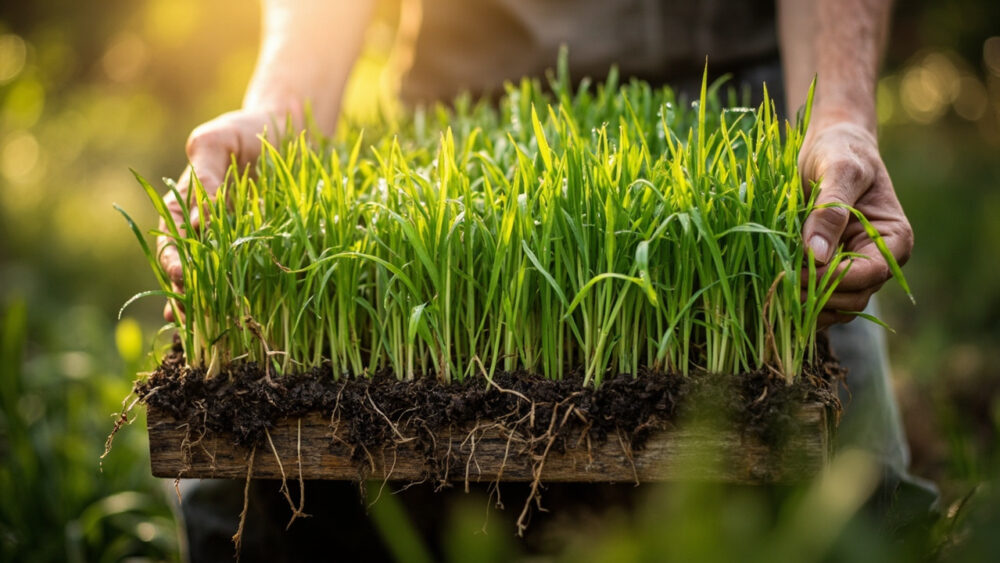
Wheatgrass grows fast enough to plant and harvest in about 7 to 12 days, whether you’re growing it in a shallow tray on a windowsill or a patch of garden soil for cats and juicing. Soak the seed 8 to 12 hours, spread it thick over moist soil, keep it dark for two or three days until it sprouts, then move it into light until the blades hit 6 to 8 inches tall. That’s the whole arc of how to grow wheatgrass, but the details decide whether you get a thick green carpet or a moldy, patchy mess.
Most first attempts fail for one of three reasons, and none of them are what people expect. It’s rarely too little water. It’s almost always too much, packed on top of seed that’s too crowded, in air that doesn’t move.
There’s also a timing mistake almost everyone makes with the soak, and a harvest sign that looks like “ready” but actually means you waited a day too long. Stick with this, and at the bottom you’ll find a Wheatgrass at a Glance card worth screenshotting before you plant your next tray.
When to Plant Wheatgrass
Indoors, there’s no frost date to wait on. You can start a tray any day of the year, and most people run a new one every week or two for a steady supply.
Outdoors, wheatgrass is really just young wheat, and it likes cool soil. Plant it 4 to 6 weeks before your last spring frost, once soil temperature sits around 50 to 65°F, or again in early fall 6 to 8 weeks before your first frost. Zones 3 through 7 get a real spring and fall window; in zones 8 and up, skip the summer entirely and grow it as a cool-season crop.
The soak you do before planting matters more than the calendar ever will.
Choosing the Spot and Prepping the Soil (or Tray)
Wheatgrass wants light, not necessarily sun. A bright windowsill or a spot under grow lights works as well as a garden bed, since you’re harvesting before it ever needs to flower or set seed.
Use a shallow tray, 1.5 to 2 inches deep, with drainage holes, filled with a light potting mix or seed-starting mix. Outdoors, loosen the top 2 to 3 inches of soil and rake it smooth. Compacted soil or waterlogged mix is the fastest way to rot the roots before the blades ever get going.
Drainage is non-negotiable here, more than for almost anything else you’ll grow.
Planting Wheatgrass Step by Step
- Soak the seed: cover wheat berries in water for 8 to 12 hours, no longer. Oversoaking suffocates them and invites the mold that ruins most trays.
- Drain and rinse: rinse until the water runs clear, then let the seed sit in a strainer or damp towel for another 8 to 12 hours until you see tiny white sprout tips.
- Spread the seed: scatter it thick, one seed nearly touching the next, over moist soil. This is a solid carpet crop, not a spaced-out row crop.
- Cover lightly: press seed into the soil surface or dust with a thin quarter-inch layer of soil. Outdoors, rake it in at about a quarter to half inch deep.
- Water gently: mist or water lightly, enough to keep the surface moist but never standing in water.
- Go dark: cover the tray with another tray, a damp towel, or cardboard for 2 to 3 days. Darkness pushes strong root growth before the leaves take over.
Once you see an inch of pale growth pushing up, it’s time to bring it into the light.
Watering and Feeding Through the Week
If you assumed more water means faster, thicker growth, that guess is exactly what causes the mold and rot that kill most trays. Wheatgrass wants consistently moist soil, not wet soil, and it wants air moving across the surface.
Mist or bottom-water once or twice a day, just enough that the soil feels moist an inch down but the surface dries slightly between waterings. Run a small fan nearby, or crack a window. Airflow does more to prevent mold than any product you could add.
Wheatgrass doesn’t need fertilizer. It’s living off the stored energy in the seed itself for its entire short life, so skip the feeding and put that attention into airflow and light instead.
Once it’s up and green, light becomes the thing that decides how it finishes.
Problems That Actually Show Up
The single most common failure is a white, cobwebby mold on the soil surface, usually from crowding seed too thick with too little airflow and too much water. It’s not always fatal, but a heavy infestation means starting the tray over rather than trying to eat around it.
Yellow or pale blades usually mean too little light, not too little water, which is the opposite of what most people assume when a tray looks weak. Move it somewhere brighter and it usually greens back up within a day or two.
Outdoors, birds and rodents will strip a newly seeded patch overnight. A light row cover or mesh over the bed for the first week solves this without any spray or trap.
Skip fungicides here. This is a crop you eat fresh and raw, so cultural fixes, airflow, correct watering, and clean trays, are the real answer, not chemical ones.
Get past the first week without mold or mice, and the rest of the grow is mostly waiting.
When and How to Harvest Wheatgrass
Harvest wheatgrass when it reaches 6 to 8 inches tall, usually 7 to 12 days after planting, and watch for the tip of the blade to split into a second leaf, sometimes called the “second cut.” That split looks like a sign to wait longer for more growth, but it’s actually your cue to cut now, since the grass gets tougher and less sweet right after this point.
Cut it as close to the soil as you can with sharp scissors or a knife, working in sections. One tray typically gives one good harvest; a second, weaker regrowth is possible but noticeably lower in juice yield.
Fresh-cut wheatgrass keeps in the refrigerator for about a week if you wrap it loosely and don’t let it sit wet. For continuous supply, start a new tray every 4 to 5 days so one is always finishing as another is cut.
Wheatgrass is non-toxic and popular as a treat for cats and dogs, but if a pet eats an unusually large amount and shows vomiting, lethargy, or stomach upset, call your veterinarian rather than waiting it out at home.
Everything you need to remember about growing it is right below, saved in one place.
Wheatgrass at a Glance
- When to plant: any time indoors, or outdoors 4 to 6 weeks before last frost and 6 to 8 weeks before first frost, once soil is around 50 to 65°F.
- Soak time: 8 to 12 hours in water, then 8 to 12 hours draining until sprout tips show.
- Planting depth: seed pressed into the surface or covered a quarter to half inch, spread thick like a carpet, not spaced out.
- Light needs: 2 to 3 days of darkness to sprout, then bright light or direct sun until harvest.
- Watering: light misting once or twice daily, moist but never soggy, with airflow to prevent mold.
- Time to harvest: 7 to 12 days, when blades reach 6 to 8 inches and just before the tip splits into a second leaf.
- Common problem: white surface mold from overwatering or overcrowding, prevented with airflow and lighter watering, not chemicals.
Get the soak right and keep the water light, and wheatgrass basically grows itself.
Everything else is just timing the cut before it toughens up.