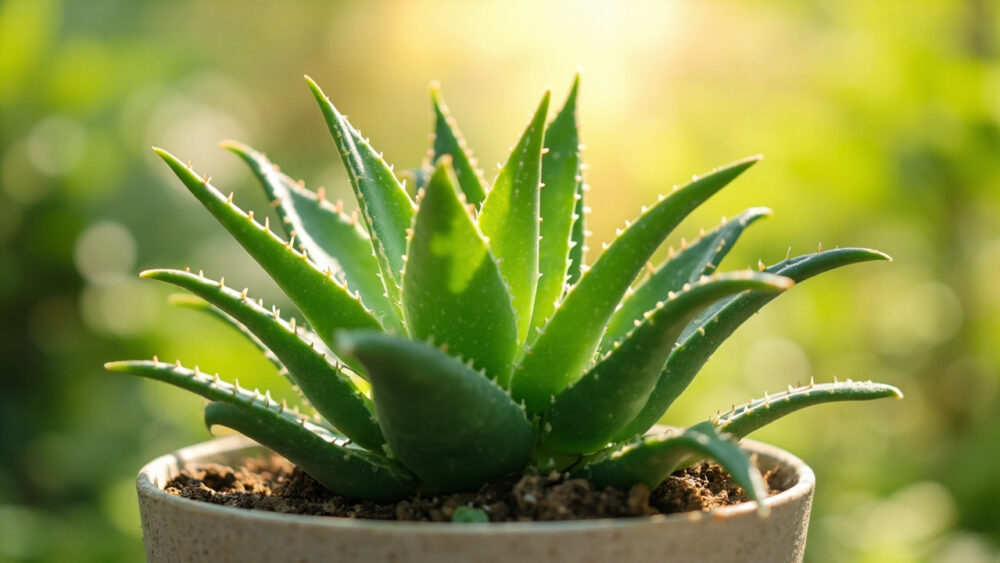
Water aloe vera about once every two to three weeks, and only after the soil has gone fully dry. There is no fixed calendar schedule that works everywhere, because a pot by a hot south window dries out three times faster than one on a cool windowsill. That single fact is why so many people overwater aloe on a weekly routine and wonder why the leaves are going soft and translucent.
Here is what most people get backward: they assume mushy, discolored leaves mean the plant is thirsty, so they water more. That guess kills more aloe plants than neglect ever does.
Before we get to the schedule that actually holds up, I want to open a few things you’re probably wondering about right now. What the finger test really tells you versus what it misses, the one watering habit that quietly rots roots over months, and how to tell overwatering and underwatering apart when they look almost identical on the leaves. Stick with me to the bottom and you’ll get a save-able Aloe Vera at a Glance card with the exact numbers.
The Honest Schedule, and What Changes It
For an aloe in a well-draining pot, indoors, at normal room temperature, water roughly every 2 to 3 weeks. That is a starting point, not a rule carved in stone.
Heat, light, and pot material all shift that number. A terra cotta pot in bright direct sun can dry out in 10 days. A plastic pot in low light might still be damp at week four.
Humidity matters too. Dry indoor air in winter, especially with heating running, pulls moisture out of soil faster than you’d expect even when the plant itself is dormant.
None of that matters as much as what the soil is actually doing right now.
Check, Don’t Guess: The Finger Test and Its Limits
Push a finger 2 inches into the soil. If it comes out with any soil clinging to it, or feels cool and damp, wait. Water only when that depth is bone dry.
The finger test has a blind spot: it only tells you about the top few inches. In a deep pot, the middle can stay soggy long after the surface looks dry, and that’s where rot starts.
Pot weight fixes that blind spot. Lift the pot right after watering and remember roughly how heavy it feels. A pot that still feels heavy at week two still has water down in the root zone, no matter how dry the top looks.
Leaves give you a slower, third signal. Firm, plump, upright leaves mean the plant is fine. Leaves that feel thin or slightly wrinkled are the plant telling you it’s running low on stored water, which is actually normal and by design.
That wrinkle is not an emergency, but the next section explains why so many people panic and water too soon anyway.
How to Actually Water It
When the soil is fully dry, water thoroughly, not lightly. A light daily sprinkle wets only the top half inch and trains roots to stay shallow.
Soak until water runs freely out the drainage holes, then let the pot sit for five minutes and dump any water that collects in the saucer. Standing water at the bottom of the pot is the single most common cause of root rot in aloe.
If your pot has no drainage hole, aloe is genuinely the wrong plant for it long term. You can get away with it for a while if you water sparingly and tip the pot to drain excess, but a drainage hole solves the problem permanently.
Getting the soak right only helps if you’re using a mix that drains fast to begin with.
The Soil Mix Matters As Much As the Schedule
Plain potting soil holds too much water for aloe. Use a cactus or succulent mix, or cut regular potting soil with coarse sand, perlite, or fine pumice at roughly a 1:1 ratio.
Good mix drains within seconds of watering and dries out evenly, which makes every other rule in this guide easier to follow correctly.
Get the mix right and the finger test becomes almost impossible to misread.
Overwatered or Underwatered: How to Tell Them Apart
This is the mix-up that costs people the whole plant, because both problems can produce discolored, unhappy-looking leaves.
Underwatered aloe shows thin, wrinkled, slightly curling leaves that still feel somewhat firm. The plant looks deflated but the tissue itself is intact. This one is easy to fix: water it and it plumps back up within a day or two.
Overwatered aloe shows leaves that turn mushy, translucent, or yellowish-brown, especially at the base, and they feel soft or squishy rather than firm. This often comes with a sour smell at the soil line, which is rotting roots.
If you catch overwatering early, stop watering completely, move the plant somewhere brighter and airier, and let the soil dry out completely before touching it again. If the base of the plant is soft and dark and leaves are pulling loose easily, the rot has likely reached the crown and roots, and at that point the honest move is often to cut away any firm healthy leaves for propagation and start a new plant rather than trying to save the original.
Knowing which one you’re looking at saves you from making the actual problem worse.
Adjusting for the Seasons
Aloe vera actively grows in spring and summer and goes semi-dormant in fall and winter. Watering needs shift a lot between those two states.
Spring and summer: the plant is drinking more and drying out faster, especially near a bright window or outdoors. Every 2 to 3 weeks is typical, sometimes closer to 2 weeks in hot, dry conditions.
Fall and winter: growth slows way down, light is weaker, and the soil stays damp much longer. Stretch to every 4 to 6 weeks, and always confirm with the finger test rather than the calendar.
If your aloe lives outdoors in a mild climate, USDA zones 9 to 11 roughly, rainfall does some of the work for you, so check soil moisture after storms before assuming it needs a manual watering too.
Get the seasonal shift wrong just once, in winter, and you’ve set up the exact rot conditions the last section warned about.
Aloe Vera at a Glance
- Watering frequency: every 2 to 3 weeks in spring and summer, every 4 to 6 weeks in fall and winter, always based on dry soil rather than the calendar.
- How to check: push a finger 2 inches into the soil, water only when it comes out completely dry, and confirm with pot weight if the pot is deep.
- How to water: soak thoroughly until water runs out the drainage holes, then empty any standing water from the saucer within a few minutes.
- Soil needed: a fast-draining cactus or succulent mix, or regular potting soil cut roughly 1:1 with perlite, pumice, or coarse sand.
- Underwatered signs: thin, wrinkled, curling leaves that are still firm and plump back up within a day or two of watering.
- Overwatered signs: mushy, translucent, or yellow-brown leaves, softness at the base, and a sour smell at the soil line.
- Light needs: bright, indirect to direct light most of the day, since low light slows drying and makes overwatering far more likely.
If you remember nothing else, remember this: water deeply, then wait for genuinely dry soil, not a date on the calendar.
More aloe plants die from a well-meaning weekly watering habit than from being forgotten for a month.