Here is the short version of how to grow kalanchoe: give it bright light, a fast-draining cactus or succulent mix, water only when the soil is fully dry, and never let it sit below 50°F. Plant it in spring after your last frost if it’s going outside for the summer, or pot it up any time of year if it’s staying indoors as a houseplant. Do that and you’ll get thick, glossy leaves and clusters of long-lasting blooms two or three times a year.
Most people who kill kalanchoe do it with kindness. They water on a schedule instead of checking the soil, and the plant rots from the base up before they notice anything is wrong.
There’s also a bloom mystery that trips up almost everyone: your kalanchoe flowered beautifully the day you bought it, and now it just sits there green and stubborn for months. That’s not a dying plant. It’s a plant waiting for a specific light cue nobody warns you about, and I’ll walk you through it below.
Stick around for the part on forcing rebloom, the two problems that account for nearly every kalanchoe death, and the Kalanchoe at a Glance card at the very bottom you can screenshot and keep.
When to Plant Kalanchoe
Kalanchoe is not frost hardy, so outdoor planting waits until nighttime temperatures reliably stay above 50°F, which usually lines up with two to three weeks after your last spring frost date. It thrives outdoors through summer in USDA zones 3 through 11 as an annual, and it survives winters outside only in zones 10 and 11.
If you’re growing it strictly as a houseplant, which is how most people grow it, timing barely matters. You can pot one up any month of the year.
Soil temperature matters more than the calendar if you’re moving one outdoors. Cold, wet soil in early spring rots roots fast, so wait until the ground has genuinely warmed rather than trusting a date on a tag.
Get the timing right and the next decision, where to actually put the thing, is just as important.
Choosing the Spot and Prepping the Soil
Kalanchoe wants bright light, ideally a few hours of direct morning or evening sun with some protection from harsh midday summer sun, which can scorch the leaves. Indoors, a south or east-facing windowsill is close to ideal.
Drainage is non-negotiable. This plant evolved in rocky, dry conditions and its roots will not tolerate sitting in wet soil for more than a day or two. Use a cactus or succulent potting mix, or amend regular potting soil with coarse sand or perlite until roughly a third of the mix is grit.
Any pot works as long as it has a drainage hole. Skip the hole and you’re basically guaranteeing root rot eventually, no matter how careful you are with watering.
Outdoors, raised beds or containers beat heavy clay garden soil every time.
Once the site and soil are sorted, planting itself takes five minutes.
Planting Kalanchoe Step by Step
1. Check the roots
If you’re transplanting from a nursery pot, gently squeeze the sides and slide the plant out. Look at the roots: white or light tan is healthy, black or mushy means rot, and you should trim away any dead root before replanting.
2. Set the depth
Plant at the same depth it was growing before. Kalanchoe doesn’t like being buried deeper, since the lower stem can rot if it’s suddenly underground.
3. Space for airflow
Give each plant 8 to 12 inches of space if you’re planting several together, whether in a bed or a wide container. Crowded plants trap humidity around the leaves, which invites fungal problems.
4. Firm and water once
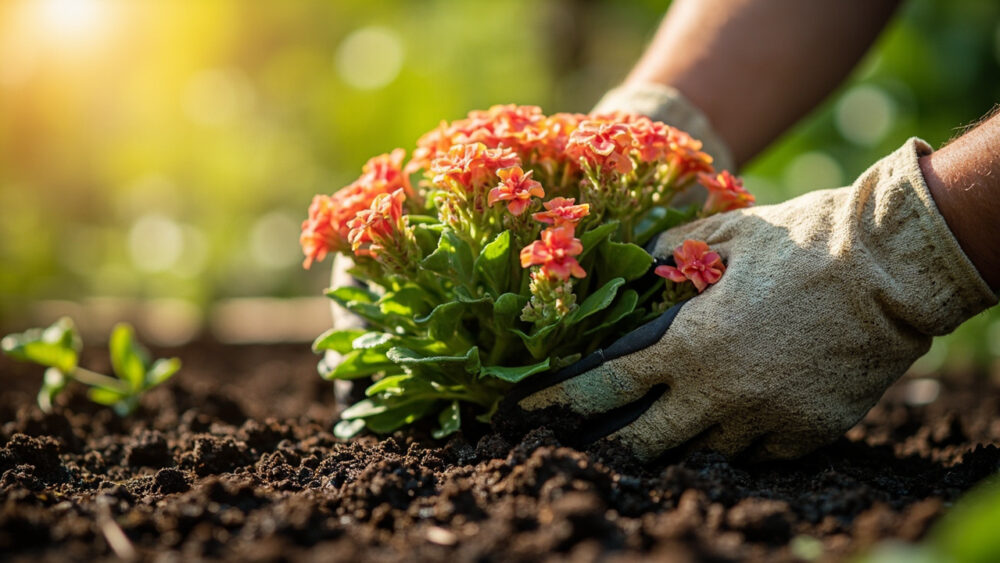
Backfill with your gritty mix, firm it gently around the base, and water once to settle the soil. Then let it dry out completely before watering again.
Getting a kalanchoe into the ground is the easy part; keeping it alive through the season is where most attempts fall apart.
Watering and Feeding Through the Season
If you assumed thin, yellowing, or dropping leaves mean the plant needs more water, that guess kills more kalanchoe than drought ever does. Overwatering is the single biggest killer of this plant, and yellow mushy leaves are almost always a sign of too much water, not too little.
Water only when the top 1 to 2 inches of soil are completely dry, which in most homes works out to every 10 to 14 days, less in winter when growth slows. Stick a finger in the soil before you water, every time, rather than trusting a schedule.
Feed lightly with a balanced, diluted fertilizer formulated for succulents once every four to six weeks during active spring and summer growth. Skip feeding entirely in fall and winter, when the plant is resting.
Now here’s the bloom mystery from the intro. Kalanchoe is a short-day plant, meaning it sets flower buds only after several weeks of long, uninterrupted dark nights, roughly 14 hours of darkness a night for about six weeks. That’s exactly what happens naturally in fall, which is why greenhouses time it to bloom for winter holidays. If yours has stopped flowering, it’s not sick. It’s just not getting dark nights long enough to trigger buds, and you can force it by covering the plant or moving it somewhere fully dark from evening to morning for six weeks straight.
Get the water and light rhythm right and most of the problems below never show up at all.
Problems That Actually Show Up (and How to Head Them Off)
Root and stem rot is the big one, caused almost entirely by wet soil and poor drainage. Prevention beats treatment here: if you catch it early, pull the plant, cut away any black or mushy tissue, let the cut ends callus for a day or two, and repot in fresh dry mix. Once rot reaches the main stem, the plant usually can’t be saved.
Powdery mildew shows up as a white, dusty coating on leaves, usually from crowded plants with poor airflow or overhead watering that wets the foliage. Space plants out, water at the soil line, and if it’s already established, a fungicide labeled for powdery mildew on ornamentals works when applied exactly per the label.
Mealybugs and aphids cluster in leaf joints and along stems, looking like small white cottony tufts or tiny green or black insects. Wipe them off with a cotton swab dipped in rubbing alcohol for light infestations, or use an insecticidal soap labeled for succulents for anything larger, following the label directions.
Leggy, stretched growth with pale color means insufficient light, not a disease at all. Move the plant closer to a bright window or give it more direct sun outdoors.
Kalanchoe is toxic to cats, dogs, and other pets if chewed or eaten, and it can cause vomiting, drooling, or heart rhythm changes in animals. If you suspect a pet has eaten any part of the plant, contact your veterinarian right away rather than waiting to see what happens.
Handle those few issues and your kalanchoe will reward you on a schedule you can actually predict.
When Kalanchoe Blooms and How to Keep It Going
A healthy kalanchoe reaches blooming size within about 3 to 4 months from a young nursery start, and mature plants typically flower for 4 to 8 weeks at a stretch, most reliably in late winter to spring if grown on a natural light cycle, or on command if you force the dark-night treatment described above.
Deadhead spent flower clusters by snapping or snipping them off at the base of the stem once they brown, which redirects energy into the next bloom cycle instead of seed production.
Unlike a vegetable, there’s no single harvest moment. You just keep giving it bright light, dry spells between waterings, and a rest period, and it will rebloom for years.
Everything you need to keep it thriving fits in the card below.
Kalanchoe at a Glance
- When to plant: outdoors two to three weeks after last frost once nights stay above 50°F, or pot indoors any time of year.
- Light: bright light with a few hours of direct sun, protected from harsh midday summer sun.
- Soil: fast-draining cactus or succulent mix, or regular potting soil cut with sand or perlite.
- Spacing and depth: plant at the same depth as the nursery pot, 8 to 12 inches apart if grouping multiple plants.
- Watering: only when the top 1 to 2 inches of soil are fully dry, roughly every 10 to 14 days in the growing season.
- Feeding: diluted balanced succulent fertilizer every 4 to 6 weeks in spring and summer, none in fall and winter.
- Bloom cycle: flowers naturally in late winter to spring, or force rebloom with about 14 hours of uninterrupted darkness nightly for 6 weeks.
If you remember nothing else, remember this: kalanchoe dies from too much water far more often than too little.
Check the soil with your finger before every watering, and this plant will bloom for you for years.