Most brown aloe leaves come down to one thing: too much water sitting around the roots. Aloe vera turning brown almost always starts at the base of the plant, where leaves get soft, translucent, and dark before they crisp up, and the fix is to stop watering, pull the plant to check the roots, and repot into drier, faster-draining soil if they look rotted. That single move solves the majority of cases, but not all of them.
Here is where it gets trickier. Everyone blames sunburn first because brown reads as “scorched,” but sun damage is actually one of the less common causes on an indoor aloe. The detail that actually tells you what you are dealing with is exactly where on the plant the brown started and whether the tissue feels mushy or dry and papery when you pinch it.
Whether your aloe bounces back depends entirely on which cause you have, and I will give you the honest odds for each one further down. Stick with me through the causes and the tell-apart guide, because the save-able two-minute diagnosis checklist is waiting at the very bottom of this page.
Causes of Aloe Vera Turning Brown, Most to Least Likely
1. Overwatering and Root Rot
Confirm it: lower or inner leaves turn brown, mushy, and almost translucent, sometimes with a slightly sour smell at the base. Slide the plant out of its pot and check the roots. Healthy roots are firm and white to tan; rotted roots are brown, black, or slimy and slip off in your fingers.
Fix it: cut away every mushy leaf and any rotted root back to firm tissue. Let the whole plant air-dry on a paper towel for a day or two, then repot into a fast-draining cactus or succulent mix in a pot with a real drainage hole. Do not water again for at least a week.
This is the cause that ruins the most aloe plants, and it is also the one people misread as underwatering because the leaves go soft.
2. Sunburn or Sudden Light Change
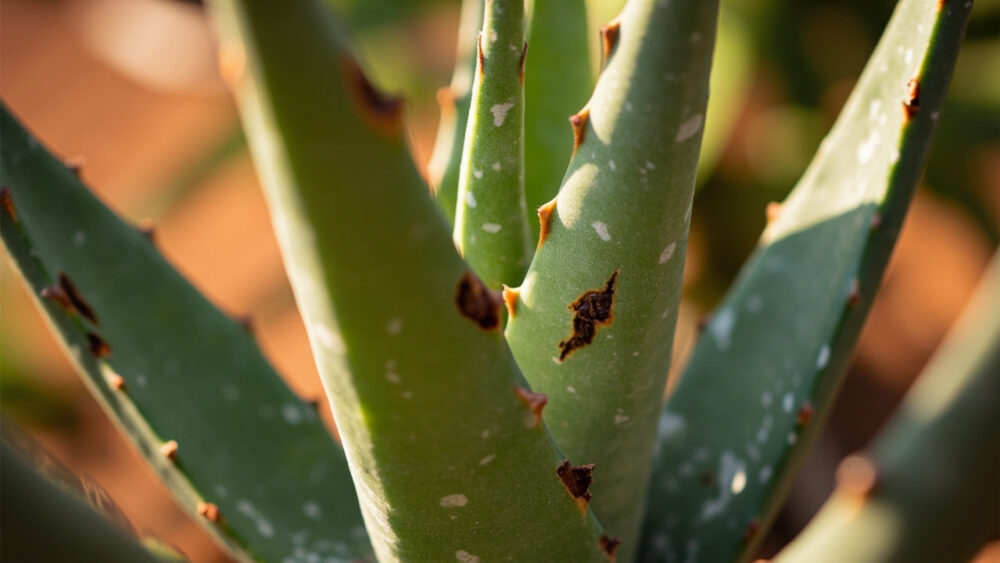
Confirm it: brown or reddish-brown patches on the sides of the leaves that face the light most directly, especially the upper, outer leaves. The tissue stays firm and dry, not squishy. This shows up fast after moving a plant outside or to a brighter window without easing it in.
Fix it: move the plant to bright, indirect light for a week or two, then reintroduce direct sun gradually over 10 to 14 days. The burned patches will not turn green again, but new growth will be fine once light exposure is corrected.
Sunburn looks alarming but it is almost always cosmetic, which is not true of the next cause.
3. Cold Damage or Frost Exposure
Confirm it: leaves develop water-soaked, dark brown to black patches after a night below roughly 40°F, especially near a drafty window or an unheated porch. Damage often appears on the side of the plant closest to the cold source and can show up within a day or two of exposure.
Fix it: move the plant somewhere it stays above 50°F, and trim off any leaf sections that have gone fully mushy or black. Aloe vera has no frost tolerance worth counting on, even a light one can collapse tissue permanently.
If the damage is limited to leaf tips, the plant usually shrugs it off with time.
4. Underwatering and Prolonged Drought Stress
Confirm it: the oldest, lowest leaves turn brown, thin, and papery-dry, sometimes curling inward, while the leaf still feels light and deflated rather than mushy. Soil has likely been bone dry for weeks.
Fix it: water thoroughly until it runs from the drainage hole, then let the top 1 to 2 inches of soil dry out completely before watering again. Aloe stores water in its leaves and tolerates neglect well, but total drought for extended stretches will eventually sacrifice the oldest leaves first.
This one is easy to confuse with rot at a glance, which is exactly why the pinch test in the next section matters.
5. Fertilizer Burn or Mineral Buildup
Confirm it: brown, crusty leaf tips or edges, sometimes paired with a white crust on the soil surface or pot rim. This shows up after regular feeding, especially with a fertilizer stronger than the plant needs, or after months of watering with hard tap water.
Fix it: flush the soil with plain water, letting it drain fully through two or three times, and hold off on fertilizer for a full growing season. Aloe barely needs feeding at all, a light diluted feed once or twice a year in spring or summer is plenty.
Buildup is slow-moving damage, so the fix is slow too, but it is one of the easiest causes to prevent outright.
6. Natural Aging of Lower Leaves
Confirm it: a single lowest, outermost leaf turns brown and dry while every other leaf on the plant looks completely normal and firm. No mushiness, no spreading pattern, no recent change in care.
Fix it: nothing to fix. Snip the leaf off close to the stem or let it dry and pull away on its own. Aloe sheds its oldest leaves as it grows, the same way a palm drops old fronds.
If this is your only symptom, you can stop worrying and skip straight to prevention.
How to Tell the Causes Apart
Location on the plant is the fastest clue. Rot and natural aging both start at the base or lowest leaves, but rot spreads upward fast and involves multiple leaves at once, while aging takes one leaf at a time over months.
Sunburn and cold damage show up on outer, light-facing or draft-facing leaves rather than uniformly at the base. Fertilizer burn concentrates on leaf tips and edges, not the whole leaf.
The pinch test settles most doubt: mushy and wet means rot or cold damage, dry and papery means drought, aging, or old sunburn.
Once you know which pattern you are looking at, the recovery odds get a lot clearer.
Will It Recover?
Root rot has the widest range of outcomes. Caught early, with firm white roots still present under the rotted ones, the plant usually recovers fully within a few months. If more than half the root system is gone, cut losses and instead save a healthy leaf or offset to start a new plant, full recovery from that point is unreliable.
Sunburn, cold damage, and fertilizer burn are cosmetic once they have happened. The damaged tissue will not green back up, but the plant itself recovers completely and grows past it with new leaves.
Drought stress reverses almost completely once regular watering resumes, aside from the leaves already sacrificed. Natural aging needs no recovery at all, it was never a problem.
The prognosis is honestly good for aloe in general, this is a tough, forgiving plant that punishes only sustained neglect or sustained overwatering.
How to Keep It From Happening Again
Get the pot and soil right first, since that prevents more aloe deaths than any watering schedule ever will. Use a cactus or succulent mix, or regular potting soil cut with perlite or coarse sand, in a pot with a drainage hole, unglazed terra cotta if you tend to overwater.
Water only when the top 2 inches of soil are fully dry, which in most homes is every 2 to 3 weeks, less in winter. Give it bright light, several hours of direct or strong indirect sun, and introduce any move to a sunnier spot gradually over a week or two.
Keep it above 40°F always and ideally above 50°F, and feed it sparingly, once or twice during the growing season at half the label strength if at all.
Get the pot, the watering rhythm, and the light right, and brown leaves become the rare exception instead of the norm.
Diagnosis Checklist
- Look at where the brown is: base and lower leaves point to rot or aging, outer or draft-side leaves point to sun or cold, tips and edges point to fertilizer or mineral buildup.
- Pinch the brown tissue: mushy and wet means rot or cold damage, dry and papery means drought, aging, or old sunburn.
- Count the affected leaves: one lone lower leaf with no other symptoms is likely just natural aging.
- Pull the plant and check the roots if the tissue was mushy: white to tan and firm is healthy, brown, black, or slimy is rot.
- Recall the last two weeks: recent move to brighter light or outdoors points to sunburn, a cold night or drafty spot points to cold damage.
- Check the soil surface and pot rim for a white crust, which points to mineral or fertilizer buildup.
- Recall your watering habit honestly: frequent watering with no drying between points to rot, weeks of bone-dry soil points to drought stress.
- Match your findings to the fix above, act within the same day for rot or cold damage since both keep spreading if ignored.
Brown aloe leaves are rarely a mystery once you know where to look and how the tissue feels in your fingers.
Fix the cause, trim what will not recover, and the next flush of leaves will tell you whether you got it right.