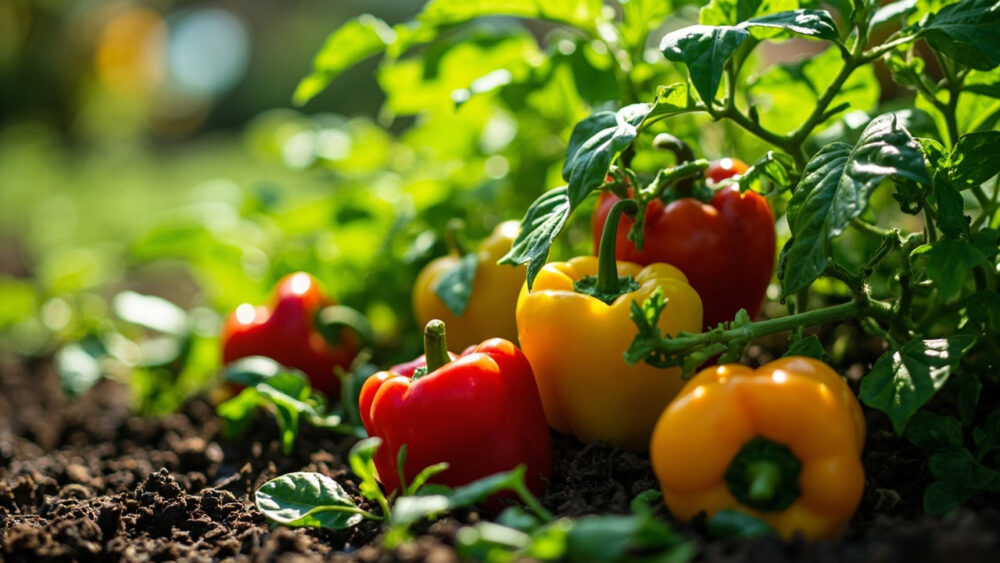
Basil, onions, carrots, and marigolds are the classic winning companions for bell peppers, while beans, brassicas like broccoli and cabbage, and fennel are the ones to keep out of that bed. The good pairings work by repelling aphids and hornworms, filling different root depths so nobody competes for water, or shading the soil so peppers do not stress in July heat. The good companion plants for bell peppers do real work, not just look nice next to each other.
Most people get the layout wrong before they get the pairing wrong. Peppers are shallow-rooted and slow to establish, and crowding them next to the wrong neighbor at planting time costs you the whole season, not just a few weeks.
There is also a popular pairing that gardeners swear by that does not actually hold up once you look at what each plant needs. I will name it, along with the honest fix. And down at the bottom, save the at-a-glance card so you are not rereading this on your phone next weekend while standing in the pepper bed.
Basil: The Pairing Everyone Gets Right
Basil is the one companion that lives up to its reputation. It confuses and deters aphids and thrips with its scent, and it stays low enough that it never shades out a pepper plant.
Plant basil 10 to 12 inches from the base of each pepper. It also happens to like the same water schedule, so you are not juggling two different watering habits in the same bed.
Some gardeners claim basil improves pepper flavor. There is no real evidence for that, but the pest protection alone earns it a spot.
Onions work a similar angle from underground, and that is worth understanding next.
Onions and Garlic: The Underground Defense
Onions and garlic repel aphids, spider mites, and some beetles through their sulfur compounds, and their narrow root systems sit in a different soil zone than a pepper’s roots. That means no real competition for water or nutrients.
Tuck them in the gaps between pepper plants, about 6 inches out, and let them do their work quietly all season.
They will not stop every pest, but they thin out the population enough to matter.
Carrots take a different approach entirely, working the soil rather than the air.
Carrots: The Soil Loosener
Carrots send a long taproot straight down while peppers stay shallow, so the two never fight for the same root zone. As that taproot pushes through, it breaks up compacted soil and improves drainage right where pepper roots need it loosest.
Sow carrots 3 to 4 inches from pepper stems, thinning to about 2 inches apart once they sprout.
They are a slow, quiet improvement you will not see until you pull one up in August.
Marigolds get more credit than almost any other companion plant, and most of it is deserved.
Marigolds: Nematode Control That Actually Works
Marigolds, specifically French marigolds, release a compound from their roots that suppresses root-knot nematodes in the soil around them. That is one of the few companion-planting claims with real research behind it, not just garden folklore.
Plant them in a border around the pepper bed rather than mixed in, about 8 to 10 inches apart, so the root zones overlap with as much of the bed as possible.
They also pull in hoverflies and predatory wasps that go after aphids and hornworm eggs.
Now for the plants that undo all of that good work if you put them in the same bed.
What to Never Plant Near Bell Peppers
Beans are the biggest mistake, and it is not obvious why. Most gardeners assume the problem is nitrogen, since beans fix it and peppers use it, and that guess is exactly backward.
Beans fixing nitrogen is not the issue. The real problem is that pole and bush beans grow fast and wide, and they shade out young pepper plants before the peppers get established, stunting them for the rest of the season.
Brassicas, meaning broccoli, cabbage, kale, and cauliflower, compete hard for the same nutrients peppers need and often attract cabbage worms that will wander over and sample your peppers too.
Fennel is worse than a bad neighbor, it is close to toxic to most things planted near it. It releases compounds from its roots that suppress the growth of many nearby vegetables, peppers included, so give it its own bed entirely, far from anything else you want to keep.
Get the layout wrong even with good companions and you will still have problems, so let’s fix that next.
Laying Out the Bed So Nobody Competes
Space bell peppers 18 to 24 inches apart, in rows 24 to 30 inches apart, and wait until nighttime soil temperatures hold above 60°F, usually two to three weeks after your last frost date. Peppers set out too early just sit there sulking, sometimes for a month, even if the air warms up fast.
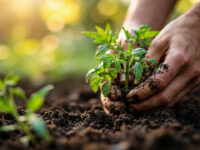
Plant to the same depth they sat in their nursery pot. Burying the stem deeper does not help peppers root out the way it helps tomatoes.
Ring the outside of the bed with marigolds first, then work basil and onions into the gaps between pepper plants as you go. Save carrots for the front edge where they get full sun and easy access for thinning.
That order matters more than people think, and it is where the next mistake usually creeps in.
The Companion-Planting Myth That Does Not Hold Up
Peppers and tomatoes get planted together constantly, and it seems obvious since they are both nightshades with similar care needs. That is exactly why it is a mistake.
Being in the same family means they share the same pests and the same soil-borne diseases, including verticillium wilt and certain hornworm species. Plant them side by side and a problem in one jumps straight to the other with zero resistance in between.
They also compete directly for the same nutrients at the same depth, since both have moderately shallow, wide-spreading roots.
If you want tomatoes in the garden, give them their own bed at least a few feet away, or rotate them to opposite corners.
With the good pairings and the bad ones both settled, here is the whole thing condensed for your phone.
Bell Peppers at a Glance
- Best companions: basil, onions, garlic, carrots, and French marigolds, each earning its spot through pest control or better use of soil space.
- Never plant nearby: beans, brassicas like broccoli and cabbage, fennel, and other nightshades such as tomatoes.
- When to plant: two to three weeks after your last frost, once nighttime soil temperature holds above 60°F.
- Spacing: 18 to 24 inches between pepper plants, rows 24 to 30 inches apart.
- Planting depth: same depth as the nursery pot, no deeper.
- Layout tip: marigolds as a border, basil and onions in the gaps, carrots along the sunniest edge.
- Biggest mistake to avoid: crowding beans or tomatoes into the same bed, which costs you the season through shade competition or shared disease.
Good companions do specific jobs, not vague magic. Get the spacing and timing right first, and the right neighbors just make a good bed better.