Water a ZZ plant every 2 to 3 weeks in spring and summer, and every 3 to 4 weeks (sometimes longer) in fall and winter. That is the honest starting number for how often to water zz plant in an average indoor room. But this is a plant that punishes calendar watering more than almost any other houseplant, and the schedule is really just a suggestion until you learn to read the plant itself.
Here is the loop worth opening right away: the mistake that kills most ZZ plants is not forgetting to water. It is watering out of habit, on schedule, without checking first. This plant stores water in thick underground rhizomes, which means it is basically carrying its own canteen, and a lot of well-meaning owners keep topping it off anyway.
There is also a sign almost everyone misreads, and I will walk you through it below because it is the difference between a plant that is fine and one that is already rotting at the roots. Stick around to the bottom for the Zz Plant at a Glance card, saveable to your phone, with the numbers you will actually need again next week.
The Real Schedule, and What Changes It
The 2 to 3 week range is a starting point, not a rule. Light, pot size, and pot material shift that number more than the season does. A ZZ in a bright room dries out faster than one tucked in a dim corner, sometimes needing water every 10 to 14 days. A ZZ in a plastic pot with no drainage might legitimately go 5 to 6 weeks between waterings without complaint.
Terracotta pots pull moisture out through the walls, so they dry faster than glazed ceramic or plastic. A rootbound plant in a small pot dries faster than one in an oversized pot, since there is less soil to hold water relative to the leaf mass pulling it out.
So the calendar number is a reminder to go check, never a command to grab the watering can.
Check, Don’t Guess: The Finger Test, Pot Weight, and Leaf Cues
If you assumed a rigid schedule was the safest way to keep this plant alive, that guess is exactly what drowns most ZZ plants. Checking beats scheduling every time.
The finger test is simple: push a finger 2 inches into the soil. If it comes out with soil clinging and feels cool and damp, wait. If the soil is dry at that depth and feels closer to powder than dough, it is time to water.
Pot weight is the second cue, and it gets more reliable the more you use it. Lift the pot right after watering and remember roughly how heavy it feels. A pot that has gone noticeably light has used up its water.
Leaves matter too, but read them as a texture cue, not a color cue. Firm, glossy, upright stalks mean the rhizomes below are hydrated and happy.
Once the soil passes the finger test dry and the pot feels light, you are clear to water, and how you do it matters almost as much as when.
How to Water a ZZ Plant Properly
Water thoroughly, not frequently. When the soil tests dry 2 inches down, water until liquid runs freely out the drainage holes, then let the pot sit for 10 minutes and dump the saucer. A quick splash on top that only wets the first half inch of soil trains roots to stay shallow and never reaches the rhizomes where the real water storage lives.
No drainage hole is a real problem for this plant, more than most, because ZZ rhizomes rot quickly sitting in stagnant water. If you are set on a decorative pot with no hole, keep the plant in a plastic nursery pot inside it and lift it out to water over a sink.
Let it drain completely before setting it back down.
Getting the mechanics right protects you from the number one killer of this plant, which deserves its own honest explanation.
Overwatering vs Underwatering: Telling Them Apart
Both problems can produce yellow leaves, which is exactly why this plant confuses people. The tell is in the stems and the soil, not just the leaf color.
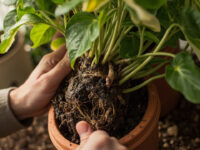
Overwatering shows up as yellowing that starts low and spreads fast, stalks that go soft or mushy at the base, and a sour or rotten smell from the soil. If a stalk pulls out with almost no resistance and the rhizome underneath is brown and squishy instead of firm and white or tan, that section has already rotted. This is root rot territory, and it is caused by soil staying wet for too long, usually from no drainage, a pot too large for the roots, or watering on a schedule instead of by feel.
Underwatering shows up differently: leaves that curl, thin, or drop while stalks stay firm, and soil that has pulled away from the pot’s edges. This one is easy to fix. A thorough soak brings the plant back within days.
- Soft, mushy, dark stalks: overwatering or rot, stop watering, check the roots.
- Firm stalks, curling or thinning leaves: underwatering, water thoroughly now.
- Yellowing that starts at the base and climbs: usually excess water sitting at the roots.
Underwatering is a scare, overwatering is a diagnosis, and the difference decides whether you reach for the watering can or the pruners.
Adjusting Through the Seasons
Growth slows dramatically once temperatures drop and daylight shortens, and water needs drop right along with it. In fall and winter, stretch watering to every 3 to 4 weeks, sometimes longer if the plant sits in a cooler room or away from strong light. The finger test still rules here: cold, damp soil sitting untouched for weeks is exactly how winter rot starts.
Spring and summer bring active growth, new stalks pushing up from the soil, and faster drying, so the 2 to 3 week range fits most homes during these months. A ZZ plant moved outdoors for summer in a bright, warm spot may need checking weekly.
Heating and air conditioning both dry soil faster than the season alone would suggest, so a plant near a vent needs checking more often than the calendar implies.
Get the seasonal shift right and the rest of the year mostly takes care of itself, which brings us to the numbers worth keeping.
Zz Plant at a Glance
- Watering frequency: every 2 to 3 weeks in spring and summer, every 3 to 4 weeks or longer in fall and winter.
- How to check first: push a finger 2 inches into the soil, water only if it comes out dry.
- How to water: soak thoroughly until water runs out the drainage holes, then dump the saucer.
- Light needs: tolerates low light but grows fastest in bright, indirect light.
- Pot and soil: a well-draining pot with a drainage hole, and a fast-draining potting mix, are essential for this plant.
- Overwatering signs: mushy stalks, sour smell from the soil, yellowing that starts at the base.
- Toxicity note: ZZ plant is considered toxic to pets and people if chewed or eaten, so keep it away from curious animals and kids, and contact a veterinarian right away if you suspect a pet has eaten any part of it.
When in doubt, wait another week and check the soil again. A ZZ plant forgives being underwatered far more easily than it forgives being drowned.