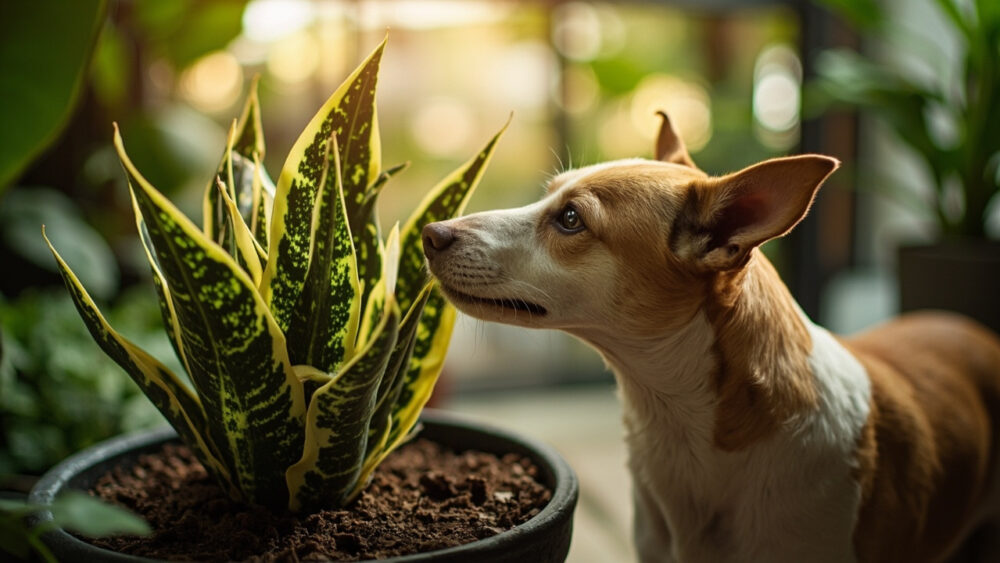
Yes, snake plant is toxic to dogs. It contains saponins, compounds that irritate the mouth and gut, and eating any part of the plant can cause vomiting, drooling, and stomach upset. It is rarely life-threatening, but that does not mean you should shrug it off.
The severity depends on how much your dog actually ate and how big your dog is, and that changes the answer more than most owners realize. A curious nose-sniff and one bitten leaf tip is a very different situation than a puppy who shredded half the pot.
Below I will walk through what parts of the plant matter, what signs actually show up, what to do right now if your dog already ate some, and a few genuinely dog-safe look-alikes if you want that same architectural look without the risk. Save the quick-reference card at the bottom for the next time you are staring at a chewed leaf wondering how worried to be.
The Plain Answer: Snake Plant Is Toxic, Not Deadly
Snake plant (Dracaena trifasciata, formerly Sansevieria) is classified as toxic to dogs and cats by veterinary toxicology sources. The saponins in the leaves are a defense compound the plant makes naturally, and they cause gastrointestinal irritation rather than organ damage or a fast-acting poison reaction.
Most dogs who chew a leaf or two get an upset stomach for a day, not an emergency. That said, “usually mild” is not the same as “ignore it,” especially with small dogs, puppies, or dogs with existing digestive issues.
The dose and the dog both matter here, and that is the next thing worth understanding.
How Much Exposure Actually Matters
A single bite out of curiosity, the kind where your dog mouths a leaf and drops it, rarely causes more than mild drooling or a lip lick. The real risk climbs with quantity: a dog who chews through several leaves, swallows fibrous plant matter, or makes a habit of nibbling the same pot repeatedly is the one who ends up with real vomiting and diarrhea.
Size matters too. A 10-pound terrier who eats a few inches of leaf has swallowed a much bigger relative dose than a 70-pound Labrador who does the same thing.
The sap that leaks out when a leaf is torn is where most of the saponin content concentrates, so a dog who shreds a leaf gets more exposure than one who just licks the surface.
Knowing the dose helps you gauge severity, but you also need to know what to actually watch for.
Signs to Watch For After Exposure
Symptoms typically show up within a few hours of ingestion. Watch for:
- Drooling or lip licking right after chewing
- Vomiting
- Diarrhea, sometimes with mucus
- Loss of appetite for the rest of the day
- Mouth or throat irritation, seen as pawing at the face or reluctance to eat
Most of these resolve within 24 to 48 hours on their own once the plant material has passed through. Rarely, a dog that swallows a large piece can show more persistent vomiting or seem genuinely lethargic, and that is a different situation than a dog who perks back up by dinner.
If any of these signs show up, or if you are not sure how much your dog actually got into, the next step is not “wait and see.”
What to Do If Your Dog Ate Snake Plant
Call your veterinarian or a pet poison helpline right away, even if your dog seems fine. Symptoms can take a few hours to show, and a vet can tell you, based on your dog’s size and how much was eaten, whether you need to bring them in or just monitor at home.
Before you call, try to gather a few specifics: roughly how much of the plant is missing, when it happened, and your dog’s weight. If you can, bring a photo of the plant or a leaf with you, since it helps confirm the species fast.
Do not induce vomiting or give any home remedy on your own. That decision should come from a vet who knows the specifics of the exposure, not a guess made at the kitchen sink.
Once you have that call made, the longer-term fix is making sure this does not become a repeat event.
Dog-Safe Plants That Give You the Same Look
If you love the upright, sculptural leaves of snake plant but want zero toxicity risk, a few houseplants scratch the same itch. Parlor palm (Chamaedorea elegans) gives you tall, architectural green without the saponin content. Spider plant (Chlorophytum comosum) is non-toxic, forgiving, and produces the same easy, low-maintenance vibe.
Calathea and Boston fern are also non-toxic options if you want texture rather than strict verticality. None of these need more light or water than snake plant demands, so swapping them in is not a downgrade in care difficulty.
If you already own snake plant and are not ready to give it up, simply moving it out of nose and paw range, on a high shelf or in a room the dog does not access, solves most of the risk without any plant losing a home.
That brings us to the card worth screenshotting before you put the phone down.
Snake Plant: Quick Reference
- Toxic to dogs: yes, due to saponins in the leaves and sap, classified as mild to moderate toxicity.
- Most common signs: drooling, vomiting, diarrhea, appetite loss, usually within a few hours of ingestion.
- Severity depends on: how much was eaten and the size of the dog, small dogs and puppies are at higher relative risk.
- What to do: call your veterinarian or a pet poison helpline immediately, even for a small nibble, and do not induce vomiting at home.
- Typical recovery: mild cases resolve within 24 to 48 hours, larger ingestions may need vet-supervised supportive care.
- Safer alternatives: parlor palm, spider plant, calathea, and Boston fern all give a similar look with no toxicity risk.
Keep this plant admired from a distance your dog cannot reach, and you get to keep both the plant and the peace of mind.
When in doubt about an ingestion, the phone call to your vet costs you nothing and settles the question fast.