Gerbera daisies want full sun, fast-draining soil, and crowns planted slightly high so they never sit wet. Get those three things right and you will have flat, dinner-plate blooms in orange, pink, yellow, and deep red from late spring through fall. Learning how to grow gerbera daisies is mostly about avoiding one specific mistake, because it kills more plants than frost, pests, and drought combined.
That mistake is planting the crown too deep, and almost everyone does it at least once. There is also a watering habit that looks helpful but slowly rots the roots, a sign of trouble that gets misread as “needs more water” when it means the opposite, and an honest answer about why gerberas sold as houseplants often sulk indoors no matter what you do.
All of it gets covered below, section by section, and the whole thing gets boiled down into a save-able Gerbera Daisies at a Glance card at the very bottom.
When to Plant Gerbera Daisies
Wait until nighttime temperatures reliably stay above 50°F and the danger of frost has passed, which usually means two to three weeks after your last spring frost date. Gerberas are hardy in USDA zones 8 through 11 as perennials; everywhere colder, treat them as annuals or dig and pot them up before the first fall frost.
Soil temperature matters more than the calendar. Push a thermometer 4 inches down and look for at least 60°F before you plant, since cold soil stalls root growth and invites rot before the plant ever gets going.
If you started plants indoors or bought nursery pots, harden them off over 5 to 7 days before they go in the ground.
Get the timing right and the next question is where exactly to put them.
Choosing the Spot and Prepping the Soil
Gerberas need 6 or more hours of direct sun, though in hot southern climates a little afternoon shade prevents scorched, faded petals. Drainage is non-negotiable. These plants developed thick, fleshy roots that rot fast in heavy, waterlogged soil, so if your yard holds water after rain, plant in raised beds or containers instead of fighting the ground.
Work in 2 to 3 inches of compost before planting, and aim for a slightly acidic pH between 5.5 and 6.5. Loosen soil at least 8 inches down since gerbera roots resent compaction.
Containers work well too, as long as the pot has real drainage holes and you use a loose, well-draining potting mix rather than garden soil.
Once the bed is ready, the actual planting is where most of the damage gets done.
Step-by-Step Planting
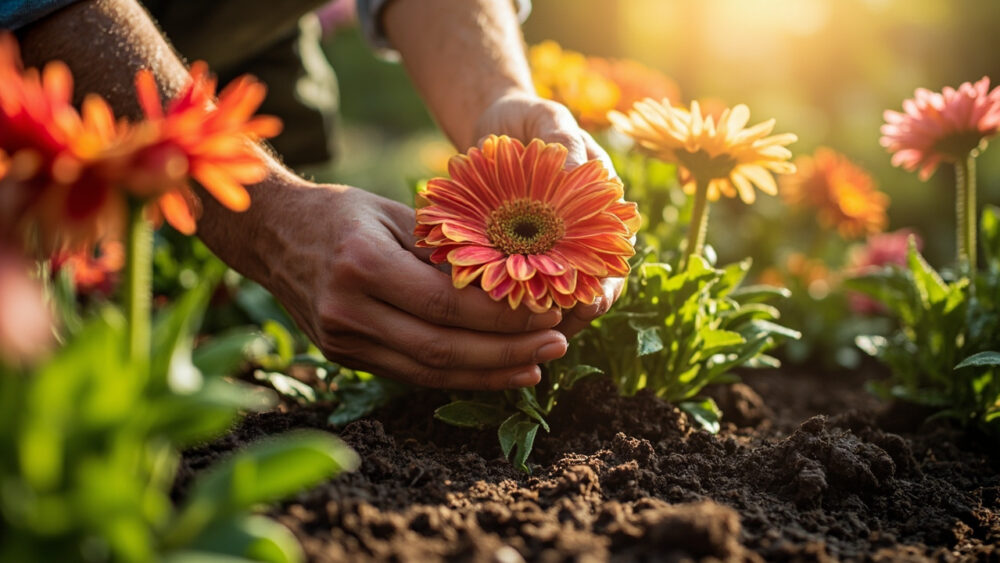
- Depth: plant so the crown, where leaves meet roots, sits slightly above the soil line, not buried. This is the single detail that determines success.
- Spacing: set plants 10 to 12 inches apart to allow airflow, which matters more for gerberas than almost any other bedding flower.
- Hole size: dig a hole twice as wide as the root ball but no deeper, so the crown naturally sits high.
- Backfill: firm soil around the roots but leave the crown exposed to air and light.
- Water in: soak thoroughly right after planting, then let the top inch dry before watering again.
If you have ever lost a gerbera within weeks of planting for no obvious reason, a buried crown is almost always the real culprit.
Get the crown right and watering becomes the next make-or-break habit.
Watering and Feeding Through the Season
Water at the basenever overhead, and let the soil surface dry out between waterings. Gerberas want consistent moisture, not constant wetness. Check by pressing a finger 1 inch down; if it’s still damp, wait a day.
Here is the habit that looks responsible but isn’t: misting the leaves or watering in the evening to “cool the plant down.” Wet foliage overnight is exactly what invites the crown and root rot that kills more gerberas than dry spells ever do. Water in the morning, at the soil, and stop there.
Feed every 3 to 4 weeks with a balanced or bloom-boosting fertilizer diluted to half strength, since gerberas are moderate feeders that sulk under heavy nitrogen. Deadhead spent blooms by snapping the stem at its base rather than cutting the leaves.
Handle water and food correctly and most disease pressure disappears on its own, but a few problems still show up uninvited.
The Problems Most Likely to Strike
Yellowing lower leaves get blamed on thirst almost every time, and that guess is usually backwards. In gerberas, yellowing paired with mushy, dark crown tissue means overwatering and early crown rot, not drought. The real fix is to back off water and improve airflownot add more.
Powdery mildew shows up as a white, dusty coating on leaves in humid, still air. Wider spacing and morning watering prevent most of it. Aphids and whiteflies cluster on new growth and stem tips, and a strong spray of water or insecticidal soap applied per the label handles light infestations.
Leaf spot diseases appear as brown or black rings on foliage in wet, crowded conditions. Remove affected leaves and improve airflow before reaching for a fungicide, and if you do need one, follow the product label exactly.
Why Indoor Gerberas Often Struggle
Gerberas sold as houseplants frequently decline indoors even with good care, because most homes cannot match the light intensity or airflow they get outdoors. A south-facing window with several hours of direct sun is the minimum, and even then, expect shorter bloom cycles than an outdoor plant gets.
Once the plant is healthy and blooming, the last real question is how to keep the flowers coming and when to cut them.
When and How Gerbera Daisies Bloom
Gerberas typically bloom 12 to 16 weeks after planting from seed, or within 4 to 6 weeks of transplanting an established nursery plant, and then continue flowering in flushes through summer into fall until frost. A flower is ready to cut when the center disk is fully open and firm, not when it first starts to unfurl, since cutting too early shortens vase life.
Cut stems at a sharp angle low near the base, early in the morning when stems are most hydrated. Change the vase water every 2 days and gerberas will hold for a week to ten days indoors.
Deadhead spent blooms promptly and keep feeding on schedule, and the plant will keep pushing new flower stalks rather than shutting down for the season.
That steady bloom cycle is the whole payoff, and here is everything above condensed into one card worth saving.
Gerbera Daisies at a Glance
- When to plant: two to three weeks after last frost, once soil hits at least 60°F four inches down.
- Sun and soil: six or more hours of direct sun, well-draining soil with a pH of 5.5 to 6.5, afternoon shade in hot climates.
- Depth and spacing: crown sits slightly above soil level, plants spaced 10 to 12 inches apart.
- Watering: water at the base in the morning, let the top inch of soil dry between waterings, never mist foliage.
- Feeding: balanced fertilizer at half strength every three to four weeks.
- Time to bloom: twelve to sixteen weeks from seed, four to six weeks from a nursery transplant.
- Harvest cue: cut when the center disk is fully open and firm, stems cut at an angle in early morning.
Get the crown height and watering rhythm right, and gerbera daisies forgive almost everything else.
Everything past that is just fine-tuning a plant that wants to bloom for you all season.