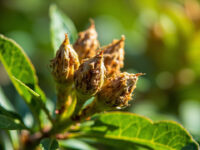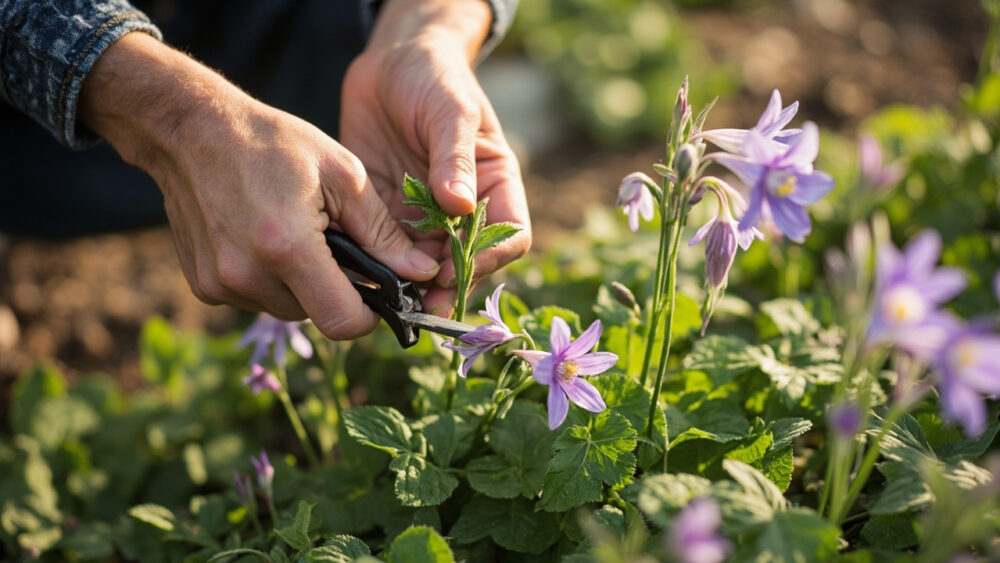
You deadhead columbines by snapping or cutting the spent flower stalk down to the first set of full leaves, not just below the flower itself, as soon as the petals drop and the little seed pods start to swell. Do it right after bloom and you often get a second, smaller flush a few weeks later. Do it wrong, and you either get volunteer seedlings taking over the bed or a plant that stops flowering early with no second act.
Here is the part most people miss: how much you cut matters more than when. Snip only the flower and you leave the plant working overtime to finish seeds on a bare stalk. Cut too far down into the crown and you can take out next year’s growth points along with this year’s spent blooms.
There is also a decision hiding in this task that nobody tells you about until it is too late, which is whether you actually want those seed pods gone at all. Columbines self-sow generously, and plenty of gardeners deadhead selectively on purpose, keeping a few stalks to reseed and clearing the rest for tidiness and rebloom. Stick around, because the full breakdown of when, how much, and the mistakes that cost people their best flowers is coming, and there is a save-able Columbines at a Glance card at the very bottom for the next time you are standing over the plant with pruners in hand.
When to Deadhead, and When to Leave It Alone
The right window opens as soon as a flower’s petals drop and the spurred back of the bloom starts to swell into a green, ridged seed pod. That is your signal, not the calendar. Depending on your zone, columbines typically bloom from mid spring into early summer, and the deadheading window follows right behind, often running four to six weeks.
Do not deadhead while buds are still opening. A single columbine stalk carries multiple flowers that open in sequence over one to two weeks, so cutting the whole stalk because the first bloom faded wastes buds that hadn’t opened yet.
Once the plant has finished its full bloom cycle for the season, usually by the time daytime temperatures settle into the 80s F, further deadheading won’t push more flowers. At that point you’re just cutting for tidiness, and that’s fine, but don’t expect another flush.
Next comes the part almost everyone gets backwards: how much of the stalk to actually remove.
The Prep Step That Actually Matters
You don’t need much gear for this. A clean pair of bypass pruners or sharp scissors is enough for the tougher flower stalks, though the softest, youngest stems will snap cleanly with just your fingers.
The one prep step worth doing: wipe your blades with rubbing alcohol before you start, especially if you handled any diseased foliage elsewhere in the garden that day. Columbines are prone to leaf miner damage and occasional powdery mildew, and dirty pruners are a fast way to spread fungal spores from plant to plant.
Look over the plant before you cut anything. Columbine foliage yellows and dies back naturally by midsummer regardless of what you do, and mistaking that normal decline for a disease problem leads people to cut far more than they should.
With clean tools and a clear read on the plant, you’re ready for the actual cutting.
How to Deadhead Columbines Step by Step
Step 1: Find the right node
Follow the flower stalk down from the spent bloom until you reach the first full set of leaves, or a side branch with its own buds. That junction is your cut point, not the base of the flower.
Step 2: Cut just above that node
Make your cut about a quarter inch above the leaf set or side shoot, at a slight angle. This encourages the plant to redirect energy into a new lateral stem rather than finishing out seeds on a dead-end stalk.
Step 3: Take the whole spent stalk, not just the flower head
If you only pinch off the wilted bloom and leave four or five inches of bare, leafless stem standing, you get a ragged look and the plant still has to support that tissue. Cut back to green growth or a leaf node every time.
Step 4: Decide what to do with the basal foliage
Leave the low mound of leaves at the base of the plant alone while it’s still green and upright. It’s still photosynthesizing and feeding the roots for next year, even after every flower stalk is spent.
That question of how much to leave standing is exactly where the next mistake usually happens.
What Happens After You Deadhead
If you assumed cutting off the flowers means the plant just sits there until next spring, that guess undersells what columbines can do. Many varieties will push a second, lighter round of blooms on fresh side stems within three to five weeks of deadheading, especially if the plant gets consistent moisture and isn’t baking in full afternoon sun during a hot stretch.
Don’t expect the second flush to match the first. It’s usually fewer flowers on shorter stems. That’s normal, not a sign you did something wrong.
Eventually, usually by mid to late summer, the whole plant will yellow and look tired no matter how diligently you deadhead. This is the natural end of the columbine’s active season, not a problem to fix. You can cut the entire plant back to a few inches of basal growth at that point, and it will hold as a low green mound until fall or emerge fresh again next spring.
That natural decline is also where the biggest missed opportunity of the whole season shows up.
The Mistakes That Cost You Flowers, Or Seedlings You Actually Wanted
The most common mistake is deadheading everything, every time, without ever letting a single pod mature. Columbines are short-lived perennials, often fading out after three to four years, and they rely on self-sown seedlings to keep a patch going long term. If you want columbines in that bed five years from now, deliberately leave two or three flower stalks per plant to go to seed each season.
The second mistake is cutting too early, before the plant has finished its full sequence of buds on a stalk, which sacrifices flowers that were only days from opening.
The third is using dull or dirty pruners that crush the stem instead of cutting it cleanly, which opens the door to stem rot and mildew, particularly in humid weather.
And the quiet one nobody warns you about: shearing the whole plant hard in the middle of active bloom because it “looks messy.” That removes buds you haven’t even seen yet and can knock out the rest of the season’s flowers in one pass.
Get the timing and the cut point right, and columbines reward you with a longer season and a self-renewing patch, which is exactly what the quick-reference card below is built to help you remember.
Columbines at a Glance
- When to deadhead: as soon as petals drop and the seed pod starts to swell, typically over a four to six week window during and just after bloom.
- Where to cut: a quarter inch above the nearest leaf set or side shoot, never leaving bare stalk standing.
- How much to remove: the entire spent flower stalk down to green growth, not just the wilted bloom head.
- What to leave: the low basal leaf mound, and two or three stalks per plant if you want self-sown seedlings next year.
- What to expect after: a lighter second bloom flush within three to five weeks under decent moisture and moderate temperatures.
- When to stop: once the whole plant yellows in midsummer heat, which is natural dieback, not a problem.
- Tool prep: clean, sharp bypass pruners wiped with rubbing alcohol before you start.
Cut the whole spent stalk to the next leaf, not just the flower, and let a few pods ripen on purpose.
That balance is what keeps a columbine patch blooming this year and coming back on its own next year.